Asian Studies Centre

Asian Studies Centre

By Oxford UniversityEducation
Download on the App Store

Asian Studies Centre episodes

  • Jeko Khere So Khaye (He who tills has the right to eat); 'development' and the politics of agrarian reform in late 1940s and early 1950s in Sindh
    Sarah Ansari (Royal Holloway) gives a talk for the Asian Studies Centre seminar series. This talk explores connections between ‘development’ and the politics of agrarian reform in Sindh (Pakistan) during the period of transition straddling Independence. On the one hand, it highlights the place of development thinking in contemporary debates and policy making there before and after 1947; on the other, it acknowledges the role of the local hari movement in pushing for tenancy changes in the Sindhi countryside. Sarah Ansari conducts research primarily (but not exclusively) on the nineteenth and twentieth-century history of Sindh. Her publications have focused on a range of topics, including local religious elites (pirs) under British rule, the impact of Partition in both the short and longer term, and women’s lives in Pakistan’s early years. Her latest book Boundaries of Belonging; localities, citizenship and rights in India and Pakistan (co-authored with William Gould) was published in late 2019.
    46 min
  • Jeko Khere So Khaye (He who tills has the right to eat); 'development' and the politics of agrarian reform in late 1940s and early 1950s in Sindh (Transcript)
    Sarah Ansari (Royal Holloway) gives a talk for the Asian Studies Centre seminar series. This talk explores connections between ‘development’ and the politics of agrarian reform in Sindh (Pakistan) during the period of transition straddling Independence. On the one hand, it highlights the place of development thinking in contemporary debates and policy making there before and after 1947; on the other, it acknowledges the role of the local hari movement in pushing for tenancy changes in the Sindhi countryside. Sarah Ansari conducts research primarily (but not exclusively) on the nineteenth and twentieth-century history of Sindh. Her publications have focused on a range of topics, including local religious elites (pirs) under British rule, the impact of Partition in both the short and longer term, and women’s lives in Pakistan’s early years. Her latest book Boundaries of Belonging; localities, citizenship and rights in India and Pakistan (co-authored with William Gould) was published in late 2019. Creative Commons Attribution-Non-Commercial-Share Alike 2.0 UK: England & Wales; http://creativecommons.org/licenses/by-nc-sa/2.0/uk/
    0 min
  • Rajput loyalties in the Mughal age
    Cynthia Talbot (Texas at Austin) gives a talk for the Asian Studies Centre seminar series on Mughal India and the Rajput. What did loyalty mean to warriors in the rapidly changing political landscape of early modern North India? I look at three case studies from the late sixteenth century in which elite warriors had to make hard choices about their competing loyalties to family members and to their imperial overlord. The Rajputs of Bikaner, Bundi, and Udaipur all faced situations in which brothers and sons disagreed about submitting to Mughal authority and could be forced to fight each other as a consequence. The demands of new political allegiances thus came into conflict with older Rajput values derived from the heavily kin-based polities of the past, in an age before patriotism. This is part of a larger project that studies the martial sentiments found in Rajput narratives, as a foray into the history of emotions.
    58 min
  • Global histories of hierarachy? Reflections from India on Caste, race and the Black Lives Matter movement
    Nayanika Mathur (Oxford) and Rosalind O'Hanlon (Oxford) give a talk for the Modern South Asian Studies seminars on the Black Lives Matter movement. In this opening session of the Modern South Asian Studies seminars, we put the disciplines of history and anthropology into conversation with one another to consider how the academic study of race and caste has changed over time. We are interested in collectively thinking about future directions the study of race and caste might take and what happens if we centre the long-standing literature from India in our globalised discussions of hierarchy.
    We take as our starting point the debates generated by Isobel Wilkerson in her recent and widely read book, Caste: The Origin of Our Discontents. Wilkerson has argued that many forms of discriminatory social hierarchy, such as race in the USA and anti-Semitism in Europe, are best understood as forms of ‘caste’.
    She suggests that India’s deeply entrenched caste system offers a local example of what is actually a long-standing global phenomenon. Long-standing ideas about racial and bodily difference – some very ancient, as in the history of Indian caste or medieval traditions of anti-Semitism, others shaped during the era of the Atlantic slave trade and its long shadow in the history of the Americas, others again by European colonial experience – are all best understood as forms of ‘caste’.
    In this era of heightened consciousness of histories of discrimination, and of global conversations between Black Lives Matter in the USA, renewed critiques of the material legacies of colonialism in Europe, and of Dalit politics in India, what fresh insights does generalising ‘caste’ in this way offer to us, and are there disadvantages in doing so?

    1 hr 2 min
  • Challenging the Limited View - The Case of the Women in Mosques Movement
    Part of the Middle East Centre Women's Rights Research Seminars. With Dr Mine Yildirim Chair: Dr Nazila Ghanea (Department for Continuing Education,University of Oxford). The place of women in the religious space of mosques in Turkey has been a long debate- more so recently.
    The Women in Mosques Movement’s challenge of the quality of space allocated for women in mosques led to strong criticism but also aroused genuine discussion about the deeply held beliefs underlying the place given to women as well as the space women carve out for themselves. The seminar will explore the implications of international human rights law, particularly women’s right to freedom of religion or belief, for the key demands of the Women in Mosques Movement.
    Bio – Dr. Mine YILDIRIM is the Head of the Norwegian Helsinki Committee’s Freedom of Belief Initiative project and Member of the OSCE/ODIHR Panel of Experts on Freedom of Religion or Belief. She a scholar of human rights law and an expert on international protection of freedom of religion or belief. She is the founder of the Freedom of Belief Initiative, and works with the Norwegian Helsinki Committee on this Initiative monitoring and reporting on freedom of religion or belief in Turkey. Yildirim is a member of the OSCE/ODIHR Panel of Experts on Freedom of Religion or Belief. Her work covers different facets of religious freedom, including the collective dimension of freedom of religion or belief, gender dimension of freedom of religion or belief, religious minorities and freedom of religion or belief in education. She was the co-recipient of the Stefanus Prize in 2016. She received her doctoral degree at AAbo Akademi Institute for Human Rights with her thesis on the collective dimension of freedom of religion or belief. Her doctoral thesis is published as a book entitled The Collective Dimension of Freedom of Religion: A Case Study on Turkey. She is a member of the Editorial Board of the academic journal Religion & Human Rights and has published extensively in academic journals and contributes to Forum 18. She has served as a consultant on numerous international projects.
    30 min

About Asian Studies Centre

From the publisher's feed

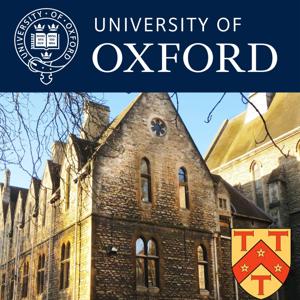
The Asian Studies Centre was founded in 1982 at St Antony's College and is primarily a co-ordinating organisation which exists to bring together specialists from a wide variety of different…

More shows like Asian Studies Centre

TED Talks Daily by TED

TED Talks Daily

10,868 Listeners

Philosophy for Beginners by Oxford University

Philosophy for Beginners

330 Listeners

Approaching Shakespeare by Oxford University

Approaching Shakespeare

331 Listeners

John Locke Lectures in Philosophy by Oxford University

John Locke Lectures in Philosophy

35 Listeners

General Philosophy by Oxford University

General Philosophy

70 Listeners

Anthropology by Oxford University

Anthropology

72 Listeners

Aesthetics and Philosophy of Art lectures by Oxford University

Aesthetics and Philosophy of Art lectures

77 Listeners

Theoretical Physics - From Outer Space to Plasma by Oxford University

Theoretical Physics - From Outer Space to Plasma

58 Listeners

Critical Reasoning: A Romp Through the Foothills of Logic by Oxford University

Critical Reasoning: A Romp Through the Foothills of Logic

37 Listeners

The Secrets of Mathematics by Oxford University

The Secrets of Mathematics

42 Listeners

Critical Reasoning for Beginners by Oxford University

Critical Reasoning for Beginners

30 Listeners