
Sign up to save your podcasts
Or



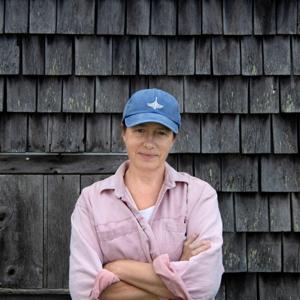
Julie Schultz of This House of Books in Billings, Montana recommends a book of poetry that made the finalist list for its category of the National Book Awards: Diane Seuss’s “Modern Poetry.”
It’s not the first national recognition for Seuss, whose collection “frank: sonnets” won the Pulitzer Prize for Poetry in 2022. Both were published by Graywolf Press in Minneapolis.
Whether you’re steeped in poetic tradition or approaching verse for the first time, Julie says you’ll find something to love in this collection, which challenges the notion that modern poetry should be dark and serious or written in free verse.
“She has all these great internal rhymes and slant rhymes in places where, once again, according to the "rules of modern poetry,” you're not supposed to be doing these things, but as the reader, you're just reveling and luxuriating in this language that she's using. And so she's bringing out the origins of poetry. Why did we as a species love poetry from the very beginning? And it's the sounds of language. And I think she's trying to get us back to that.
"If you're a broad reader, this is a collection with little easter eggs for you all throughout it. Even if you don't read a lot of books, literature, poetry, you will still just love the sense of the language as you're reading.”
 View all episodes
 By Minnesota Public Radio

4
44 ratings
Julie Schultz of This House of Books in Billings, Montana recommends a book of poetry that made the finalist list for its category of the National Book Awards: Diane Seuss’s “Modern Poetry.”
It’s not the first national recognition for Seuss, whose collection “frank: sonnets” won the Pulitzer Prize for Poetry in 2022. Both were published by Graywolf Press in Minneapolis.
Whether you’re steeped in poetic tradition or approaching verse for the first time, Julie says you’ll find something to love in this collection, which challenges the notion that modern poetry should be dark and serious or written in free verse.
“She has all these great internal rhymes and slant rhymes in places where, once again, according to the "rules of modern poetry,” you're not supposed to be doing these things, but as the reader, you're just reveling and luxuriating in this language that she's using. And so she's bringing out the origins of poetry. Why did we as a species love poetry from the very beginning? And it's the sounds of language. And I think she's trying to get us back to that.
"If you're a broad reader, this is a collection with little easter eggs for you all throughout it. Even if you don't read a lot of books, literature, poetry, you will still just love the sense of the language as you're reading.”

43,583 Listeners

38,793 Listeners

37,341 Listeners
14,691 Listeners

113,368 Listeners
56,932 Listeners
9,108 Listeners

5,876 Listeners
4,845 Listeners

6,447 Listeners

48 Listeners

4,500 Listeners
6,250 Listeners