
Sign up to save your podcasts
Or



On The Thread’s Ask a Bookseller series, we talk to independent booksellers all over the country to find out what books they’re most excited about right now.
Part of the joy of reading historical fiction is discovering moments or voices in our past that resonate today.
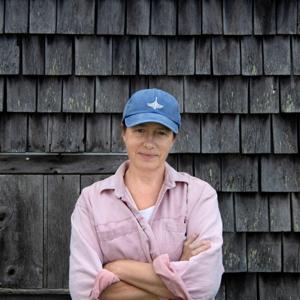
For Sophia Terry of Bank Street Books in Mystic, Conn., the novel that had her turning pages — and then diving into internet research to learn more — was "The Lilac People" by Milo Todd. It comes out in paperback this week.
The novel weaves between two starkly different timelines in the life of Bertie, a trans man living in Germany. In the early 1930s, Bertie works with Dr. Magnus Hirschfeld at the Institute for Sexual Science, where his work uplifts a thriving queer community in Berlin.
Ten years later, Bertie and his girlfriend are in hiding, living on a farm under assumed names. A young trans man winds up on their property, still dressed in the prison clothes from the camp in which he escaped, and the couple takes him in.
The fall of the Nazis and the arrival of the Allies, though, does not signal the end of danger for Bertie and other queer people.
Terry recommends this novel for lovers of Anthony Doerr’s “All the Light We Cannot See” and others who enjoy WWII or queer history.
“It was such a powerful debut novel. It’s a chapter of history and voice that you so rarely get to hear from, but it's as much about hope and resilience as [about] these darker chapters of history.”
 View all episodes
 By Minnesota Public Radio

4
44 ratings
On The Thread’s Ask a Bookseller series, we talk to independent booksellers all over the country to find out what books they’re most excited about right now.
Part of the joy of reading historical fiction is discovering moments or voices in our past that resonate today.
For Sophia Terry of Bank Street Books in Mystic, Conn., the novel that had her turning pages — and then diving into internet research to learn more — was "The Lilac People" by Milo Todd. It comes out in paperback this week.
The novel weaves between two starkly different timelines in the life of Bertie, a trans man living in Germany. In the early 1930s, Bertie works with Dr. Magnus Hirschfeld at the Institute for Sexual Science, where his work uplifts a thriving queer community in Berlin.
Ten years later, Bertie and his girlfriend are in hiding, living on a farm under assumed names. A young trans man winds up on their property, still dressed in the prison clothes from the camp in which he escaped, and the couple takes him in.
The fall of the Nazis and the arrival of the Allies, though, does not signal the end of danger for Bertie and other queer people.
Terry recommends this novel for lovers of Anthony Doerr’s “All the Light We Cannot See” and others who enjoy WWII or queer history.
“It was such a powerful debut novel. It’s a chapter of history and voice that you so rarely get to hear from, but it's as much about hope and resilience as [about] these darker chapters of history.”

43,687 Listeners

38,950 Listeners

37,247 Listeners
14,655 Listeners

113,121 Listeners

56,944 Listeners
9,100 Listeners

5,867 Listeners
4,807 Listeners
6,462 Listeners

48 Listeners

4,503 Listeners
6,281 Listeners