
Sign up to save your podcasts
Or



In this episode of AskTMFG, Financial Advisors Carlo Cansino and John Iaconetti return to a strategy they’ve covered before: the RRSP meltdown.
An RRSP is a tax-deferral plan. You get a deduction at your income level when you contribute, and you pay tax at your income level when you withdraw. For many Canadians, trading works best when they earn more while working than in retirement. If your retirement income is likely to be high, or a large RRSP is likely to be taxed at the top rate in your estate, drawing it down earlier at a lower rate may save you significant money.
Carlo and John walk through five questions to ask yourself: whether your retirement income will put you in a higher tax bracket than when you contributed, whether you want to reduce estate taxes and the risk of OAS clawbacks, whether you have unused TFSA room to move withdrawals into, whether you’ll have stable income from CPP, OAS or a pension, and whether you’re comfortable paying more tax now to pay less later.
👉 Watch the full episode here
Question for our viewers: Did you answer “yes” to any of these five questions, and which one surprised you most?
👉 Book a complimentary call: https://tmfg.ca/portfolio-analysis/
Follow us:
In this episode of AskTMFG, Senior Financial Advisor Carlo Cansino looks at a milestone many investors work toward for decades: seeing a seven-figure balance in their investment account. Does $1 million mean you’re set for life?
It can feel like the finish line, but the number on your statement doesn’t tell the whole story. A large part of that balance was never fully yours to spend. Once you convert your RRSP to a RRIF, mandatory minimum withdrawals start at 5.4% at age 72, which is $54,000 a year on a $1 million RRIF. Every dollar of it is taxable, and it can push your income toward the OAS clawback threshold.
Carlo walks through three realities every pre-retiree should understand: how taxes shrink what you actually get to keep, how inflation quietly erodes purchasing power over a retirement that can last decades, and how unexpected costs like prescriptions, dental care and long-term care can strain even a well-funded plan. He also covers the risk of lifestyle creep. Then he lays out how to respond: a tax-efficient withdrawal strategy using your TFSA, non-registered and RRIF accounts, a balanced portfolio built to outpace inflation, and a financial plan you review every year.
👉 Watch the full episode here
Question for our viewers: Which of these three realities (taxes, inflation or unexpected costs) concerns you most about your own retirement?
👉 Book a complimentary call: https://tmfg.ca/portfolio-analysis/
Follow us:
In this episode of AskTMFG, Financial Advisors Carlo Cansino and John Iaconetti tackle a question that surprises many people: can someone who’s 61 with $2.1 million in their RRSP afford to retire?
On paper, the answer seems obvious. But a large RRSP balance on its own doesn’t guarantee a comfortable retirement. In this hypothetical scenario, a couple has a mortgage-free home, healthy TFSAs, no significant debt, and $3 million in combined RRSPs. What they don’t have is a workplace pension, and they’re planning on about $120,000 a year in lifestyle costs, with higher spending in the early “go-go years.”
The advisors walk through seven key questions every pre-retiree in this position should be asking: how long the money needs to last when longevity runs in the family, how market risk and sequence of returns can affect withdrawals, how inflation erodes purchasing power over 30+ years, and why fully taxable RRSP withdrawals call for a tax-efficient strategy. They also cover planning for healthcare and long-term care costs, and how to create predictable income without an employer pension.
👉 Watch the full episode here
Question for our viewers: Which of these seven questions has been the hardest to answer in your own retirement plan?
👉 Book a complimentary call: https://tmfg.ca/portfolio-analysis/
Follow us:
In this episode of AskTMFG, Senior Financial Advisor Carlo Cansino breaks down one of the most important financial decisions you’ll make before retirement: whether to take your pension as a lump sum or as a guaranteed income for life.
For many Canadians, this choice can’t be undone, and it will shape the next 20 to 30 years of retirement. The challenge isn’t just comparing a large cheque to a monthly payment. It’s choosing between two very different futures: one built on control, and one built on certainty.
Carlo walks through how each option works, from transferring a lump sum into a LIRA (and eventually a LIF) to choosing between a single-life or joint-and-survivor annuity. He explains how to calculate a simple payout yield, why the implied rate of return matters more, and how inflation can erode a fixed pension over time. He also covers how pension protection varies across Canada, including Ontario’s Pension Benefits Guarantee Fund.
Finally, he looks at the personal factors that often decide the outcome (your health, your spouse, and your legacy goals) and walks through a hypothetical couple weighing a $400,000 lump sum against a lifetime pension.
👉 Watch the full episode here
Question for our viewers: If you were offered the choice today, would you take the lump sum or the lifetime pension?
👉 Book a complimentary call: https://tmfg.ca/portfolio-analysis/
Follow us:
In this episode of AskTMFG, Senior Financial Advisor Carlo Cansino and Financial Advisor John Iaconetti explain why retirement starts to look different once you’ve saved $500,000 in your RRSP.
Many Canadians reach this milestone and still delay retiring. The problem usually isn’t the amount saved; it’s uncertainty about taxes, withdrawal timing, and how the RRSP fits into the bigger retirement picture. That uncertainty can keep people stuck in the “one more year” trap.
Carlo and John walk through what a $500,000 RRSP can make possible. It can give you more flexibility on when to take CPP, whether that means avoiding the reduction for starting at 60 or deferring to 70 for up to a 42% larger benefit. They look at what a 5% withdrawal could add to your annual income- about $25,000 a year in this example- and how that money might support travel and hobbies while you’re healthy.
They also cover how that added income may let you take less risk in your portfolio than you did while saving, and why it can help you plan for one of the biggest unknowns in retirement: healthcare costs.
👉 Watch the full episode here: https://www.youtube.com/watch?v=agaHAPx-Pos
Question for our viewers: Has your RRSP size changed as you plan to retire?
👉 Book a complimentary call: https://tmfg.ca/portfolio-analysis/
Follow us:
In this episode of AskTMFG, Senior Financial Advisor Carlo Cansino walks through five tax moves he’d make before December 31 if he were 64 with $2.5 million saved for retirement.
For most people, December 31 is just New Year’s Eve. For retirees and pre-retirees, it’s the last day to control this year’s tax bill. After that, your withdrawals, unclaimed losses, and unused TFSA room are locked in for another year, and that can cost your family real money.
Carlo starts with charitable giving: donating appreciated stocks or mutual funds in-kind, rather than writing a cheque, can generally eliminate the capital gain while still earning a donation receipt for the full market value. He then explains tax-loss harvesting, the superficial loss rule, and why some retirees in a low-income year may consider harvesting gains instead. For those still working at 64, he covers why one last RRSP contribution can be one of the best remaining opportunities to reduce taxes before RRIF conversion, and why moving money from taxable accounts into your TFSA should be a priority, with cumulative room of up to $109,000 in 2026.
Finally, he looks beyond next April’s return to the biggest tax bill many families face: the one on the final return, when the remaining RRSP or RRIF is generally treated as income. Carlo explains why beneficiary designations matter and how charitable giving or life insurance can help manage that liability.
👉 Watch the full episode here: https://youtu.be/YFiAeR8sTN0?si=sUUnHcboNe9iYRc_
Question for our viewers: Which of these five year-end moves are you planning to make before December 31?
👉 Book a complimentary call: https://tmfg.ca/portfolio-analysis/
Follow us:
In this episode of AskTMFG, Senior Financial Advisor Carlo Cansino walks through nine spousal income splitting rules that many retired Canadian couples miss.
Most couples assume income splitting means checking one box on their tax return, but that assumption can cost thousands of dollars a year in extra taxes and lost government benefits.
Not all retirement income qualifies in the same way. Registered pension plan income can generally be split at any age, while RRIF withdrawals usually qualify only from age 65, and RRSP withdrawals don’t qualify at all. CPP can’t be split on your tax return; it can only be shared through Service Canada. Carlo also explains the attribution rules that can tax income back to you, including spousal RRSP withdrawals made within three years of a contribution and investment income earned on money gifted to your spouse. Gifts to your spouse’s TFSA are the exception.
Finally, he covers the payoff: how splitting lets both spouses claim the pension income credit, why the OAS clawback is calculated separately for each spouse, and why Form T1032 should be reviewed every year rather than set once and forgotten.
👉 Watch the full episode here: https://youtu.be/iUgsGvghoGI?si=kaBjJwu3OzuVifDW
Question for our viewers: Have you and your spouse reviewed how you split your retirement income this year?
👉 Book a complimentary call: https://tmfg.ca/portfolio-analysis/
Follow us:
In this episode of AskTMFG, Financial Advisors Carlo Cansino and John Iaconetti explain what happens to your Canada Pension Plan benefits when your spouse passes away, and the steps you need to take. Many surviving spouses don’t know what they’re entitled to, and during an already difficult time, that gap can cost thousands of dollars in missed payments.
The government provides a one-time CPP death benefit of $2,500 to help with immediate costs such as funeral and burial expenses. The ongoing survivor’s pension is not automatic, though; you have to apply for it. How much you receive depends on your age when your spouse passes away and on how much your spouse contributed to CPP. Survivors 65 and older receive 60% of the deceased spouse’s retirement pension.
Carlo and John also clear up a common misconception: your own CPP and the survivor’s pension combined cannot exceed the maximum retirement pension for one person. Many survivors expect to receive their spouse’s full payment on top of their own, but in practice the top-up is often much smaller. That’s why it’s important to plan ahead for other income sources that can make up the difference.
👉 Watch the full episode here: https://youtu.be/gdziNfB9mlY
Question for our viewers: Have you and your spouse talked about how your retirement income would change if one of you passed away?
👉 Book a complimentary call: https://tmfg.ca/portfolio-analysis/
Follow us:
In this episode of AskTMFG, Financial Advisors Carlo Cansino and John Iaconetti walk through what you need to do with your CPP, OAS, and RRSP before you retire outside Canada. Many Canadian retirees who move abroad mismanage these benefits, and that mistake can cost thousands in unnecessary taxes and lost payments.
CPP can be collected in many countries, but it stays taxable in Canada and may also be taxed where you live, so exchange rates and tax treaties both matter. OAS can be paid internationally as well, but it comes with residency requirements and paperwork, and the clawback is based on your worldwide income.
RRSP and RRIF withdrawals are generally subject to a 25% non-resident withholding tax, which a tax treaty may reduce. Your new country may also tax that same money. Finally, they also explain why cross-border banking and a clear withdrawal plan should be in place before you leave.
👉 Watch the full episode here: https://youtu.be/MCecyS91KyY
Question for our viewers: Are you thinking about spending your retirement outside Canada? Where would you go?
👉 Book a complimentary call: https://tmfg.ca/portfolio-analysis/
Follow us:
In this episode of AskTMFG, Senior Financial Advisor Carlo Cansino explains the pension clause that catches thousands of Canadian retirees off guard: the bridge benefit. If you retired early with a defined benefit pension, part of your monthly income is temporary, and it ends automatically the month after you turn 65, whether or not you’ve started CPP. For some retirees, that means a drop of hundreds of dollars a month.
Carlo explains how the bridge benefit works alongside your lifetime pension, and why it can create a costly income gap for anyone planning to defer CPP to 70. He then walks through three steps to prepare. First, confirm the exact amount of your bridge benefit and the date it ends. Second, revisit your CPP strategy with that number in mind. Third, if you plan to delay CPP, build your own bridge using a planned withdrawal order. That order starts with your RRSP, moves to your non-registered accounts, and keeps your TFSA in reserve, so the drop at 65 becomes a non-issue instead of a shock.
👉 Watch the full episode here: https://youtu.be/N0RVUsOknto
Question for our viewers: Did you know your pension income could drop at 65, even if you haven’t started CPP?
👉 Complimentary portfolio analysis: https://tmfg.ca/portfolio-analysis/
Follow us:
From the publisher's feed
AskTMFG, brought to you by The McClelland Financial Group of CI Assante Wealth Management Ltd, offers clear and straightforward guidance on investing, retirement planning, and wealth management. We address your most pressing financial questions and share practical strategies to help you plan with confidence and stay on track toward achieving your goals.
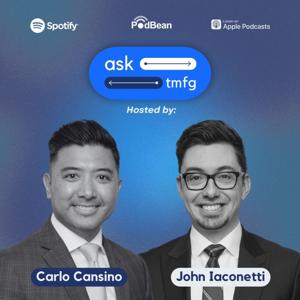
Hosted by: Carlo Cansino, Senior Financial Advisor and John Iaconetti, Financial Advisor at The McClelland Financial Group of CI Assante Wealth Management Ltd.
Follow us:
Click here to request a meeting: https://tmfg.ca/schedule/
Check the episode video on our YouTube channel: https://www.youtube.com/@TmfgCa
Facebook: https://www.facebook.com/tmfg.ca
Instagram: instagram.com/themcclellandfinancialgroup_/
Please visit www.assante.com/legal for important legal and regulatory disclosures.