
Sign up to save your podcasts
Or

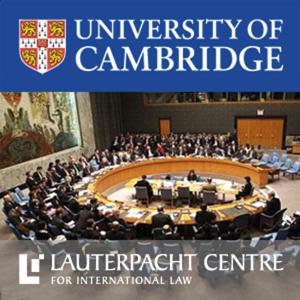

Lecture summary: Early March 1946 marked a rough midpoint in proceedings before the International Military Tribunal at Nuremberg. The prosecution had closed its case, with France and the USSR just having presented most of the trial’s eyewitnesses – two of them women. The defense opened just as Churchill gave his Iron Curtain speech. Elsewhere in Palace of Justice, personnel were going home even as others arrived, to prepare subsequent proceedings. These new ‘Nurembergers’ included more women, more people of colour, and more people who had not served in the world war then on trial. By centring such developments, this talk will offer a less-travelled account of the first international criminal trial.
An expert in international law and its subfields, including legal history and international criminal law, Diane Marie Amann has served as Regents’ Professor, Emily & Ernest Woodruff Chair in International Law, and Faculty Co-Director of the Dean Rusk International Law Center at the University of Georgia School of Law, and is an Academic Affiliate at University College London Faculty of Laws. She was Special Adviser to International Criminal Court Prosecutor Fatou Bensouda on Children in & affected by Armed Conflict, is a member of the Council on Foreign Relations, and has held leadership posts in the American and European societies of international law. Amann is writing an Oxford University Press book about lawyers and other women professionals at the first Nuremberg trial.
 View all episodes
 By LCIL, University of Cambridge

4.4
1111 ratings
Lecture summary: Early March 1946 marked a rough midpoint in proceedings before the International Military Tribunal at Nuremberg. The prosecution had closed its case, with France and the USSR just having presented most of the trial’s eyewitnesses – two of them women. The defense opened just as Churchill gave his Iron Curtain speech. Elsewhere in Palace of Justice, personnel were going home even as others arrived, to prepare subsequent proceedings. These new ‘Nurembergers’ included more women, more people of colour, and more people who had not served in the world war then on trial. By centring such developments, this talk will offer a less-travelled account of the first international criminal trial.
An expert in international law and its subfields, including legal history and international criminal law, Diane Marie Amann has served as Regents’ Professor, Emily & Ernest Woodruff Chair in International Law, and Faculty Co-Director of the Dean Rusk International Law Center at the University of Georgia School of Law, and is an Academic Affiliate at University College London Faculty of Laws. She was Special Adviser to International Criminal Court Prosecutor Fatou Bensouda on Children in & affected by Armed Conflict, is a member of the Council on Foreign Relations, and has held leadership posts in the American and European societies of international law. Amann is writing an Oxford University Press book about lawyers and other women professionals at the first Nuremberg trial.

7,913 Listeners

4,225 Listeners

4,113 Listeners

277 Listeners
155 Listeners

113,121 Listeners

24,930 Listeners
19 Listeners
5 Listeners
3 Listeners
1 Listeners
5 Listeners
17 Listeners
0 Listeners
1 Listeners

55 Listeners

684 Listeners
1 Listeners

16,525 Listeners

3,858 Listeners
496 Listeners

1,314 Listeners
1 Listeners

632 Listeners