
Sign up to save your podcasts
Or



Two small-time criminals, Bill and Sam, kidnap Johnny, the 10-year-old red-haired son of Ebenezer Dorset, an important citizen, and hold him for ransom. But the moment that they arrive at their hideout with the boy, the plan begins to unravel, as the boy actually starts to enjoy his kidnappers. Calling himself "Red Chief", the boy proceeds to drive his captors to distraction with his unrelenting chatter, malicious pranks, and demands that they play wearying games with him, such as riding 90 miles on Bill's back pretending to be an Indian scout. The criminals write a ransom letter to the boy's father, lowering the ransom from $2,000 to $1,500, believing that the father won't pay much money for his return. The father, who knows his son well and realizes how intolerable he will be to his captors and how eager they will soon be to rid themselves of the delinquent child, rejects their demand and offers to take the boy off their hands if they pay him $250. The men hand over the money and the howling boy – who had actually been happier being away from his strict father – and flee while the father restrains his son from following them. The ironic situation is where the kidnappers have to pay the father to get his son back (or in truth, to actually agree to even accept him back) instead of the father's paying the kidnappers for the return of his son.
SOMETHING WENT WRONG...AND ED FLETCHER GOT MIXED UP IN THE BIGGEST THING IN HIS LIFE. A man called the Clerk approaches a talking dog, and explains in businesslike manner that "Sector T137" is scheduled for "adjustment" at 9 o'clock. He instructs the dog to bark at exactly 8:15, which the Clerk explains will summon "A Friend with a Car", which will take real estate salesman Ed Fletcher to work before 9, but while the Clerk is preoccupied, the dog falls asleep and as a result barks a minute too late. Inside Ed's house, while he is getting ready for work, Ed is accosted by a door-to-door insurance salesman and doesn't leave for work until 9:30. Ed arrives at his office building, but upon stepping onto the curb, finds himself in a sunless version of the world where everything and everyone is immobile, ash-grey, and crumbles at his touch. Ed is accosted by white-robed men, who talk about "de-energizing" him with a hose-like piece of equipment, but he flees outside and across the street, back to the everyday world, fearing he's had a psychotic episode.
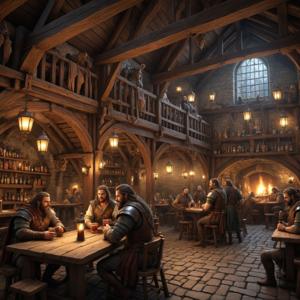
The room was large, but with a low ceiling, and at one end of the lengthy, broad apartment stood a gigantic fireplace, in which was heaped a pile of blazing logs, whose light, rather than that of several lanterns hanging from nails along the timbered walls, illuminated the faces of the twenty men who sat within. Heavy timbers, blackened with age and smoke, formed the ceiling. The long, low, diamond-paned window in the middle of the wall opposite the door, had been shuttered as completely as possible, but less care than usual was taken to prevent the light from penetrating into the darkness beyond, for the night was a stormy and tempestuous one, the rain lashing wildly against the hunting chalet, which, in its time, had seen many a merry hunting party gathered under its ample roof.
The Aluminum Dagger is one of Freeman's inverted detective stories or "locked room mysteries" featuring medical-forensic investigator, Dr. Thorndyke. It was first published in McClure's Magazine, July, 1910
adapted from Glaspell's one-act play Trifles based on a murder case she covered as a reporter for the Des Moines Daily News.
Lost Hearts was first published in 1904, featured in M.R. James' Ghost Stories of an Antiquary. This ghost story tells the tale of an orphan boy about to turn twelve, Stephen Elliott, who is sent to stay with Mr. Abney, the boy's cousin, at his remote estate in the country. He is an alchemist obsessed with his quest to acquire immortality. Young Stephen is soon haunted by mysterious apparitions.
Dutton accepted the invitation for the feeble reason that he was not quick enough at the moment to find a graceful excuse. He had none of that facile brilliance which is so useful at week-end parties; he was a big, shy, awkward man. Moreover, he disliked these great houses. They swallowed him. The solemn, formidable butlers oppressed him. He left on Sunday night when possible. This time, arriving with an hour to dress, he went upstairs to an enormous room, so full of precious things that he felt like an insignificant item in a museum corridor. He smiled disconsolately as the underling who brought up his bag began to fumble with the lock. But, instead of the sepulchral utterance he dreaded, a delicious human voice with an unmistakable brogue proceeded from the stooping figure. It was positively comforting. "It 'ull be locked, sorr, but maybe ye have the key?" And they bent together over the disreputable kit-bag, looking like a pair of ants knitting antennae on the floor of some great cave. The giant four-poster watched them contemptuously; mahogany cupboards wore an air of grave surprise; the gaping, open fireplace alone could have swallowed all his easels—almost, indeed, his little studio. This human, Irish presence was distinctly consoling—some extra hand or other, thought Dutton, probably.
He talked a little with the lad; then, lighting a cigarette, he watched him put the clothes away in the capacious cupboards, noticing in particular how neat and careful he was with the little things. Nail-scissors, silver stud-box, metal shoe-horn, and safety razor, even the bright cigar-cutter and pencil-sharpener collected loose from the bottom of the bag—all these he placed in a row upon the dressing-table with the glass top, and seemed never to have done with it. He kept coming back to rearrange and put a final touch, lingering over them absurdly. Dutton watched him with amusement, then surprise, finally with exasperation. Would he never go? "Thank you," he said at last; "that will do. I'll dress now. What time is dinner?" The lad told him, but still lingered, evidently anxious to say more. "Everything's out, I think," repeated Dutton impatiently; "all the loose things, I mean?" The face at once turned eagerly. What mischievous Irish eyes he had, to be sure! "I've put thim all together in a row, sorr, so that ye'll not be missing anny-thing at all," was the quick reply, as he pointed to the ridiculous collection of little articles, and even darted back to finger them again. He counted them one by one. And then suddenly he added, with a touch of personal interest that was not familiarity, "It's so easy, ye see, sorr, to lose thim small bright things in this great room." And he was gone.
The circumstances I am about to relate to you have truth to recommend them. They happened to myself, and my recollection of them is as vivid as if they had taken place only yesterday. Twenty years, however, have gone by since that night. During those twenty years I have told the story to but one other person. I tell it now with a reluctance which I find it difficult to overcome. All I entreat, meanwhile, is that you will abstain from forcing your own conclusions upon me. I want nothing explained away. I desire no arguments. My mind on this subject is quite made up, and, having the testimony of my own senses to rely upon, I prefer to abide by it. Well! It was just twenty years ago, and within a day or two of the end of the grouse season. I had been out all day with my gun, and had had no sport to speak of. The wind was due east; the month, December; the place, a bleak wide moor in the far north of England. And I had lost my way. It was not a pleasant place in which to lose one's way, with the first feathery flakes of a coming snowstorm just fluttering down upon the heather, and the leaden evening closing in all around. I shaded my eyes with my hand, and staled anxiously into the gathering darkness, where the purple moorland melted into a range of low hills, some ten or twelve miles distant. Not the faintest smoke-wreath, not the tiniest cultivated patch, or fence, or sheep-track, met my eyes in any direction. There was nothing for it but to walk on, and take my chance of finding what shelter I could, by the way. So I shouldered my gun again, and pushed wearily forward; for I had been on foot since an hour after daybreak, and had eaten nothing since breakfast.
Widely regarded by ghost story buffs as one of the most terrifying stories published in English, it's a vivid depiction of dread and waking nightmares. Three years ago I was on my way out to the East, and as an extra day in London was of some importance, I took the Friday evening mail-train to Brindisi instead of the usual Thursday morning Marseilles express. Many people shrink from the long forty-eight-hour train journey through Europe, and the subsequent rush across the Mediterranean on the nineteen-knot Isis or Osiris; but there is really very little discomfort on either the train or the mail-boat, and unless there is actually nothing for me to do, I always like to save the extra day and a half in London before I say goodbye to her for one of my longer tramps.
The Wood of the Dead is a short story written by Algernon Blackwood. It was first published in the 1906 collection The Empty House and Other Ghost Stories. One summer, in my wanderings with a knapsack, I was at luncheon in the room of a wayside inn in the western country, when the door opened and there entered an old rustic, who crossed close to my end of the table and sat himself down very quietly in the seat by the bow window. We exchanged glances, or, properly speaking, nods, for at the moment I did not actually raise my eyes to his face, so concerned was I with the important business of satisfying an appetite gained by tramping twelve miles over a difficult country. The fine warm rain of seven o'clock, which had since risen in a kind of luminous mist about the tree tops, now floated far overhead in a deep blue sky, and the day was settling down into a blaze of golden light. It was one of those days peculiar to Somerset and North Devon, when the orchards shine and the meadows seem to add a radiance of their own, so brilliantly soft are the colourings of grass and foliage. The inn-keeper's daughter, a little maiden with a simple country loveliness, presently entered with a foaming pewter mug, enquired after my welfare, and went out again. Apparently she had not noticed the old man sitting in the settle by the bow window, nor had he, for his part, so much as once turned his head in our direction.
From the publisher's feed

2,584 Listeners

322 Listeners