
Sign up to save your podcasts
Or

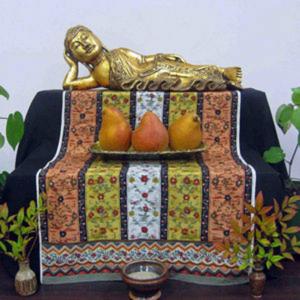


The three fruits of Zen practice are, 1. joriki or concentration, 2. kensho, or seeing your True Nature and 3. mujo do no taigen, or embodiment of the peerless way.
Source: Ruben Habito's Foreword to The Flowing Bridge by Elaine MacInnes, Wisdom 2007.
More from the Shobogenzo Zuimonki on effort.
Source: A Primer of Soto Zen translated by Reiho Masunaga.
Dōgen's Fukan Zazengi, "General Recommendations for Doing Zazen"
Source: How to Raise an Ox by Francis Dojun Cook.
Dōgen's talks from the Eihei Kōruku, Part Two.
Sources: Dōgen's Extensive Record: Eihei Kōroku translated by Taigen Dan Leighton and Shohaku Okumura, and The Art of Just Sitting edited by John Daido Loori.
Dōgen's talks from the Eihei Kōruku, Part One.
Source: Dōgen's Extensive Record: Eihei Kōroku translated by Taigen Dan Leighton and Shohaku Okumura.
Dōgen's early life.
Source: Zen Master Dōgen - An Introduction with Selected Writings by Yūhō Yokoi with Daizen Victoria.
Looking at all ten cardinal precepts from the angle of Bodhidharma's One Mind teachings.
Source(s): Invoking Reality by John Daido Loori.
This is the second in a series of koans centred on the natural world. The koan is Case 37 in the Mumonkan, Zhaozhou's Cypress Tree in the Courtyard.
Sources: Pilgrim at Tinker's Creek by Annie Dillard and Two Zen Classics by Katsuki Sekida.
Not-self is the third of the Three Marks of Existence, and is also referred to as emptiness of self, or just Emptiness. It can be understood intellectually when examined through the lenses of impermanence and dependent co-arising. It can also be directly experienced when we forget ourself.
Sources: There is No Suffering by Master Sheng Yen, Dharma Drum 2001, and What makes you not a Buddhist, by Dzongsar Jamyang Khyentse, Shambhala 2008.
From the publisher's feed

72 Listeners