
Sign up to save your podcasts
Or

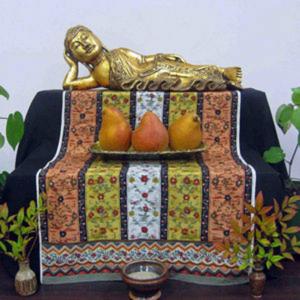


Adrian Croucher gives a dharma talk on grief and Zen, drawing on a range of sources and his own recent experiences after the loss of his father.
References:
Domyo Burk, "Grief in Buddhism", Zen Studies Podcast, May 2020 (two parts):
https://zenstudiespodcast.com/grief-in-buddhism-1/
Lucy Hone, "Resilient Grieving - How to Find Your Way Through Devastating Loss", Allen and Unwin, 2023.
In this teisho we explore the different meanings of "I don't know", which are the three most famous words in Zen.
What is the receiving- the-precepts, or Jukai, ceremony and why do we participate in it?
Main Source: Invoking Reality, moral and ethical teachings of Zen by John Daido Loori, Shambhala 2007.
Richard-sensei's teisho on the koan "Linji's Great Enlightenment". The teisho also looks at the use of the kyosaku, the encouragement stick, in Zen.
Main references:
Zen's Chinese Heritage by Andy Ferguson.
Description: To die the Great Death means letting go of everything, even our precious awakening experience. We go up the pole to free ourselves of the three poisons, but then we leap back down into the world of duality and suffering to help others to liberate themselves. A Zen master said, "Zen training is preparation for life in the world, not the goal of life in the world."
Sources: Awakening to Zen, Roshi Philip Kapleau; Zen's Chinese Heritage, Andy Fergusson; Two Zen Classics, Katsuki Sekida; The Gateless Barrier, Zenkei Shibayama; Passing Through the Gateless Barrier, Guo Gu.
Texts:
Urs App, Master Yunmen
Master Sheng-yen, The Sword of Wisdom.
Description: According to the Avatamsaka (Huayen) Sutra the Buddha proclaimed at his great awakening that all beings are endowed with wisdom and virtue. Why then do we cause so much suffering for others and ourselves?
Source: The Book of Equanimity by Jerry Shishin Wick.
Description: The third of Master Hui Neng's antidotes for attachment. Having the courage to be open and vulnerable and making peace with not being in control, are skilful strategies in an impermanent world.
Main text: Flowers Fall: A Commentary on Zen Master Dogen's Genjokoan translated by Paul Jaffe.
Description: Master Hui Neng's antidotes to our attachment to our inner world, outer relationships and identity.
Source: Silent Illumination by Guo Gu.
From the publisher's feed

72 Listeners