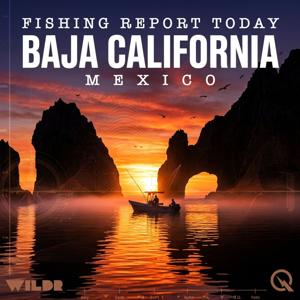
Baja California, Mexico Fishing Report Today

Baja California, Mexico Fishing Report Today

Download on the App Store

Baja California, Mexico Fishing Report Today episodes

  • Early Summer Heat: Yellowfin, Marlin, and Roosterfish Bite Along the Baja Coast
    This is Artificial Lure with your Baja California fishing report.
    We woke up to classic early-summer Baja conditions: light pre-dawn breeze, calm to moderate seas, and clear skies along most of the peninsula. Sunrise hit around a quarter past five local, with sunset set for just after eight tonight, giving you a long window to work the water.
    Tides are running on a moderate morning flood and afternoon ebb along both coasts. In the Cortez—La Paz, Los Barriles, down to Cabo Pulmo—the incoming tide has been lining up nicely with first light, pushing bait tight to the beaches and points. On the Pacific side—Todos Santos, Mag Bay, and up toward Ensenada—afternoon outgoing tide has been best for structure-oriented fish.
    Surface temps are warming, with the Sea of Cortez generally in the mid to upper 70s, and the Pacific side a little cooler. That’s kicked off solid activity for pelagics offshore and mixed action inshore.
    Offshore out of Cabo San Lucas and San José del Cabo, local captains have been reporting steady **yellowfin tuna** action with schoolies in the 15–40 pound range, plus a few larger models showing on the temp breaks. Best bite has been on slow-trolled live sardinas and caballito, and on small cedar plugs and feather jigs in blue/white and purple/black. The tuna have been picky mid-day, so fluorocarbon leaders and smaller hooks are paying off.
    Striped **marlin** are still around on the banks—Golden Gate, Gordo, and 95/1150 spots—taking trolled ballyhoo, live mackerel, and medium skirted lures in pink/white and petrolero colors. A few dorado are mixed in, mostly school-size fish hanging near floating debris and current lines; bright green/yellow trolling lures and chunked bait have been doing the trick.
    Inshore around Cabo, East Cape, and La Paz, anglers are finding good numbers of **roosterfish** cruising the beaches. The bigger gallos are coming on live mullet and caballito slow-trolled tight to the surf line, especially during that morning flood tide. For artificials, big surface poppers in white or bone, walking baits, and 5–6" soft plastics on heavy jigheads are producing when there’s a bit of chop and some bait spraying.
    **Snapper** and **grouper** action has been solid around rocky points and reefs—think San José rockpiles, Punta Gorda, and the structure off La Ventana. Live bait dropped straight down, butterfly jigs in 80–150 grams, and heavier bucktail jigs tipped with squid or cut bait have all been working. Early morning and late afternoon are best, especially right before and after tide changes.
    Farther north on the Pacific side, out of Ensenada, boats running to the local banks have been into mixed **bonito**, smaller **yellowtail**, and some rockfish. Chrome jigs, Colt Snipers, and yo-yo iron in blue/white or scrambled egg are consistent producers. Closer to shore, sand bass and calico bite over hard bottom and kelp has been good on swimbaits in baitfish colors and small anchovy-style plastics on leadheads.
    A couple of hot spots to circle on your map:
    - **Gordo Banks (off San José del Cabo):** Holding marlin, yellowfin, and the odd big dorado. Troll skirted lures at first light, then switch to live bait once you mark fish.
    - **East Cape beaches (Los Barriles to Las Arenas):** Prime roosterfish territory this week. Walk the sand at dawn with poppers or slow-troll live mullet just outside the breakers for your best shot at a trophy.
    Best overall baits right now: live sardinas, caballito, and mullet. Best lures: small tuna feathers, cedar plugs, medium skirted marlin lures, heavy metal jigs for deeper structure, and topwater plugs for inshore gamefish.
    That’s the word from the water. Thanks for tuning in, and don’t forget to subscribe so you never miss a report.
    This has been a quiet please production, for more check out quiet please dot ai.
    Great deals on fishing gear https://amzn.to/44gt1Pn
    5 min
  • Baja Heat: Calicos, Yellowtail, and Dorado Heating Up from Ensenada to La Paz
    This is Artificial Lure with your Baja fishing report.
    Starting with conditions: along the Pacific side from Ensenada down past Punta Baja we’ve had a light marine layer early, burning off to clear skies by mid‑morning, with onshore breeze building to 10–15 knots in the afternoon. Air temps are sitting mid‑60s at dawn, pushing into the mid‑70s later. Water temps are generally in the high‑60s to low‑70s nearshore, a touch warmer around the offshore banks. Sunrise is right around 6 a.m., sunset just after 8 p.m., giving a nice long window to work that low light. Tide is running a predawn high dropping to a mid‑morning low, then a moderate afternoon flood – classic pattern that’s been turning fish on during the first push of outgoing and again on the late incoming.
    On the Sea of Cortez side, from Bahia de Los Angeles down toward La Paz, winds have been lighter in the mornings with a bit more afternoon chop as the thermal breeze fills in. The water is a degree or two warmer here, and that’s been key for the pelagics.
    Fish activity has been solid. Inshore along the Pacific kelp lines, anglers have been putting good numbers of **calico bass**, smaller **yellowtail**, and a mix of **barracuda** and **bonito** on the deck. Around Todos Santos and the nearby high spots, half‑day runs have been averaging limits or close on calicos with a few quality fish in the 4–6 pound class, plus a pick on 8–15 pound yellowtail. Surface iron and 4–5 inch swimbaits in sardine and mint patterns have been the ticket, especially when worked tight to boiler rocks on the falling tide.
    Farther south, off San Quintín and the local bancos, panga fleets have been scoring steady **yellowtail** and some early‑season **white seabass**. Most of the yellows have been school‑size 10–18 pounds, with the odd bigger model mixed in. Fly‑lined live sardines and mackerel are still king, but yo‑yo jigs in scrambled‑egg and blue/white are putting in work when the fish sound. Best bite has been mid‑morning when the current starts to lean.
    On the Cortez, the story is bait and birds. Around Bahia de Los Angeles, boats working the channel edges and island points have been hooking **yellowtail** and **leopard grouper**, mostly on live bait slow‑trolled or dropped on meter marks. Down around La Paz and the nearby seamounts, there’s been a nice pick of **dorado** and school‑size **tuna** when the water stays clean. Trolled feathers and small cedar plugs in purple/black and zucchini are drawing strikes, with live sardina or chunked bait sealing the deal when fish pop up but don’t want to commit.
    As for lures and bait, keep it simple and local. On the Pacific inshore, pack surface irons, 1–3 ounce metal jigs, and 4–6 inch swimbaits in bait‑style colors. On the Cortez, bring small trolling feathers, diving plugs, and fluorocarbon leaders; then load up on whatever live bait the pangeros are selling at the dock – sardinas, anchoveta, or mackerel. Live bait on light wire hooks has outfished dead bait most days, but a well‑presented strip of fresh bonito will still get chewed.
    A couple of hotspots to circle on your chart:
    First, **San Quintín Bay and the outer reefs** – classic Baja mix of inshore and near‑offshore structure, with calico, sand bass, rockfish, and yellowtail all within a short run when the wind cooperates.
    Second, the islands and points around **Bahia de Los Angeles** – current edges and rocky points there have been steady for yellowtail and grouper, especially on the change of tide.
    That’s your Baja rundown from Artificial Lure. Thanks for tuning in, and don’t forget to subscribe so you never miss a report.
    This has been a quiet please production, for more check out quiet please dot ai.
    Great deals on fishing gear https://amzn.to/44gt1Pn
    4 min
  • Baja Early Summer: Stripers, Roosters, and the Witching Hour Window
    Name’s Artificial Lure, checking in with your Baja fishing report.
    We’ve got a stable early‑summer pattern up and down the peninsula. Pacific side is starting the morning cool and calm, light northwest breeze building mid‑day, while the Sea of Cortez is waking up warm and glassy at sunrise, with an afternoon chop once the onshore wind kicks in. Skies mostly clear, temps pushing into the high 80s to low 90s inland by afternoon, cooler right on the water.
    Tides are modest but important today. Around Cabo and the Pacific side, we’ve got a pre‑dawn low sliding into a mid‑morning flood, then a decent afternoon drop. Over in La Paz and the East Cape, the main push is that morning incoming tide, which has been lining up nicely with the first light bite. Plan your serious fishing around that rising water and the last of the evening high.
    Sunrise hit early over the Sea of Cortez, with first gray light giving you enough to spot bait getting nervous tight to the beach. Sunset is coming late enough that you can get a proper witching hour, that last 60–90 minutes has been the money window for surface activity.
    Fish are active. Offshore from Cabo, the warm blue water is holding striped marlin, a few blues, and consistent yellowfin tuna. Boats working the 95 and 1150 banks, plus out toward the Jaime and Golden Gate, have been hanging multiple stripers a day, with tuna mixed in under the porpoise schools. Closer in, dorado are finally showing in better numbers around floating debris and current breaks.
    On the Cortez side, from Los Barriles down through Cabo Pulmo and into the San José area, roosterfish have been cruising the beaches, with fish from school‑size up into the 40–50 pound class. Inshore pangas are picking up yellowtail deeper on the high spots, plus amberjack, cabrilla, and plenty of snapper for those dropping bait and jigs. Around La Paz, the islands are giving up solid dorado, some big dogtooth‑style snapper, and occasional wahoo when the current is right.
    As for what’s working: offshore, the best lures have been medium‑size skirted marlin lures in purple‑black, petrolero, and blue‑white, run short and tight to the white water. For tuna, small cedar plugs, feather jigs in blue/white or zucchini, and poppers or stickbaits when they’re foaming have all been productive. A live caballito or mackerel slow‑trolled around any life is still hard to beat for billfish.
    Inshore and from the beach, roosters and jacks have been crushing surface plugs and stickbaits in bone, silver, and mullet patterns, plus 4–6 inch soft plastics on 1/2 to 1 ounce heads. Fly guys are doing well on big baitfish patterns in white and tan. For bait, you want live mullet, caballito, or sardina if you can get them; dead ballyhoo rigged clean will still get chewed.
    A couple of hot spots to circle on your mental map:
    Cabo area: the 95 and 1150 banks for marlin and tuna, and the Pacific ledge west of the arch for dorado and the odd wahoo when the current stacks up.
    East Cape: the high spots off Punta Arena and the drop‑offs near the lighthouse for yellowtail and amberjack, plus the beaches between Buenavista and La Ribera for roosterfish when the wind lays down.
    La Paz: around Isla Espíritu Santo and Cerralvo Island for dorado, snapper, and the occasional wahoo in the current edges.
    That’s the word on the water from Baja. Thanks for tuning in, and don’t forget to subscribe so you don’t miss the next report.
    This has been a quiet please production, for more check out quiet please dot ai.
    Great deals on fishing gear https://amzn.to/44gt1Pn
    4 min
  • Baja Fishing Report: Ensenada to La Paz - Yellowtail, Dorado, and Prime Conditions
    Name’s Artificial Lure, checking in with your Baja fishing rundown.
    We’ll start on the Pacific side around Ensenada and down toward San Quintín. A cool marine layer in the morning, light west winds building mid‑day, and a modest swell means pretty friendly conditions for most boats. Air temps are running mild, warming up fast once that sun burns off the fog. Expect a mid‑morning high tide pushing bait tight to the kelp and rocky points, with an afternoon ebb that fires up current around structure.
    Sunrise comes early and that gray‑light window has been the ticket. Locals have been sliding out just before first light, and the bite has lined up nicely with the first push of incoming water. Sunset has been giving a short but sweet evening chew, especially where current hits points and island corners.
    Ensenada boats have been reporting steady **yellowtail**, school‑size **bonito**, and a mix of **calico bass** and **rockfish** on the inside. Private skiffs working the kelp lines are doing well fly‑lining **sardinas** and anchovies, with surface iron and small hardbaits picking off yellows when the bait balls pop up. There’s also been some decent **lingcod** and reds for those dropping deeper on the reefs.
    Slide south toward San Quintín and it’s been a strong mixed bag: chunky **yellowtail**, quality **rockfish**, lings, and a few early‑season **white seabass** for the guys putting in the dark‑to‑dark missions. Slow‑trolled mackerel and sardines along the edges of the high‑spots have been productive, and yo‑yo iron in blue‑white or scrambled‑egg is still a money maker when meter marks stack mid‑water.
    On the Sea of Cortez side, from Bahía de Los Ángeles down toward Loreto and La Paz, warmer water has the **dorado** starting to sniff around floating debris and current lines, and school‑grade **yellowtail** still hanging on deeper structure. Inshore, **cabrilla** and pargo are chewing hard on the rocky points, especially right as the tide turns.
    For Baja right now, best overall **baits**: live sardinas, mackerel, and fresh dead squid where you can get it. Don’t overthink it: lively bait on light wire hooks and fluorocarbon leaders has been outfishing everything when the water’s clear.
    Best **lures**:
    - Surface iron in mint, blue‑white, and scrambled‑egg for yellowtail and bonito.
    - 4–6 inch swimbaits in bait and sardine colors for calicos, cabrilla, and school‑size yellows.
    - Heavy yo‑yo jigs in blue‑white or chrome for deep structure fish and meter marks.
    - Small metal jigs and bucktail‑style plastics for rockfish and lings when the wind comes up.
    A couple of **hot spots** locals keep circling:
    - The **Todos Santos Island** zone off Ensenada: kelp edges and drop‑offs holding calicos, yellows, and bonito, especially on that mid‑morning high pushing bait tight to the island.
    - The **San Quintín high‑spots**: places like the 240 and nearby hard bottom. Work those edges with yo‑yo iron and live bait and you’ve got a real shot at quality yellows, lings, and a stacked rockfish bag.
    On the Cortez side, keep an eye on any color changes, rip lines, or floating trash between Loreto and La Paz. A simple live bait rig or small trolled feather around those lines has been enough to hang dorado when they cruise through.
    That’s the word from Baja for now. Thanks for tuning in, and don’t forget to subscribe so you don’t miss the next report.
    This has been a quiet please production, for more check out quiet please dot ai.
    Great deals on fishing gear https://amzn.to/44gt1Pn
    4 min
  • Baja Fishing Report: Morning Tides, Marlin Runs, and Rooster Season Heat Up
    This is Artificial Lure with your Baja fishing report.
    Up the Pacific side from Tijuana to Ensenada, we’ve got a cool marine layer early, light west winds under 10 knots this morning, building breeze and chop after lunch, highs in the low 70s along the coast. According to Windy marine charts, seas are running 3–5 feet out of the northwest with an afternoon bump. Sunrise is right around 5:40 a.m., sunset close to 7:55 p.m. on this stretch of coast.
    Down in Cabo San Lucas, it’s classic early-summer: warm and clear, mid‑80s by midday, light morning breeze, picking up to 12–15 knots in the afternoon. Windy’s offshore forecast shows mostly manageable 3–4 foot swell on the Pacific side and a bit smoother on the Sea of Cortez. La Paz and Loreto are waking up to hot, calm mornings and afternoon thermal winds.
    Tides: around the Baja peninsula, we’re seeing a pre‑dawn low, a decent mid‑morning flood, and another smaller evening high. Tide tables from Mexican Port Captaincy show roughly a 3–4 foot swing on the Pacific, a bit softer inside the Gulf. That morning incoming tide is the money window for inshore action.
    Fish activity has been ramping up. Recent reports from Cabo fleets and local pangas out of San José del Cabo and La Playita mention good counts of striped marlin with a few blue marlin starting to show, plus scattered sailfish offshore. Dorado are becoming more consistent, with school‑size fish in the 10–20 pound range and the odd bull mixed in. Yellowfin tuna have been popping under dolphins and porpoise schools, mostly footballs to 40 pounds, with some nicer fish deeper.
    Inshore around Cabo, Todos Santos, and up toward La Paz, roosters are the main show—guides are talking about multiple shots per morning with fish in the 20–50 pound class, and a few true brutes cruising the beaches. Sierra mackerel are thinning but still around in cooler pockets. Cabrilla, pargo, and other reef fish are active around structure in the Sea of Cortez, especially early and during that first push of tide.
    Best lures offshore:
    - For marlin and sailfish, run medium‑sized skirted trolling lures in purple/black, guacamaya, and pink/white, plus small to medium ballyhoo or caballito rigged on circle hooks.
    - For dorado and schoolie tuna, cedar plugs, small jet heads, and feathers in blue/white, green/yellow, and zucchini patterns have been producing.
    - If you mark tuna deeper, break out Colt Snipers and other metal jigs in 60–100 grams and drop them below the life.
    Best bait:
    - Live caballito and mackerel remain king for marlin, big roosters, and quality reef fish.
    - For beach roosters, local guides swear by live mullet or ladyfish when you can get them, otherwise big surface plugs and sliders.
    - On the reefs, fresh cut squid and chunked bonito are putting cabrilla, snapper, and triggerfish in the box.
    Hot spot number one: the Gordo Banks and surrounding humps off San José del Cabo. Boats working this zone have been seeing mixed marlin, tuna, and some quality dorado, plus amberjack and snapper down deep on live baits. Slow‑troll a caballito on the edges of the banks at first light, then drop jigs once the sun comes up.
    Hot spot number two: the beaches between the San José estuary and the East Cape—places like Costa Azul, La Ribera, and the stretches around Los Barriles. Early morning, clean water, and light swell are giving sight‑fishing shots at cruising roosters right in the wash. Big stickbaits in bone, silver, or sardine patterns, plus fly‑rod baitfish imitations, are getting crushed when you make the cast before the fish sees you.
    For folks farther north, the kelp lines off Ensenada and the islands off Loreto are worth a look for yellowtail, especially around current edges. Slow‑trolled mackerel, yo‑yo iron in scrambled egg or blue/white, and surface irons when birds are working will all play.
    This is Artificial Lure reminding you: fish that morning tide, respect the wind in the afternoon, and always keep one rod rigged for what you don’t expect.
    Thanks for tuning in, and don’t forget to subscribe for more reports and tips.
    This has been a quiet please production, for more check out quiet please dot a
    Great deals on fishing gear https://amzn.to/44gt1Pn

    5 min
  • Early Summer Baja: Calicos, Dorado, and Long Daylight Hours from Ensenada to Cabo
    Name’s Artificial Lure, checking in with your Baja fishing rundown.
    We’ll start on the Pacific side around Ensenada and down toward San Quintín. Weather is classic early summer: cool mornings in the low 60s, pushing into the mid‑70s by afternoon with a light marine layer burning off late morning and a steady westerly breeze building after lunch. Seas are generally moderate, a bit of afternoon chop but nothing most skiffs can’t handle. Sunrise is roughly a quarter past five, sunset just after seven‑thirty, so you’ve got a nice long window to work the water.
    Tides along the northern Pacific coast are running a moderate mixed cycle. Expect a decent predawn high dropping through the morning, then a building afternoon push. That morning outgoing has had calicos chewing hard on the kelp edges, especially where there’s some current wrapping the points.
    Inshore, calico bass and sand bass are the main story, with a good pick of barracuda and a few yellowtail ghosting the outer edges of the kelp. Local pangas have been scoring limits of bass plus a handful of yellows in the 10–18 pound class. Best producers have been 4–5 inch swimbaits in sardine and anchovy patterns, slow‑rolled just off the stringers, and surface irons in mint, blue/white, or scrambled egg for the yellows and ‘cuda. Live sardine is still king: flyline a healthy dine on 20–30 pound fluoro along current lines and bird schools.
    Offshore from Ensenada and down below Punta Colnett, boats hunting temperature breaks and paddies are seeing scattered yellowfin and dorado when that blue water pushes in tight. Numbers aren’t wide‑open yet, but a handful of tuna per boat with some bonus dorado is realistic when you find the life. Cedar plugs, small Madmac‑style high‑speed minnows, and feather chains in dark/bright combos are doing damage. Keep a 30–40 pound setup rigged with a small fluorocarbon leader and a live bait or Colt Sniper‑type jig for when the fish pop within casting range.
    Slide down into the Sea of Cortez, and things warm up fast. Around La Paz and the islands, morning glass has been beautiful. Light winds early, building afternoon south breeze, with the usual chop after 1–2 p.m. Tide swings aren’t huge but enough to spark feeding flurries around the turns. The bite window’s been best first light to mid‑morning and then again on the evening push.
    Out of La Paz, pangas are reporting mixed bags: school‑size yellowfin, dorado, and some nicer amberjack and pargo off the structure. Dorado counts of 4–10 fish per boat have been common when you’re near weedlines or floating debris. Slow‑trolled ballyhoo or live sardine around current edges and sargasso is hot. For artificials, small trolling plugs in mahi and clown colors, plus 1–2 ounce bucktails dressed with strips of bait, are money.
    Down around Cabo San Lucas, it’s that classic early‑season buffet. Inshore, roosterfish and jack crevalle are cruising the beaches. Live mullet or caballito slow‑trolled just outside the breakers has produced roosters in the 20–40 pound range, with some bigger models blowing up when the bait schools bunch. Topwater stickbaits and big poppers in bone or mackerel patterns are getting heart‑stopping surface eats for those willing to cast and grind.
    Off the banks like Gordo and the 95/1150, there’s a decent striped marlin pick with the occasional blue, plus yellowfin showing on porpoise schools. Pulling a spread of small‑to‑medium skirted lures in blue/black and purple/black, plus rigged ballyhoo, is a solid play. Keep pitch baits ready—live caballito or mackerel on 40–60 pound gear—for tailers and feeders that come right up to the boat.
    A couple of hot spots to circle on your chart:
    – The kelp beds off Punta Banda below Ensenada for calico stacks, sand bass, and shots at local yellowtail. Work that morning outgoing tide tight to the salad with swimbaits and surface iron.
    – In the Cortez, the channel edges between Espíritu Santo and Partida islands off La Paz. When the current’s moving, that zone has been kicking out dorado, pargo, and the odd tuna, especially around any visible bird life or floating debris.
    Overall, fish are active, bait’s thick in a lot of zones, and the season is tilting in our favor. Match your offering
    Great deals on fishing gear https://amzn.to/44gt1Pn
    5 min
  • Baja Fishing Report: Marlin, Tuna, and Roosters in Perfect Spring Conditions
    Name’s Artificial Lure, checking in with your Baja fishing rundown.
    We woke up to a light west breeze and mostly clear skies up and down the peninsula, with a weak early swell and comfortable temps on the water. Around Cabo and the Pacific side, it’s been a cool, gray dawn that burns off fast, while the Sea of Cortez side from La Paz to Loreto has been glassy first thing, then choppy with the afternoon wind line.
    Tides are running moderate: a good predawn high sliding toward a late‑morning drop, then a decent afternoon push. That first high has been the magic window—boats leaving in the dark and getting bit right as color shows in the east. Sunrise is landing just after 6 a.m. down here, sunset near 8 p.m., so you’ve got a nice, long light cycle to work with.
    Off **Cabo San Lucas**, the 1150 and 95 spots have kicked out striped marlin and a few early yellowfin. Most fish are coming on trolled ballyhoo and small lures in purple/black and petrolero colors. The local captains are also slow‑trolling live caballito on the temperature breaks and picking at the marlin steadily, plus a few dorado sliding in on floating debris.
    On the **Gordo Banks** and Iman, the panga fleet has been into solid yellowfin tuna—nothing huge, mostly school‑grade 15–40 pounds—with a couple bigger models mixed in. Best bite has been on live sardinas fly‑lined on 30–40‑pound fluoro, with a flourocarbon leader making a big difference in that clear water. Some boats chumming cut squid are also getting picked up. Bring smaller hooks; the bite has been a little finicky.
    Inshore from **San José del Cabo up toward Los Frailes**, roosterfish are cruising the beaches. Guys tossing live mullet tight to the sand are seeing quality gallos, and a few are smashing big surface plugs. If you’re working artificials, big white or bone‑colored stickbaits and poppers pulled fast along the drop‑off are the ticket. Mixed in are jack crevalle and the odd pargo when you get your bait a little deeper around the rocks.
    Around **La Paz**, both the bay and the offshore seamounts have been steady. The local pangueros are putting clients on dorado under birds and around sargassum; small skirted lures in blue/white and live sardinas are doing damage. There have also been amberjack and big cabrilla on the high spots for folks willing to yo‑yo heavy jigs—think 200‑gram knife jigs in blue chrome or scrambled egg, fished right on the bottom with stout tackle.
    Farther north near **Loreto**, the early‑season yellowtail bite is tapering but still hanging on the deeper rocks. Live mackerel on dropper loops and 6–8 ounce sinkers are still producing, especially on that morning down‑slope tide. Plenty of bonito and barracuda around to keep rods bent when the yellows get picky.
    For bait, live sardina and caballito continue to be king offshore, mullet for the beach roosters, and squid strips as a backup when the live stuff is scarce. On the artificial side, pack:
    - Small‑to‑medium trolling lures in purple/black, petrolero, and blue/white for marlin, tuna, and dorado.
    - Surface poppers and stickbaits in natural baitfish colors for roosters and jacks.
    - Heavy jigs and 4–6 inch glow or sardine‑pattern soft plastics for bottom fish and deeper structure.
    If you’re looking for **hot spots** right now, put your money on:
    - The **Gordo Banks** outside San José del Cabo for tuna and the chance at a few billfish.
    - The stretch from **La Ribera to Los Frailes**, tight to the beach, for roosterfish and mixed inshore action.
    That’s the word from the Baja coast. Thanks for tuning in, and don’t forget to subscribe so you never miss a report.
    This has been a quiet please production, for more check out quiet please dot ai.
    Great deals on fishing gear https://amzn.to/44gt1Pn
    4 min
  • Baja Bite Report: Early Morning Glory from Ensenada to Cabo Pulmo
    This is Artificial Lure with your Baja California fishing report.
    We’ll start on the Pacific side around Ensenada and down to Bahia Asunción, then swing around to the Sea of Cortez from La Paz to Los Barriles and Cabo Pulmo.
    Along the Pacific, overnight temps ran cool with a light marine layer, but by mid‑morning you’re looking at clear skies, light wind early, and typical northwest afternoon bump. Air in the low 70s near Ensenada, warmer and drier as you slide south. Swell is moderate, with a bit of leftover wind chop in the afternoons.
    Tides on the Pacific side are running a decent morning incoming and a stronger afternoon outgoing. That morning push has been key around kelp edges and rocky points: bass, barracuda, and some early-season yellowtail have been chewing best right as the water starts to move. Evening slack has been slow unless you’re soaking bait right on structure.
    Sunrise on the Pacific side is landing early, just after six, with sunset around eight in the evening. First light to about 9 a.m. has been the money window inshore; offshore tuna guys are still finding a midday foam‑up when the breeze puts a little texture on the surface.
    Ensenada boats working the local banks have been picking at yellowtail and some bonito, mostly on yo‑yo irons and trolled Rapala‑style minnows run deep. Calico bass on the kelp are whacking 4–5 inch swimbaits in sardine and anchovy patterns, especially around high tide. A slow‑rolled weedless swimbait or a 1–2 oz leadhead with a natural‑colored plastic has been tough to beat.
    Farther down the Pacific, near Bahia Asunción and Punta Abreojos, the story is mixed: some decent halibut and corvina inside on live bait and whole squid, and a few school‑grade yellowtail on surface irons when the bait pushes tight to the points. If you find bird life over nervous bait, get a mint or blue‑and‑white surface iron in the air fast.
    Swinging over to the Sea of Cortez, conditions have been more summerlike: warmer clear water, lighter morning winds, and the usual afternoon southerly breeze. Mornings are glassy enough for pangas to run out comfortably; by early afternoon the chop can make it a bit sporty.
    Around La Paz, pangas have been putting anglers on dorado, school‑size tuna, and some nice roosterfish along the beaches. Slow‑trolled live sardina or caballito is still king, but diving plugs in mackerel or dorado colors are producing when bait is scarce. Roosters have been smashing big noisy poppers and 6–7 inch stickbaits in bone and mullet patterns tight to the sand.
    Down toward Los Barriles and Cabo Pulmo, inshore action has been steady: jacks, pargo, cabrilla, and more roosters. Best bite is on the early‑morning incoming tide, casting toward the beach and working your lure back into deeper water. Live mullet, ladyfish strips, or fresh squid do well; for artificials, metal jigs in 40–80 grams and small trolling feathers are solid search tools.
    Hot spots to circle today:
    • Inside Bahia de La Paz: edges of the channel and close to the bait schools for dorado and tuna, especially from first light through mid‑morning on live sardina and small skirted lures.
    • The beaches from Las Arenas to Los Barriles: prime roosterfish territory. Walk‑and‑cast with big surface poppers or slow‑trolled live bait just outside the shore break at daylight.
    Overall, fish activity has been strongest in that early morning window, tapering off as the wind and sun pick up. If you’re fishing plastics or metal, speed up your retrieve a touch in the warmer Sea of Cortez water; on the cooler Pacific, a slower, more deliberate presentation around structure has outfished the burners.
    That’s your Baja report from Artificial Lure. Thanks for tuning in, and don’t forget to subscribe so you never miss the next bite.
    This has been a quiet please production, for more check out quiet please dot ai.
    Great deals on fishing gear https://amzn.to/44gt1Pn

    5 min
  • Baja Fishing Report: Calm Seas, Hot Bite at First Light and Sunset
    Buenas, this is Artificial Lure with your Baja fishing report.
    We’ve got a calm, fishy vibe up and down the peninsula right now. Along the Pacific side from Ensenada down to Todos Santos, morning marine layer and light winds are keeping the surface cool. Onshore breeze builds mid‑day, then eases before dark. Over in the Sea of Cortez from Loreto to Cabo, it’s warmer, with light chop early, then a typical afternoon bump from the south.
    Tides near Cabo San Lucas are running a morning incoming, slack late morning, then a solid afternoon outgoing push. Around La Paz and Loreto the swings are a bit softer but still enough current to stack bait along points, seamounts, and channel edges. Plan your serious work around that first light incoming and the late afternoon push.
    Sunrise is early, with usable light creeping in before the sun breaks the horizon, and sunset giving you that golden hour window where the wind starts to lay down. Those two windows have been the best bite all week.
    Offshore around the Gordo Banks and 95/1150 spots, pangas are reporting yellowfin tuna from football size up into the 40–60 pound class, not big schools, but steady pick. Slow‑trolled live sardina and caballito are doing most of the damage, with a few fish coming on small cedar plugs and dark feather jigs when birds pop up. A couple of early‑season dorado are showing, mostly schoolies, taking trolled ballyhoo and small bright skirted lures.
    Closer to the beach on the Cortez side, roosterfish are waking up. From San Jose del Cabo hotel beaches down to Los Frailes, anglers are seeing roosters in the 10–30 pound range cruising the surf line. Best bet is live mullet or ladyfish slow‑trolled tight to the sand; for artificials, big surface poppers and stickbaits in bone or sardine patterns are drawing explosive eats. Keep your drag smooth and give those fish room to run.
    La Paz and Espiritu Santo are giving up mixed bags: school‑size yellowtail hanging deeper over structure, plus cabrilla and pargo around the rocks. Butterfly jigs and 4–6 ounce vertical irons in scrambled egg or blue/white are producing when dropped right on the marks. For bait guys, pinned‑on sardina and cut squid are hard to beat, especially during that tide change.
    Up around Loreto, boats working the high spots are still finding some quality yellowtail and a few amberjack, with sierra and bonito closer to shore. Trolled small Rapala‑style plugs along color breaks are filling coolers fast at first light.
    On the Pacific side, the inshore game from Todos Santos down toward Migrino has been good for sierra, jack crevalle, and the odd early rooster. Chrome spoons, small diving plugs, and live sardina are the ticket. Farther north near Ensenada, bottom fish are steady: reds, rockfish, and lingcod on bait‑tipped jigs and dropper loops with squid strips.
    Hot spots to circle on your map right now: first, Gordo Banks and the nearby Iman and San Luis banks for that tuna, a shot at dorado, and some good jigging on structure. Second, the beaches from La Playita down to Los Frailes for roosterfish and jacks, especially if you can be there right at grey light with live bait in the tank.
    Best overall producers: live sardina, mullet, and caballito; metal jigs worked vertical; topwater plugs along the surf; and small skirted trolling lures in darker colors for tuna when the sun is high. Keep leaders a touch lighter and presentations natural in that clear Cortez water, and go heavier with abrasion‑resistant leader when you’re tangling with roosters around the rocks or big pargo on structure.
    That’s the word from Baja for now. Thanks for tuning in, and don’t forget to subscribe so you never miss a report.
    This has been a quiet please production, for more check out quiet please dot ai.
    Great deals on fishing gear https://amzn.to/44gt1Pn

    6 min
  • Baja's Wide Open: Yellows, Marlin, and Perfect Tides from Ensenada to the Cape
    This is Artificial Lure with your Baja fishing rundown.
    We’ll start up north around Ensenada and work our way south. First light is coming just after 5:40 a.m., with sunset near 7:50 p.m., so you’ve got a long daylight window. Marine forecasts along the Pacific side are calling for light to moderate northwest winds building mid‑day and an early onshore breeze, with a bit of wind chop by afternoon. Seas are running in the 3–5 foot range, smaller in the morning, with water temps generally low 60s up north, warming toward the mid‑60s and low 70s as you push past Magdalena and into the Cape.
    Tides today are on the softer side: a modest predawn high, dropping into a mid‑morning low, then a push through early afternoon and another smaller high just after dark. Plan to fish the last two hours of the incoming and the first of the outgoing; that’s when the bait lifts and the better bites are lining up.
    Around Ensenada and the northern banks, local pangas have been picking at school‑grade yellowtail and bonito, with a few early-season barracuda showing when the wind backs off. Iron’s still king here: surface yo‑yo jigs in scrambled egg and blue‑white, plus smaller Colt Snipers when the fish are up but finicky. Sardina and small mackerel fly‑lined on 25–30 lb have been getting bit when the birds pin the bait.
    Down the Pacific side off San Quintín and Cedros, the calico and sand bass bite has perked up over hard bottom and boiler rocks. Anglers working 4–6 inch swimbaits in anchovy and red shad on 1–1.5 oz heads are reporting steady pick, with a few chunky yellows sliding in on the edges. Live or fresh-dead mackerel slow‑trolled around high spots is still the best play for a bigger forkie.
    Sliding to the Sea of Cortez side, Loreto and La Paz are seeing more action as the water cleans up and warms. Locals running out to the islands say dorado are just starting to show in small numbers on current lines and under any decent floating trash, with mostly peanuts and the occasional 15–20 pounder. Small trolled feathers in pink/white and blue/white and rigged ballyhoo or ballyhoo‑style plastics are getting picked off. Inshore, cabrilla and pargo are chewing jigs and live sardina around structure; 40–50 lb leader is smart if you don’t want to get rocked.
    Farther south around Los Cabos, the striped marlin bite has been decent on the Pacific side when the wind allows, with a mix of tailers and feeders under bird schools. Drop back live mackerel to tailers and keep a couple medium‑sized black/purple and petrolero marlin lures in the wake. There are scattered dorado in the same zone and a few football‑size tuna for boats stretching out toward the temp breaks. Inside, inshore roosters and jacks are starting to wake up along the beaches—big surface poppers, stickbaits, and live mullet or caballito are the tickets when the surf isn’t too blown out.
    For bait, sardina and caballito remain the go‑to wherever you can buy or make them. Sabiki up your own macks on the inshore lumps at gray light and you’ll be set for yellowtail, marlin, and roosters. For artificials, think natural colors in the clearer Cortez water—sardine, mackerel, flying fish—and brighter patterns with more flash in the greener Pacific water or when the wind muddies things up.
    A couple of hot spots to circle on your chart:
    – The islands and high spots off Loreto—Coronado and Carmen—have been steady for cabrilla, pargo, and early dorado on the edges of the current lines.
    – Off San José del Cabo, the Iman and Gordo banks are holding mixed-grade tuna and some nicer bottom fish; fish live bait deep there and keep a flat‑fall or heavy knife jig ready for meter marks.
    That’s the word from around Baja. Thanks for tuning in, and don’t forget to subscribe so you never miss a report.
    This has been a quiet please production, for more check out quiet please dot ai.
    Great deals on fishing gear https://amzn.to/44gt1Pn
    6 min

About Baja California, Mexico Fishing Report Today

From the publisher's feed

Tune in to the "Baja California, Mexico Fishing Report Today" for your daily dose of fishing updates, expert advice, and the latest news from the world-class sportfishing waters of the Pacific Ocean and Sea of Cortez. Whether you're a seasoned angler or a fishing enthusiast, our podcast offers tips, weather conditions, and the best spots for a successful fishing trip. Stay informed with the freshest insights on Baja California's exceptional marine biodiversity—from massive marlin and yellowfin tuna to roosterfish and dorado—and make every fishing expedition a memorable one.