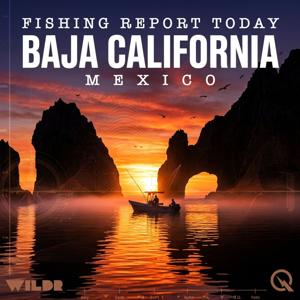
This is Artificial Lure with your Baja fishing rundown.
Overall, Baja’s waking up nice and fishy. We’ve got a mellow late‑spring pattern, warm days, and water temps mostly in the low‑ to mid‑70s on both sides of the peninsula, with a bit cooler water inshore along the Pacific.
Around Cabo San Lucas, the marina crowd is reporting decent mixed action off the arches and out toward the 95 and 1150 banks. Crews yesterday brought in scattered striped marlin, a few school‑sized yellowfin, and some decent dorado tight to current breaks. The port captain’s board has most of the billfish still outside 10–15 miles, but dorado are creeping closer whenever a weed line stacks up.
Sunrise is coming just after six and sunset just after seven local. First light has been the magic window: that gray‑light hour has produced most of the billfish and better‑grade tuna. Midday slows when the sun gets high and the breeze fills in from the northwest.
Tides on the Cortez side are running a moderate morning high followed by a dropping tide through late morning and a smaller push in the afternoon. That falling water has been good for inshore roosterfish and jacks from San José del Cabo down the beach to the lighthouse. Local panga skippers are seeing roosters from 10 to 30 pounds cruising tight to the sand when there’s a little chop and some bait in the wash.
Best baits right now: live caballito, mullet, and sardina when you can get them. The bait guys off Cabo and San José are reporting decent, but not wide‑open, supplies early; once they’re sold out, that’s it. Bring small sabiki rigs in case you need to make your own on the inshore humps.
For artificials, pack surface irons and stickbaits: mint‑and‑white or blue‑and‑white jigs for the yellows and jacks, and big, noisy poppers for the roosters. Offshore, skirted ballyhoo, small‑to‑medium marlin lures in black‑and‑purple or petrolero, and cedar plugs or small feathers are still getting bit by school‑size tuna and dorado.
Up the Pacific side toward Todos Santos and Magdalena, the current has pushed some cooler, nutrient‑rich water in. That’s turned on the bottom fish: reds, lingcod, and rockfish on cut squid and jigs. There are also pockets of yellowtail on the high spots when the current’s moving—drop yo‑yo irons in scrambled‑egg or blue‑chrome and crank hard.
On the Sea of Cortez side, around La Paz and out toward Isla Espíritu Santo and Cerralvo, local captains are talking about steady inshore action: pargo, cabrilla, and occasional yellowtail on live bait and small jigs worked along the rocky points. A few dorado have been sliding in under floating debris and buoys—keep a spinning rod rigged with a fluke or small trolling feather so you can cast fast when they pop up.
Two hot spots to circle on your map:
First, the Gordo Banks off San José del Cabo. When that morning high tide lines up with first light, it’s been giving up a mix of striped marlin, a few tuna, and quality bottom fish—amberjack and snapper—on live bait dropped down into the marks.
Second, Isla Cerralvo, especially the north and east sides. Drift live baits along the edges and watch for birds; that zone has been holding yellowtail, jacks, and the odd dorado. When the afternoon breeze comes up, work the shadowed side of the island with deep jigs for pargo.
Fish activity will hinge on that early window and the late‑afternoon tide bump. If you’re running offshore, be out of the harbor in the dark so your spread’s working at gray light. Inshore, walk the beaches at first light and again toward sunset, looking for nervous water and bait spraying in the shore break.
That’s the word from Baja for now. This is Artificial Lure—thanks for tuning in, and don’t forget to subscribe so you don’t miss the next report.
This has been a quiet please production, for more check out quiet please dot ai.
Great deals on fishing gear https://amzn.to/44gt1Pn