
Sign up to save your podcasts
Or

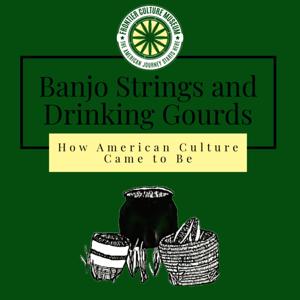


Foraging is a practice that dates back into prehistory. Living off the land should be an essential human right, but in 18th and 19th century America, that right was often revoked for enslaved persons. In this episode, our guest, Misti Furr, details just why foraging was important in enslaved communities, how it was used as resistance against enslavers, and why the practice is seeing a resurgence in descendent communities today.
Following on from our earlier episode this season, this episode, with our guest, Ray Wright, focuses on the development of the railroad in America. The Shenandoah Valley in particular owes a lot to the iron horse, and all the men and boys who worked to lay tracks and cut through the mountains.
Have you ever wondered why we have the word railways and the word railroad? In this episode, we look at the development of the railway in England and just how that fantastic mode of transportation of goods and people changed the world. We'll have a second episode about the development of the railroad (catch that?) in America later this month.
Ever wanted to know the history of your favorite carols? This episode delves into the background of some of the best beloved carols. Some are more modern than you'd think, while others have a much older melody. So sit back with your favorite warm beverage and enjoy the history of Christmas carols.
On this second episode on abolition, we focus on British abolitionists. Britian abolished slavery long before the United States and enforced the ban on the international slave trade, but just how did that come about? Who was involved? We answer those questions.
Note: This episode contains contemporary quotes that use language which today is considered offensive.
Opening Music: Zac Bell
End Music: Jean Claude Hatungimana
Cover Art: Emily Noble Day
In this final episode of season three, we review Origin: A Genetic History of the Americas by noted geneticist, Jennifer Raff. While the book is about the first peopling of the Americas, something that the study of DNA and mtDNA has drastically changed, a large portion of the book is also devoted to the development of physical anthropology and the archaeological evidence for the earliest peopling of both Americas. This book gives a graduate course in interdisciplinary studies of who the first people were, where they came from, and how they got here in a readily accessible and sympathetic style. We highly recommend it!
Intro Music: Zac Bell
Exit Music: Jean Claude Hatungimana
Cover Art: Emily Noble Day
Have you ever looked at something on your plate and wondered how it got there? In this episode, our guest, Misti Furr, talks about the movement of goods between the Americas, Africa, and Europe that had a significant impact on the world, both positively and negatively. The Columbian Exchange goes far beyond the humble potato or peanut!
Intro Music: Zac Bell
Exit Music: Jean Claude Hatungimana
Cover Art: Emily Noble Day
N.B.- This episode contains quotes from primary sources and may contain language considered offensive today.
Continuing on the topic of revolution and freedom, in this episode, we ask if the revolutionary rhetoric, the language used to discuss freedom from Britain, had any impact on slavery. Many founding fathers tended to compare British treatment of white male citizens of the colonies to slavery, yet slavery as an institution continued well into the 19th century in the newborn United States. Was there any sort of understanding of the hypocrisy involved? Did the prevailing themes of freedom and emancipation from Britain begin to echo in regards to race-based chattel slavery?
Also, please bear with us as the audio quality in this episode reflects our upcoming relocation of recording space.
Intro Music: Zac Bell
Exit Music: Jean Claude Hatungimana
Cover Art: Emily Noble Day
Have you ever wondered about how some events in history could have turned out differently? In this episode, we introduce a counterfactual, or according to the Cambridge Dictionary, "a mental simulation where you think about something that happened, and then imagine an alternate ending." Just in time for the Fourth of July, our guests, Sam McGinty and Davis Tierney, discuss how the British could have won and what could have been the result.
Intro Music: Zac Bell
Exit Music: Jean Claude Hatungimana
Cover Art: Emily Noble Day
Continuing our abolition series, Mark Mazzochi joins us to discuss the Haitian Revolution. While the revolt over slavery drastically impacted Haiti and it's economic conditions today, it had a surprising effect on the rest of the world as well.
Intro Music: Zac Bell
Exit Music: Jean Claude Hatungimana
Cover Art: Emily Noble Day
From the publisher's feed