
Sign up to save your podcasts
Or

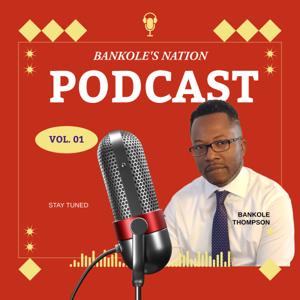


This week on Bankole’s Nation, journalist Bankole Thompsoninterviews Democratic State Sen. Stephanie Chang about the $81 billion spending plan that Democratic Gov. Gretchen Whitmer signed into law, and what is in the budget for urban cities like Detroit that are struggling with the crisis of poverty. Chang was a holdout during budget negotiations over a proposed increase in the marijuana tax, but ultimately voted for the passage of the budget to avoid a state shutdown.
Chang, who is in her final term in the Senate, where Democrats hold the majority, discusses how the bipartisan budget includes support for several key projects in Detroit. This includes $1 million in funding for Focus: HOPE, which recently lost a $6 million federal grant for its Head Start program, likely affecting thousands of families in the city, as well as backing for a water affordability plan.
Chang explains why the budget provides a funding boost for public safety efforts in local municipalities, more resources for higher education, free meals in schools, support for at-risk students, Medicaid, and other related programs, as well as funding for roads.
The Detroit Democrat also discusses the 2026 gubernatorial race, why Michigan needs a Democratic governor, and the lessons the Democratic Party is learning during President Donald Trump’s second term.
This week on Bankole’s Nation, journalist Bankole Thompsoninterviews Lindsey McAdory, the campaign manager for Rev.Solomon Kinloch Jr.’s bid to become the next mayor of Detroit.
McAdory, a national campaign strategist who has led 87 successful political and issue-based campaigns and was most recently behind the victory of Randall Woodfin, the mayor of Birmingham, Alabama, discusses the path tovictory for Kinloch in Detroit.
In the interview, McAdory explains how the Kinloch campaign is running an aggressive grassroots effort to reach voters who are typically not excited to vote for politicians with a message centered around poverty and economicinequality.
Citing Kinloch as anti-establishment, McAdory says the campaign isn’t seeking media endorsement or major corporate backing because the most important endorsement, according to him, is the many Detroiters they meet on the campaign trail, whose lives reflect that the city’s recovery has not yet reached its most vulnerable communities.
He also discusses what he considers the negatives of Kinloch’s general election opponent, Mary Sheffield, the president of the Detroit City Council.
This week on Bankole’s Nation, journalist BankoleThompson interviews Robin Kinloch, the first lady of Triumph Church, about her husband, Rev. Solomon Kinloch Jr.’s campaign to become the next mayor of Detroit.
Robin Kinloch, who has a law degree, discusses herbackground in her first media interview about the 2025 Detroit mayor’s race. She discusses growing up in Detroit and how she and her sibling navigated the challenges of poverty and inequality. She shares her experience of being raised in what she calls the Warren-Connor projects on the city’s east side, where she firsthand encountered poverty. This experience has left a lasting impression on her and motivates her to give voice to those struggling in the depths ofinequality.
She referenced the latest U.S. Census report, whichshows Detroit having the highest poverty rate among cities with a population of half a million or more. She also talks about issues she will support as first lady of Detroit while arguing why Rev. Kinloch is the right choice to lead thecity.
This week on Bankole’s Nation, journalist Bankole Thompson provides an analysis of what seems to be a calculated effort by the media to undermine the mayoral campaign of Solomon Kinloch, the senior pastor of Triumph Church, whois running against Mary Sheffield, the president of the Detroit City Council.
Thompson, who has had a front-row seat to Detroit’s issues for a long time and is an authority on the media, discusses how the media as an institution is failing to provide balanced coverage of the mayor’s race and seems to be acting as a shadow campaign manager for the Sheffield campaign.
He discusses how the media in Detroit mostly looked the other way regarding the scandals of outgoing Mayor Mike Duggan, the first White mayor in 40 years.
In the analysis, Thompson, who has authored five books and is one of the first Black editors in the nation to conduct several exclusive sit-down interviews with President Barack Obama, states that the media coverage of the political race seems to be an attempt to delegitimize one Black candidate over the other. He calls for fair coverage where both candidates are held accountable and scrutinized equally based on their policies.
This week on Bankole’s Nation, journalist Bankole Thompson offers an analysis of what is missing in the Detroit mayor’s race between Mary Sheffield, the president of the Detroit City Council, and Solomon Kinloch, the senior pastor of Triumph Church.
Thompson, who has had a front-row seat to Detroit’s issues for a long time, discusses what Detroiters are missing in the race for the next leader of one of America’s largest urban centers.
In the analysis, Thompson explains how issues such as a universal basic income for Detroit’s underserved population, a topic which Dr. Martin Luther King Jr. discussed in his last book, “Where Do We From Here: Chaos or Community,” and a host of other issues to address the city’s poverty crisis aremissing from the mayoral race.
This week on Bankole’s Nation, journalist Bankole Thompson offers an analysis of the Detroit Council of Baptist Pastors & Vicinity’s endorsement of Mary Sheffield for mayor ofDetroit, over Solomon Kinloch, the senior pastor of Triumph Church.
Thompson, who has in-depth knowledge of Detroit's clergy group, discusses what the endorsement signifies, given thegroup’s inaction on various issues affecting Detroiters. He provides a historical and current perspective of the Black church. He explains why he believes that the Detroit Council of Baptist Pastors & Vicinity, under the current leadership of Rev. Richard White, has not met the expectations ofstruggling Detroiters.
In the analysis, Thompson explains a litany of issues that the pastor’s group could address beyond simply making a symbolic gesture through a political endorsement. He references several pastors in the city’s recent history whoshowed moral courage and clarity by directly advocating for the underserved, including the group’s former president, thelate Rev. Joseph Jordan.
This week on Bankole’s Nation Extra, journalist BankoleThompson speaks with veteran campaign strategist Sam Riddle, widely regarded as the dean of political consulting in Detroit, about Detroit Mayor Mike Duggan’s endorsement of Mary Sheffield to succeed him as the city’s next mayor.
Sheffield, the president of the Detroit City Council,is facing Rev. Solomon Kinloch, the senior pastor of Triumph Church, in a general election matchup.
Riddle suggests that Kinloch has a clear path tovictory in November if his campaign is willing to hit the streets and energize and motivate new voters who have become disillusioned with politicians. Since Sheffield is the establishment candidate, Riddle advises that the Kinlochcampaign should directly address issues like public safety and explain what he would do differently from the establishment.
In the interview, Riddle explains the responsibilitiesboth candidates have to address the core issues of economic inequality affecting Detroiters, not just settle for buzzwords like “affordable housing,” among other issues.
This week on the show, journalist Bankole Thompson interviews Detroit City Councilmember At-Large Mary Waters, the top vote-getter in the recent primary, to discuss a wide range of issues affecting Detroit's present and future.
From the troubled Detroit Land Bank Authority, to the crises of homelessness, job creation for the city’s youth, the I-375 project in Detroit’s Black Bottom, and the demand for reparatory justice, as well as the gun violence pandemic raging through the city, and the push for equitable opportunities for Detroiters in the city’s comeback, all these issues took center stage in the interview.
Waters outlines her expectations for the two mayoral candidates as they head into the general election: Mary Sheffield, the president of the Detroit City Council,and Rev. Solomon Kinloch, the senior pastor of Triumph Church.
In their conversation, Waters says Detroiters need help, and they want their elected officials to deliver for them.
This week on Bankole’s Nation Extra, journalist Bankole Thompson offers an in-depth commentary and analysis about who the establishment is supporting in the ongoing Detroit mayor’s race between Mary Sheffield, the president of the Detroit City Council, and Solomon Kinloch, the senior pastor of Triumph Church.
Thompson explains how Sheffield is clearly the establishment favorite and why top business leaders support him, along with Rev. Wendell Anthony, the president of the Detroit Branch of the NAACP. Thompson’s perspective follows his earlier critique of the media’s focus on Kinloch, while Sheffield has received almost no critical attention from the press.
In the analysis, he explains how some of the Black elites in the Motor City who are part of the civic leadership prefer Sheffield over Kinloch.
This week on the show, journalist Bankole Thompson sits down with Detroiter Dr. Nefertari Nkenge, a veteran public school educator, activist, and daughter of the late Detroit City Councilwoman JoAnn Watson, to discuss the November mayoral race between Mary Sheffield, the president of the Detroit City Council, and Solomon Kinloch, the senior pastor of Triumph Church.
Nkenge says both candidates need to address the core issues of poverty and structural inequality facing Detroiters – from the foreclosure crisis, over taxation of homeowners, to lack of economic opportunities for the city’s residents in a comeback that has benefited chiefly downtown, Midtown, and Corktown. She discussed her mother’s legacy and her firebrand nature of tackling the vexing issues of politics in the city during her time, as well as the expectations that Detroiters should place on the candidates running for thecity’s top job.
Even though Detroit stands at the crossroads of possibly electing its first female mayor in Sheffield, if she wins, Nkenge noted that Sheffield needs to focus on an agenda that addresses the concerns of the majority of BlackDetroiters rather than just the symbolism of her being the first woman mayor.
In the interview, she shares her own experience with Sheffield’s office during a time when the basement of her house in the King Estates in the city flooded. She said she called the council president’s office and left a detailed message on the office phone for help but received no response. When she looked up Sheffield on Instagram to see how to reach her, she was at the Essence Festival in New Orleans. That became a red flag for Nkenge regarding the councilwoman’s ability to deliver services for residents.
In their conversation, Nkenge says that, given the dynamics of the race, Detroit voters need to move past soundbites and optics and focus on the real substance of the candidates' platforms this fall.
From the publisher's feed