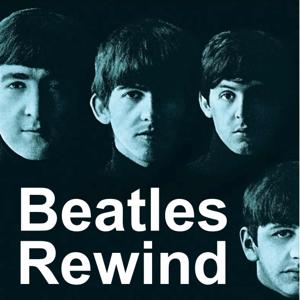
There are moments in history that act as permanent markers of "Before" and "After." The printing press. The atomic bomb. The moon landing. On a cold Sunday night in February 1964, four young men from Liverpool joined that list. In just 12 minutes and 40 seconds of television, they didn't just play songs; they redrew the cultural map of the Western world. But the path to that stage wasn't a victory lap—it was a frantic scramble of rainstorms, fever dreams, and strategic gambles, all set against the backdrop of a grieving nation desperately searching for a reason to smile again.
October 31, 1963: The Heathrow Epiphany
While returning from a European scouting trip, American TV host Ed Sullivan and his wife Sylvia were trapped in a massive traffic jam at London Airport (now called Heathrow). Sullivan, a former sports columnist who’d built his Sunday night variety show into America’s most-watched program, was bewildered by thousands of screaming teenagers braving a rainstorm just to catch a glimpse of a band returning from Sweden. The phenomenon was unlike anything he’d witnessed—and Sullivan had seen Frank Sinatra and Elvis Presley at their peaks.
The Quote: Sullivan turned to an airport worker and asked what was happening. The reply: “It’s The Beatles.” Sullivan’s legendary response: “Who the hell are The Beatles?” The worker explained that they were the biggest thing in Britain, that they’d been playing to sold-out crowds, that teenagers were going absolutely mental for them. Sullivan, ever the showman who could smell a cultural moment, made a mental note. Within hours, he was on the phone to his producers back in New York. 📞
The Deal: Weeks later, manager Brian Epstein—the polished, sophisticated impresario who’d taken four leather-clad rockers from Hamburg dive bars and molded them into suited professionals—met Sullivan at the Delmonico Hotel in New York. They struck a deal for three appearances (two live performances and one taped) at $10,000 total—an absolute bargain price that Epstein accepted on one crucial condition: the band must receive top billing. Sullivan initially balked. His show featured multiple acts, and headliners were typically established American stars, not unknown British kids. But Epstein held firm. The Beatles would be the main event, or there would be no deal. Sullivan, remembering those screaming fans at Heathrow, agreed. It was one of the smartest decisions he ever made. 🤝
What Sullivan didn’t know was that Capitol Records, the band’s American label, had rejected them multiple times. The prevailing wisdom in the American music industry was that “British acts don’t work here.” It took pressure from EMI’s British headquarters (which owned Capitol) to force the U.S. release of “I Want to Hold Your Hand,” the song that would become their U.S. breakthrough.
The Girl Who Leaked It
While Capitol dragged its feet on “I Want to Hold Your Hand,” one 15-year-old girl refused to wait. In December 1963, Marsha Albert was stuck at home, bored and desperate for something new. After seeing a brief clip of the band on the news, she launched a one-person letter campaign to local disc jockeys, including Carroll James at WWDC in Washington, D.C. James was intrigued enough to have his girlfriend—a flight attendant for BOAC—smuggle a copy of the single back from London. On December 17, 1963, he played it, marking the first time a Beatles song was broadcast on American radio. The phone lines instantly exploded. Capitol Records was livid that their meticulously planned January launch was being "ruined," and threatened to sue the station for airing the song. Eventually, Capitol caved and moved the release date up to December 26. Within three weeks, the song was #1. From her bedroom, Marsha Albert had triggered a cultural avalanche. 📻💥 📻💥
February 7, 1964: The British Are Coming
Pan Am Flight 101 touched down at JFK at 1:20 p.m. on a freezing Friday afternoon. Over 3,000 fans breached the tarmac, creating a wall of sound that nearly drowned out the jet engines. The kids had skipped school, lied to their parents, hitchhiked from neighboring states—whatever it took to be there when the Beatles arrived. WMCA had been hyping the arrival for days, playing “I Want to Hold Your Hand” hourly with updates on the Beatles’ journey across the Atlantic, creating a fever pitch of anticipation. 🛬
When the plane landed and the Beatles emerged, they were stunned at all the commotion. They assumed the crowd must be for someone else—maybe a dignitary or a movie star. John Lennon later said they genuinely thought the fans were there to see the Prime Minister or President Johnson. When they realized the screaming was for them, the band members looked at each other in disbelief. America had been the impossible dream, the market where British acts came to die. And here were thousands of American teenagers losing their minds.
At their first American press conference, a chaotic scene in the airport’s Pan Am lounge, the band’s legendary wit immediately disarmed a skeptical press corps. American journalists had arrived expecting to mock these British upstarts, to tear them apart with sarcastic questions. Instead, the Beatles turned it into a comedy routine.
February 7, 1964: The Press Conference
* Reporter: “Would you please sing something?” The Beatles (In Unison): “No!”
* Reporter: “There’s some doubt that you can sing.” John Lennon: “No... we need money first!”
* Reporter: “Are you going to get a haircut while you’re in the country?” George Harrison: “I had one yesterday.”
* Reporter: “What do you think of Beethoven?” Ringo Starr: “Great. Especially his poems.”
* Reporter: “Are you a part of a rebellion against the older generation?” Paul McCartney: “It’s not a rebellion. It’s just us.”
* Reporter: “How long do you think Beatlemania will last?” John Lennon: “About another hour, I should think.”
The press corps, accustomed to earnest, nervous performers, was charmed despite themselves. These weren’t just musicians—they were quick, funny, and completely unfazed by the spotlight. Within 24 hours, skeptical journalists were writing glowing pieces about the band’s charisma and intelligence.
The Beatles had conquered Britain, but America was the place where show-business careers went to become immortal—or die. And in the span of one afternoon, the Beatles knew they’d crossed over.
The weekend before the Sullivan show was controlled chaos. The band was staying at New York’s Plaza Hotel, where the management quickly regretted allowing them to check in. Fans discovered which rooms they were in and maintained a 24-hour vigil outside, screaming, chanting, and trying to break through security. The Beatles were essentially prisoners in their suites, ordering room service and watching American TV to understand their new audience.
February 8, 1964: The “Ghost” Rehearsal
The band arrived at CBS Studio 50 (now the Ed Sullivan Theater) on West 53rd Street for a rehearsal, but George Harrison was missing. He was confined to the Plaza with a 102-degree fever and strep throat, shivering under blankets while his bandmates prepared for the biggest performance of their lives. The show was less than 24 hours away, and one of the four Beatles couldn’t stand without nearly collapsing. 🤒
To ensure the show’s camera staging could proceed, Beatles road manager Neil Aspinall stood in for George, clutching a Gretsch guitar while the studio crew mapped out the shots. Camera operators framed shots, lighting designers adjusted angles, and Sullivan’s team choreographed where each Beatle would stand. Gigantic arrows were erected, pointing at center stage. Meanwhile, back at the Plaza, a doctor was pumping George full of antibiotics and praying he’d be functional by showtime.
The pressure was immense. CBS had promoted this appearance relentlessly. Capitol had shipped 2 million copies of “I Want to Hold Your Hand” to stores. If George couldn’t perform, the entire phenomenon might collapse before it began. The British press, already skeptical of the American hype, would have a field day.
By late evening on February 8th, George’s fever broke. He was weak, pale, and barely able to eat, but he could stand. He could hold his guitar. Most importantly, he could sing the high harmonies that made Beatles songs distinctive. The show would go on. 🎸
February 9, 1964: The Big Bang
At 8:00 PM EST, 73 million people—roughly 60% of the American television audience—tuned in. To put that in perspective: the Super Bowl today, with a fragmented media landscape of hundreds of channels and infinite streaming options, struggles to reach half of that number. In 1964, with only three major networks, America had a genuine monoculture. And on this night, virtually the entire country was watching the same thing. 📺
As showtime neared, the atmosphere in Studio 50 was so electric that Ed Sullivan admonished the crowd, “If you don’t keep quiet, I’m going to send for a barber.” The joke got laughs, but barely made a dent in the screaming. The 728 seats in the studio were filled with teenagers who’d won a lottery to attend—50,000 had applied for those seats. The rest of America watched from living rooms, unable to look away.
What many people don’t realize is how carefully orchestrated this moment was. This wasn’t just four guys showing up and playing songs. The band and Brian Epstein had carefully chosen every song to win over every possible demographic in that massive audience.
The Strategic Setlist
“All My Loving”: They opened with this because of its relentless “galloping” rhythm. It was a high-energy statement of intent—immediately announcing “we’re not here knocking on the door, we’re kicking down the door and grabbing you by the collar.” The song is propulsive, impossible to ignore, and features Paul’s soaring vocal and John and George’s tight harmonies. Within 15 seconds, anyone who’d tuned in skeptically was now paying attention. 🎵
“Till There Was You”: By performing a ballad from the Broadway musical The Music Man, they showed parents they were legitimate musicians, not just hooligans with electric guitars. Meredith Willson, who wrote the song, was a beloved American composer. By covering it with respect and beauty, the Beatles were essentially saying: “We know your music. We appreciate your music. We’re not here to destroy what you love—we’re here to add to it.” It was a masterstroke of strategic programming. Parents watching with their skeptical arms crossed found themselves melting. 🎭
“She Loves You”: This was the song that had conquered Britain, with its iconic “yeah yeah yeah” hook that became a cultural catchphrase. The screaming during this song reached levels that actually caused technical problems—the CBS audio engineers had never dealt with noise at these decibels, and the meters were redlining. 💔
“I Saw Her Standing There”: In their second set later in the show, they opened with this rocker, with Paul’s iconic count-off: “One, two, three, FAH!” It’s a burst of pure joy, a song about teenage romance that felt authentic because the Beatles had written it themselves when they were teenagers playing Hamburg clubs. 🎸
“I Want to Hold Your Hand”: They closed with the #1 song in the country, ensuring the performance ended on the highest possible note. By this point, the screaming was so loud that the band couldn’t hear themselves. Ringo was playing by watching the others’ movements. George’s fingers were on autopilot. But it didn’t matter—the audience wasn’t analyzing musical precision. They were experiencing pure, collective euphoria. The song built to its climactic finish, and as the final chord rang out, America knew it had witnessed something that could never be replicated. 🏆
The Quote: Ringo Starr later admitted the terror behind the scenes: “I’ve never seen anyone’s legs shake like Paul’s were shaking then. He was terrified.” Paul, usually the most composed Beatle, was visibly trembling as they waited in the wings. John chain-smoked. George, still recovering from his fever, looked pale and sweaty. But the moment Sullivan announced them, adrenaline took over. Terror transformed into performance, and they delivered. 😰
The “Lightning Bolt” Moment
The significance of those 12 minutes and 40 seconds of performance (spread across two segments in the show) cannot be overstated. For an entire generation of future legends, it was the exact moment their lives changed:
Tom Petty: “It was like going from black-and-white to color. Really.” Petty was 13 years old, watching in Florida, and he decided that night he would become a musician. Within weeks, he’d saved up for a guitar. 🎸
Bruce Springsteen: “Rock ‘n’ roll came to my house where there seemed to be no way out... and opened up a whole world of possibilities.” Springsteen was 14, watching with his mother in New Jersey, feeling isolated and directionless. The Beatles showed him that working-class kids could become artists. 🎤
Billy Joel: “I saw four guys who played their own songs and instruments... I said, ‘I know these guys, I am these guys.’” Joel was 14, already taking piano lessons but unsure if it could be a real career. The Beatles proved that musicians could write their own material, that bands didn’t need Tin Pan Alley songwriters or record label control. They were self-contained, and that changed everything. 🎹
The Legacy: A Nation Healed
The performance occurred just 77 days after the assassination of John F. Kennedy. This timing is crucial to understanding the Beatles’ impact. America in early 1964 was a nation in shock, stuck in a deep winter of mourning. Kennedy’s death on November 22, 1963, had traumatized the country in a way that’s difficult to fully explain to people who didn’t live through it. The optimism of the early 60s—the hope represented by the young, charismatic president—had been violently destroyed in Dallas. For a nation stuck in grief, the Beatles provided the first collective moment of joy. 🕊️
It remains the most important “monoculture” moment in history—a night when, for one hour, the entire country was looking at the same thing and seeing the future. We’ll never have a moment like that again. Media has fragmented into infinite streams and niches. There’s no single show or sporting event that 60% of America watches simultaneously, and chats about the next morning. But for one night in 1964, there was only one channel that mattered, and it was showing four young men who were about to change everything.
But more than any commercial statistic, what mattered was the feeling. America, which had been holding its breath for 77 days, finally exhaled. The Beatles hadn’t just performed on Ed Sullivan—they’d performed a kind of cultural miracle, proving that joy could return, that the future could be brighter than the past, and that four working-class kids from England could unite a grieving nation simply by playing rock and roll. 🌈✨
Visit my Beatles Store:
Get full access to Beatles Rewind at beatlesrewind.substack.com/subscribe