
Sign up to save your podcasts
Or

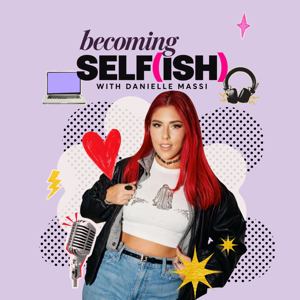


Licensed psychotherapist and host Danielle Massi explains shadow work: how unconscious patterns form, why buried experiences can resurface, and how to approach them with calm and curiosity. She outlines her approach to the process, describes integrating disowned traits, and shares a self-compassion letter exercise.
KEYWORDS
shadow work, Danielle Massi, unconscious mind, parts work, self-compassion, neural pathways, personal growth
KEY TOPICS
TAKEAWAYS
KEY FRAMEWORKS
ACTION ITEMS
CHAPTERS
00:00 What shadow work is and why it matters
01:59 The iceberg: conscious, subconscious, and unconscious
05:44 How experience shapes neural pathways
08:11 The subconscious feedback loop and early narratives
11:26 Why unconscious material can resurface
13:22 Shadow work as clearing and integrating
15:35 A step-by-step approach to shadow work
19:20 Staying grounded while revisiting memories
21:46 Integrating hidden parts instead of fighting them
23:42 A self-compassion letter exercise
25:08 A gentle question to take into the week
In this debut episode of Becoming SELF(ISH) with Danielle Massi, licensed psychotherapist, bestselling author, keynote speaker, and former Penn State professor Danielle Massey explains why caring for yourself is not a moral failing. Drawing on her experience after a cancer diagnosis and her training in cognitive neuroscience and shadow work, she offers a practical journaling exercise to help listeners identify postponed needs and take one realistic step toward change.
Becoming SELF(ISH), Danielle Massi, self-care, boundaries, shadow work, journaling, people pleasing, guilt, cognitive neuroscience
KEY TOPICS
Danielle Massi describes how cancer, diagnosed around her 30th birthday in late 2018, prompted her to rethink work and self-care.
She recounts being called selfish for taking a barre class, eating a healthy lunch, and changing her work schedule after years of caring for clients and family.
Massi explains how early experiences and reinforced neural pathways can shape automatic choices and identity.
She reframes guilt as a reason to examine a choice, not proof that the choice is wrong.
Her definition of becoming selfish includes considering health, time, boundaries, nourishment, and happiness while communicating needs and negotiating shared responsibilities.
She distinguishes internal motivation from relying on external pressure to make changes.
Massi argues that people can make changes from a place of calm rather than waiting for crisis or rock bottom.
She introduces shadow work journaling and leads a three-question exercise about postponed needs, anticipated reactions, and one realistic step to take this week.
TAKEAWAYS
· “You don't have to hit rock bottom to change.”
· “You don't need a diagnosis, a breakdown, or a dramatic story to deserve support.”
· “Feeling guilty is a reason to examine a choice, not an automatic verdict that the choice is wrong.”
· “For me, becoming selfish was all about making it okay to center myself.”
· “Choosing yourself will sometimes require compromise.”
· “The question is whether you're participating in that compromise or automatically removing your needs from consideration.”
· “You can create change from a place of peace and calm and wellness just as well as you can from a rock bottom.”
· “What need have I been postponing?”
· “Whose reaction am I anticipating? And what am I afraid that they will think?”
· “What is one realistic step that I can take this week?"
ACTION ITEMS
1. Reflect or journal on: “What need have I been postponing?”
2. Ask: “Whose reaction am I anticipating, and what am I afraid they will think?”
3. Choose one realistic step you can take this week.
CHAPTERS
00:00
Why choosing self-care got Danielle called selfish
02:27 A
cancer diagnosis prompts a life reset
04:20
How the word “selfish” sparked a movement
05:18
Why we wait for rock bottom to change
06:11
How early experiences shape automatic choices
09:00
Guilt is a cue to examine, not condemn, a choice
09:31
What becoming selfish means in practice
11:27
Choose change from peace, not crisis
12:25
Shadow work journaling: “What am I waiting for?”
14:50
Three questions to uncover your next step
From the publisher's feed
You don’t have to hit rock bottom to change. And you don’t need everyone’s permission to put yourself first.
Welcome to Becoming SELF(ISH) with Danielle Massi, the podcast exploring the…
Danielle is a licensed psychotherapist, bestselling author of Shadow Work, creator of The Shadow Work Deck, and founder of SELF(ISH)philly. After surviving cervical cancer, she started making healthier choices for herself. When someone called her selfish for doing it, she turned that judgment into a movement.
Now, she’s bringing that conversation to your headphones.
Through honest solo episodes and conversations with experts and some of your favorite faces, Danielle explores the unconscious beliefs, learned expectations, and everyday habits that keep you last on your own list. Expect psychology, neuroscience, spirituality, and practical tools for making meaningful changes before a crisis demands them.
We’ll talk about:
• Shadow work, self-awareness, and the parts of yourself you’ve learned to hide.
• People-pleasing, perfectionism, and setting boundaries when you’re afraid of disappointing others.
• Nervous system regulation, emotional well-being, and sustainable self-care.
• Self-worth, identity, and building trust in your own decisions.
• Relationships, motherhood, ambition, money, and the expectations that shape your choices.
• Visibility, authenticity, and giving yourself permission to want more.
Why does saying no feel so uncomfortable? Who are you when you’re no longer the “good girl,” the fixer, or the person everyone can count on at any hour? And what could change if you stopped waiting until you were overwhelmed to take your needs seriously?
Each episode offers something to recognize, something to question, and a proactive step you can take in your own life. Expect candid stories, thoughtful expert insights, and conversations that make deep inner work accessible.
If you’re ready to stop abandoning yourself to keep everyone else comfortable, you’re in the right place.
Your needs matter now. Let’s get SELF(ISH).
Follow Becoming SELF(ISH) with Danielle Massi and connect on Instagram, TikTok, and YouTube @iamdaniellemassi.
This podcast is for education and personal exploration and is not a substitute for individualized mental health or medical care.