
Sign up to save your podcasts
Or



I am pleased to bring you the thinking of today's guest, Doug Bradley. He's a Vietnam vet who, with his co-author Craig Werner, spent two years making more than 100 presentations coast to coast, witnessing honest, respectful exchanges among audience members. The purpose was to explore how the music of the era, shared by those who served in the war and those who stayed home, helped to create safe, nonjudgmental environments for listening, sharing, understanding and forgiving. We will be discussing a range of topics, such as the traumas of wars, especially divisive ones like the Vietnam War, what forgiveness and reconciliation mean in the context of wars, and the role of music in healing the wounds caused by wars.
I am honored to introduce today's guest, Phil Cousineau. Phil is an award-winning writer, filmmaker, teacher, editor, travel leader, storyteller and TV host.
We will be discussing a range of topics, such as the meaning of forgiveness and atonement, the importance of presence, and our collective longing for wholeness.
The following is a taste of my conversation with Phil.
Q: Where does forgiveness end? Where does compassion end? Phil: (Quoting Dr. Jacob Needleman): You ask them three times for forgiveness. Now, the first time, they may still be angry at you. The second time, they may not have gotten over you. And then, the third time, they could forgive you or they have become so obtuse and so bitter that they still refuse, well, on, let's say, on the grand scale of things, your karma is free. You have done what you need to do on the spiritual plane.
Q: How do you define atonement? Phil: At-one-ment. It's like many of the classic definitions of beauty, which is all forms of harmony and wholeness.
Q: How does atonement relate to forgiveness? Phil: The act of forgiveness is kind of going halfway and then stopping. Doing something to make amends that is psychologically commensurate with the damage that was done, then the healing can begin.
Q: How does one get to forgiveness when there's a complex blend of multiple layers of mutual wrongdoing, with each party blaming the other? Phil: If we do not learn how to forgive in our relationships, in the workplace, and in our political activism, a kind of soul rust sets in.
When asked if there's one last thing he'd like our listeners to hear, Phil says, "People will risk themselves for others, and I once asked Joseph Campbell why this is so? And I can still hear the beautiful cadence in his voice when he gave me the answer on camera, "It's because we know at the end of the day, we are one."
About Phil: Phil Cousineau is a writer, teacher, editor, independent scholar, documentary filmmaker, travel leader and storyteller. His life-long fascination with the art, literature and history of culture has taken him on many journeys around the world. He lectures frequently on a wide range of topics--from mythology, film and writing, to beauty, travel, sports and creativity. He has published more than 35 nonfiction books and has over 20 scriptwriting credits to his name. He is the host and cowriter of the PBS and Link TV series, "Global Spirit."
I'm excited to introduce the upcoming podcast season titled Forgiveness and Reconciliation. You'll hear from experts on the topic who share their insights about what forgiveness means and how it relates to reconciliation at two very different levels: family wounds like parental estrangement, and collective trauma due to social and political offenses, such as slavery, terrorism and war. The bi-monthly podcast will launch on April 6th.
I'm honored to speak with Dr. Paul Lam on health and wellness issues he has championed for over 40 years. Paul was born in Vietnam but was left as a baby with his grandmother in China. At sixteen, malnourished and arthritic, he escaped to Hong Kong during Chairman Mao's disastrous regime. From there, he moved to Australia, where he pursued his dream of becoming a physician. In 2010, he and his colleagues established the Tai Chi for Health Institute. His tai chi programs have been used to train over 10 million people around the world.
Paul and I will be discussing a range of topics, such as the nature of relationships, using tai chi practice to create harmony and wellness, and the important role of safety for learning and growth. His long career as a physician and world-renowned tai chi master has given him deep insights into these topics that you won't want to miss.
The following is just a taste of Paul's insights.
Q: Based on your experience, what can you tell us that might be helpful to us in moving beyond our own fears and our own sense of powerlessness to create the lives that we truly desire? Paul: The will to live, to learn and to enjoy life keeps pushing us to work harder and to love others.
Q: What would you say are the most important benefits of practicing tai chi? Paul: The slow, smooth, movements, and the coordination of body and mind, the right posture and the right breathing all contribute to being mindfully present and that brings a sort of inner strength and an inner serenity.
Q: What have your many years of mindful tai chi practice and training taught you about healing challenging relationships? Paul: Tai chi practice trains us to listen to the incoming force and then absorb, redirect, or use the opponent's force to combine with ours to reach a win-win situation. I can translate that to life in our interactions with people. All relationships have to do with interaction.
Q: Based on your experience, what can you tell us about the importance of having a safe place from which to learn and grow? Paul: The center of emotional security having to do with survival is in our brain stem. Having someone we feel we can trust with our insecurities is a part of survival. It allows us to open up and grow.
When asked if there's one last thing he'd like our listeners to hear, Paul says, "I would love everybody to think that anyone can do tai chi. Have a go. In Australia, it means have a try."
Dr. Paul Lam's latest book, Born Strong: From Surviving the Great Famine to Teaching Tai Chi to Millions, shares his life experiences and his belief that no matter how desperate things are, there's always hope.
I'm pleased to bring you the thinking of Mary Lou Bonham, a psychotherapist who also happens to be my sister. She and I will talk among other things about what it was like growing up on a Low-German Mennonite leprosy station in Paraguay, South America. Our parents were medical missionaries who did heroic things in the world, like revolutionizing how leprosy is treated on the planet today. But there are always costs associated with greatness it seems, and some of those costs we bore as their kids.
Despite our similar parentage and history, Mary Lou's story is actually quite different than mine. We each found our own distinctive path toward healing. And as a professional psychotherapist, she helps us understand some of the reasons why this was the case and what we can all learn from it.
The following is a taste of my conversation with Mary Lou.
Q: How did growing up with German, Paraguayan and North American identities influence how you understand who you are? Mary Lou: Those of us who grow up with multiple identities are very comfortable in many places, but not at home anywhere.
Q: What does reconciliation mean to you? Mary Lou: Self-abandonment is never the path forward toward reconciliation. In order to truly reconcile with another, you must bring your whole self forward. And that may be so difficult that a relationship is hardly possible. It may be very limited because it depends on the capacity of both parties. The depth that you can achieve through reconciliation is not within your control alone.
Q: What was at the root of our father's frequent bursts of anger? Mary Lou: I think we have two basic ways in which our needs can be met. One is through vulnerably asking for help and support. The other is through power and control. Our father was incapable of being vulnerable, so control was his go-to. Anger is a very powerful tool when you're trying to control your environment.
Q: How do you understand the role of crises in our lives? Mary Lou: We all hate crises. Crises suck. They're the worst. But they're also transformative. So, they are a gift. If I had not hit rock bottom in my life, I think I would have had to limp along for a very long time with all of my stuff, and maybe slowly I could have worked through it. But the full-on crisis was transformative.
When asked if there's one last thing she'd like our listeners to hear, Mary Lou says, "There is a quote from one of the saints that says, 'All is well, and all is well, and all manner of things will be well.' If all things are not well, it is not yet the end."
Mary Lou Bonham is a multi-lingual psychotherapist based in Portland, Oregon.
When Misty was six years old, her family started to live and dress like the Amish. Misty and her sister were basically kept as slaves on a mountain ranch. They were subjected to almost complete isolation, sexual abuse and extreme physical violence. The two young girls were too terrified to escape. They also knew that no rescue would ever come because only a few people even knew they existed and they didn't know them well enough to care, so they thought. Then as teenagers, they were adopted into Amish families and things seemed so much better at first but then went from bad to worse.
Misty escaped and is here to tell her story and so much more. She inspires us to stand up for and be committed to protect children from abuse.
The following is just a taste of Misty's thoughts about child abuse and about her commitment to making this world a safer place for the vulnerable and defenseless.
Q: When your Amish abusers confessed, they were excommunicated for a short while and then they were forgiven. What does forgiveness mean to you? Misty: I don't think forced forgiveness is really forgiveness. I believe forgiveness is something that has to come from your heart. It has to be true and it has to be when you're ready.
Q: Why have the Amish been romanticized a lot over time? Misty: The Amish have been romanticized because people literally do not know anything about them. When you don't know about something, you make up your own presumptions.
Q: Why didn't you escape much sooner from your abusers when you had opportunities? Misty: When talking about a child abuse victim, you have to think of it like a domestic violence situation: If victims of domestic violence aren't sure they can get out of that situation, they're not going to talk or even consider an escape.
Q: How has the abuse you suffered as a child influenced who you are today? Misty: When I left the Amish, I told myself that, somehow, I was going to make a difference and put a stop to this abuse.
When I ask if there's one last thing she'd like our listeners to hear, Misty says, "If you suspect child abuse, don't look the other way. Don't think somebody else is going to report it. Don't just brush it off, because it could be a case like mine."
Misty Griffin is the author of Tears of the Silenced: An Amish True Crime Memoir of Childhood Sexual Abuse, Brutal Betrayal, and Ultimate Survival, an inspirational story of surviving abuse and standing up for the abused.
About Misty Griffin When Misty was six years old, her family started to live and dress like the Amish. Misty and her sister were basically kept as slaves on a mountain ranch. They were subjected to almost complete isolation, sexual abuse and extreme physical violence. The two young girls were too terrified to escape. They also knew that no rescue would ever come because only a few people even knew they existed and they didn't know them well enough to care, so they thought. Then as teenagers, they were adopted into Amish families and things seemed so much better at first but then went from bad to worse. Misty escaped and is here to tell her story and so much more. She inspires us to stand up for and be committed to protect children from abuse.
Find Misty on Social Media: Twitter: @ExAmish101
Misty's Book: Tears of the Silenced: An Amish True Crime Memoir of Childhood Sexual Abuse, Brutal Betrayal, and Ultimate Survival
Book Mentioned in the Interview: Love Is Complicated: A True Story of Brokenness and Healing, by Marlena Fiol, to be released summer 2020
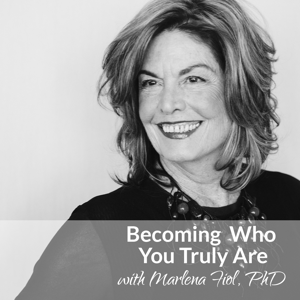
About Marlena Fiol, PhDMarlena Fiol, PhD, is a globally recognized author, scholar and speaker. She is a spiritual seeker whose work explores the depths of who we are and what's possible in our lives. Her significant body of publications on the topic, coupled with her own raw identity-changing experiences, makes her uniquely qualified to write about personal transformational change. She is also a certified tai chi instructor and freelance writer whose most recent work has appeared in numerous literary magazines and newsletters.
You can find Marlena in the following places: https://marlenafiol.com Facebook Twitter: @marlenafiol
Nita described herself as a 49-year-old overweight woman suffering from crippling depression and bipolar disorder, when she caught the running bug. Her first run lasted 60 seconds, but she kept running just a bit longer each time. Since then, Nita has completed three full marathons, 28 half marathons and almost 100 shorter races—and through it has discovered an inner strength she didn't know she had.
With refreshing honesty, Nita shares her journey from debilitating fear to self-mastery. We will discuss the parallels between running and meditation, the importance of doing that which is scary, and the necessity of not only having a vision, but trusting and believing in it.
The following provides a taste of Nita's thoughts about running, writing and life:
Q: Did finally running a full marathon change your life? Nita: The peak experience of running the marathon was not what was life-altering – what changes your life is the day-to-day stuff leading up to those events – showing up over and over.
Q: What are the parallels between your writing process and managing chronic depression? Nita: The foundation of my writing process is just starting again and again and again. And as someone with chronic depression, that's essential, because if it were up to me, I would just stay in bed, quite frankly.
Q: What's your advice to writers wishing to publish their work and receiving rejection, after rejection, after rejection? Nita: Have somebody you can cry with, be angry with, yell with, throw things with. You know, go for a run and then just go back and send it out again.
Q: By what process did you eventually begin to let in the fact that you are good, you are a runner, you are a writer, you are a winner? Nita: I still have the doubts that plague many of us. If I don't run for two or three days, my brain will say, "Well Nita, that was fun. But it's over now. Like, I'm never going to run again. So I say, "Thank you. I appreciate that you're trying to protect me. Now I'm going to go put on my running shoes and just go run a couple of miles. So hang tight, and let's see what happens."
When asked if there's one last thing she'd like our listeners to hear, Nita says, "If you want to do something, especially if it's something that seems so big or maybe terrifying, pick a tiny, tiny goal, a goal so small that you can't fail and start there."
Nita Sweeney is the author of Depression Hates a Moving Target: How Running with My Dog Brought Me Back from The Brink, an inspirational story of persistence and courage.
About Nita Sweeney Nita was forty-nine, chronically depressed and unable to jog for more than 60 seconds when she discovered running. Through the sport, Nita gained an inner strength she didn't know she possessed, and with the help of her canine companion, found herself on the way to completing her first marathon. In her first memoir, Depression Hates a Moving Target: How Running with My Dog Brought Me Back from the Brink, Sweeney shares how she faced emotional and physical challenges to overcome her fears and come back from the brink. Nita lives in Columbus, the heart of Ohio, where she writes, coaches writers, teaches meditation and publishes Write Now Columbus and the blog, Bum Glue.
Find Nita on Social Media: https://nitasweeney.com Twitter: @nitasweeney Facebook LinkedIn Pinterest Instagram: @nitasweeney
Nita's Book: Depression Hates a Moving Target: How Running with my Dog Brought me Back from the Brink
Book Mentioned in the Interview: Love Is Complicated: A True Story of Brokenness and Healing, by Marlena Fiol, to be released summer 2020
About Marlena Fiol, PhDMarlena Fiol, PhD, is a globally recognized author, scholar and speaker. She is a spiritual seeker whose work explores the depths of who we are and what's possible in our lives. Her significant body of publications on the topic, coupled with her own raw identity-changing experiences, makes her uniquely qualified to write about personal transformational change. She is also a certified tai chi instructor and freelance writer whose most recent work has appeared in numerous literary magazines and newsletters.
You can find Marlena in the following places: https://marlenafiol.com Facebook Twitter: @marlenafiol
Imagine you're in your early 30s, you're in a wheelchair, hallucinating, barely able to follow the doctor's speech. It's Friday. And he says," You're not going to make it until Monday."
That is today's guest, Cherie Kephart. A mysterious illness led to years of suffering, during which her symptoms again and again were undiagnosed and misdiagnosed. For many years, Cherie dealt with relentless pain and the anguish of not knowing what was causing it.
She shares important lessons the painful experiences taught her about the point of suffering, the meaning of forgiveness, and the importance of stopping, noticing and recalibrating when life moves too fast, among others.
The following is just a tiny taste of Cherie's remarkable insights.
Q: What's the point of suffering? Cherie: The big lesson suffering taught me was that I needed to slow down and pay attention.
Q: What eventually led to your healing? Cherie: Believing it would happen was one of my first steps in healing. If you can't believe it, then it probably won't happen.
Q: What does forgiveness mean? Cherie: The freedom to move on.
Q: You're on a healing path. Does that mean you were broken? Cherie: No. In the midst of my suffering, I felt broken. But in retrospect, I experienced something that propelled me into the beautiful life I live now, that I don't think I would have gotten without it. And I'm still on the healing path, recognizing that I'm not broken. That I am whole and complete.
When I ask if there's one last thing she'd like our listeners to hear, Cherie says, "Don't let fear drive you. Put fear in the back seat. Put it in the trunk. Strap it to the roof. Don't let it drive you. It will be with you. But you have a choice what you do with your fears."
Cherie Kephart is the award-winning author of A Few Minor Adjustments: A Memoir of Healing, an inspirational story of one person's persistence to find healing.
About Cherie Kephart Raised in Venice, California, Cherie longed to travel and experience the way other people lived. After serving as a Peace Corps volunteer in Zambia on a water sanitation and health education project, Cherie returned to the United States with an African souvenir she didn't expect: a mysterious illness. She fell severely ill and almost died, leaving her with symptoms that went undiagnosed for many years. This inspired Cherie to write her memoir, A Few Minor Adjustments: A Memoir of Healing, taking the reader on a powerful but entertaining journey through her adventures and search for life-saving answers.
Find Cherie on Social Media: CherieKephart.com Facebook Instagram: @CherieKephartwriter Goodreads
Cherie's Books:
Books Mentioned in the Interview: Fierce Joy, by Susie Rinehart Love Is Complicated: A True Story of Brokenness and Healing, by Marlena Fiol, to be released summer 2020
About Marlena Fiol, PhDMarlena Fiol, PhD, is a globally recognized author, scholar and speaker. She is a spiritual seeker whose work explores the depths of who we are and what's possible in our lives. Her significant body of publications on the topic, coupled with her own raw identity-changing experiences, makes her uniquely qualified to write about personal transformational change. She is also a certified tai chi instructor and freelance writer whose most recent work has appeared in numerous literary magazines and newsletters.
You can find Marlena in the following places: https://marlenafiol.com Facebook Twitter: @marlenafiol
I am really excited today to bring you the thinking of New York Times best-selling author Dr. Stephen Post, on issues that have driven his career. Stephen and I will be discussing a range of topics, such as whether we need to suffer to really heal, whether we plan our life or destiny controls it, and the difference between human and divine love.
His long career as a researcher, public speaker and professor has given him deep insights into these topics that you will want to hear and consider. I am particularly impressed with how consistently Stephen eschews easy answers to inherently complex questions.
The following is just a taste of Stephen's remarkable insights.
Q: Do we plan our life, or is it controlled by destiny? Stephen: We are co-creators of our destiny if we live with openness and responsiveness to surprises.
Q: Must all of us suffer and become broken in order to truly heal? Stephen: Some people who lack empathy and love are lucky to come to some kind of brokenness so their light can begin to shine through; others are naturally empathetic and do not need that.
Q: What's the difference between human and divine love? Stephen: Human love, no matter how deep, is limited and can turn into anger or hatred; sometimes, if we're open, we're invaded by a spirit of (divine) love that is shockingly beyond our usual repertoire.
Q: What's the difference between the right and the wrong kind of oneness? Stephen: We all desire oneness, but we often seek to achieve it by eliminating those who are different; the right kind of oneness includes everyone as having equal eternal value.
When asked if there's one last thing he'd like our listeners to hear, Stephen quotes Eleanor Roosevelt as saying, "The future belongs to those who believe in the beauty of their dreams."
Dr. Stephen Post's latest book, God and Love on Route 80: The Hidden Mystery of Human Connectedness, is a true story of the author's recurring dream as a teenager, and how he literally followed the dream west on Route 80 until he got to a ledge on the Golden Gate Bridge – actually, he's been following the dream for the rest of his life. It's a classic story about the hero being called on a spiritual journey.
About Dr. Stephen G. Post For over twenty years, Stephen has been spreading the science of giving and the commitment to the greater good. He has promoted the idea of "give and live better" across the globe. Funding over 50 scientific studies at the nation's top universities as well as conducting his own research, Stephen is considered the "go to" guy with his uplifting message that when we contribute to the lives of others, give meaningfully, and live by the Golden Rule, we are generally happier, healthier, more resilient, creative, hopeful and successful.
Find Stephen: Stephen's website: https://stephengpost.com The Institute for Research on Unlimited Love
Stephen's Books: God and Love on Route 80: The Hidden Mystery of Human Connectedness Why Good Things Happen to Good People: How to Live a Longer, Healthier, Happier Life by the Simple Act of Giving
Books Mentioned in the Interview: Falling Upward: A Spirituality for the Two Halves of Life, by Richard Rohr Love Is Complicated: A True Story of Brokenness and Healing, by Marlena Fiol, to be released summer 2020
About Marlena Fiol, PhD Marlena Fiol, PhD, is a globally recognized author, scholar and speaker. She is a spiritual seeker whose work explores the depths of who we are and what's possible in our lives. Her significant body of publications on the topic, coupled with her own raw identity-changing experiences, makes her uniquely qualified to write about personal transformational change. She is also a certified tai chi instructor and freelance writer whose most recent work has appeared in numerous literary magazines and newsletters. You can find Marlena in the following places: https://marlenafiol.com Facebook Twitter: @marlenafiol
In 1984, Rita and her husband Brad welcomed a healthy baby boy named Brandon into their family. Only five years later, Brandon began a 20-year battle with brain cancer. They watched as their son became increasingly mentally and physically handicapped. In June of 2009, Brandon suffered a devastating stroke in the same site as his original brain tumor. With broken hearts, Rita and Brad, made the necessary decisions to set up hospice care. They said goodbye as he "healed into death," as Rita has so beautifully described it.
Rita shares important lessons that her journey with Brandon taught her about suffering, trust, self-care, courage and so much more.
The following is just a glimpse into Rita's inspiring insights.
Q: As Brandon's medical crisis turned into a 20-year chronic condition, what did you learn about self-care? Rita: I think people often misunderstand self-care to mean self-indulgence. I actually think self-care is a form of self-discipline, where you choose to do those things that move you in the direction of health and aliveness, so you can authentically show up.
Q: What did Brandon's life and death teach you about trust? Rita: In the medical world, you don't get a choice about trust. You have to sign over your child to surgeons and doctors and nurses really on blind faith. We found a place of existential faith that we were all going to do the best we could. We chose to trust what you couldn't see, what we couldn't understand and what we couldn't control.
Q: How did you learn to be OK with receiving help from others? Rita: When we truly engage in the mutual act of giving and receiving, it brings us into an awareness of the interconnectedness of all things. And it tears down our illusions of being separate.
Q: How are you different as a result of going through the pain of Brandon's illness and death? Rita: I think how I have changed or been transformed has to do with letting go of everything that's not me. And letting go of all of the attachments we collect growing up about what we're supposed to be and do in the world. I think that's an ongoing journey to become more and more transparently and authentically the person I'm divinely birthed into being on the planet.
When I ask if there's one last thing she'd like our listeners to hear, Rita says, "When we look at the world, it's really easy to be so discouraged that we want to numb out or shut down. This is really a time when I am called to continue to be love and light in the world in whatever way it's given to me to do that. And to trust in the larger mysterious reality that is divine and intended for love and life and aliveness at its very best."
Rita Berglund is a psychotherapist and retreat leader based in Centennial, Colorado. She is the author of An Alphabet about Kids with Cancer.
About Rita Berglund In 1984, Rita and her husband Brad welcomed a healthy baby boy named Brandon into their family. Only five years later, Brandon began a 20-year battle with brain cancer. They watched as their son became increasingly mentally and physically handicapped. In June of 2009, Brandon suffered a devastating stroke in the same site as his original brain tumor. With broken hearts, Rita and Brad, made the necessary decisions to set up hospice care. They said goodbye as he "healed into death," as Rita has so beautifully described it. Rita shares important lessons that her journey with Brandon taught her about suffering, trust, self-care, courage and so much more.
Find Rita online: http://www.ritaberglund.com
Rita's Book: An Alphabet about Kids with Cancer
Book Mentioned in the Interview: Love Is Complicated: A True Story of Brokenness and Healing, by Marlena Fiol, to be released summer 2020
About Marlena Fiol, PhDMarlena Fiol, PhD, is a globally recognized author, scholar and speaker. She is a spiritual seeker whose work explores the depths of who we are and what's possible in our lives. Her significant body of publications on the topic, coupled with her own raw identity-changing experiences, makes her uniquely qualified to write about personal transformational change. She is also a certified tai chi instructor and freelance writer whose most recent work has appeared in numerous literary magazines and newsletters.
You can find Marlena in the following places: https://marlenafiol.com Facebook Twitter: @marlenafiol
From the publisher's feed