
Sign up to save your podcasts
Or

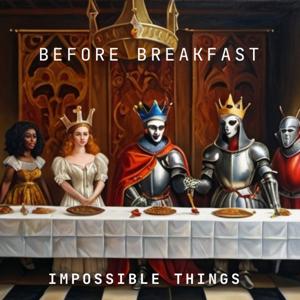


Lies, whether small fabrications or grand distortions, often serve as tools of persuasion. The power of suggestion, similarly, can manipulate perception and shape beliefs. However, neither truly creates a new reality — they merely construct an illusion. The liar, intoxicated by their own fabrications, may feel emboldened, mistaking deception for dominance. Yet, this illusion does not translate into actual power. Instead, it feeds a self-constructed delusion that ultimately weakens rather than strengthens their standing.
The journey to profound inner peace often begins in unexpected ways. For me, it started when my son, Euyee, guided me into meditation and my daughter, Jorgia, helped me focus my intention. Through their gentle teachings, I discovered that true enlightenment can arise from simple, heartfelt practices shared as a family.
There comes a moment — often quiet, sometimes devastating — when you realize that someone has already decided who you are. Not based on your present truth, nor the full context of your past, but on a version of you they’ve chosen to preserve. This version fits their comfort, their narrative, or their control. And no matter how much you evolve, how consistently you show up differently, they remain unmoved. Their perception has hardened into a verdict.
In our hyper-connected world, lending devices and sending texts or calls are often acts of convenience or generosity. A friendly stranger may lend you their computer, or you might borrow a phone to send a quick email or social media message. While these interactions seem entirely benign, they can inadvertently open up opportunities for illicit activities — especially when these devices become conduits for messages aimed at high-stakes targets, like individuals in prison.
In the shadowed corridors of dimensional reality, where identity dissolves and archetype reigns, there exists a class of beings known only as the Eyes. Small in stature yet immense in implication, these creatures are cloaked in absolute black — robes that erase all trace of individuality, and conical headpieces with only two void-like holes for vision. They speak — but we rarely hear them. Their voices are not carried by air but by vibration, by resonance, by the subtle shifts in dimensional pressure that only the attuned can detect. What they say is not for the masses. It is encoded, encrypted, and often meant for entities beyond our comprehension.
There are places in the multiverse that defy metaphor. Places so precise in their cruelty, so architecturally deliberate in their horror, that they cannot be dismissed as myth or allegory. One such place — known to astral navigators, remote viewers, and dimensional analysts as Hell in a Handbasket — is not a figment of religious imagination. It is a reality. A system. A structure. And for some, a destiny.
For centuries, folklore and mysticism have painted human existence with shades of otherworldly influence — a spectral presence that might, in theory, claim dominion over the living. Yet, in the realm of philosophy, science, and rational inquiry, the idea that unseen metaphysical landlords or ghostly proprietors silently govern our bodies simply doesn’t hold water. Let’s explore why this notion is more a tantalizing metaphor than a reflection of reality.
The U.S. border wall is not a security solution — it is a symbolic artifact, a mythic projection of control in a landscape shaped by fear, racial anxiety, and institutional betrayal. Despite billions spent on its construction, maintenance, and expansion, the wall has failed to prevent unauthorized crossings, drug trafficking, or cartel activity. Instead, it functions as a performance of safety, a visual reassurance to the public that the government is “doing something,” even as more effective, less visible tools already exist.
The human fascination with death has always been matched by an equally profound wonder about what lies beyond — or even within — it. What if the moment of death is not a singular, final event but a gateway to a new beginning? Imagine a reality where dying does not trigger a memory of an ending, but instead clears the slate for a brand new day. In this theory, death is not an irreversible cessation but a transition, a reset button that allows life to continue in cycles shaped by non-linear time.
After watching The Handmaid’s Tale, Kathlene reflects on her own traumatic experience within a cult-like family she entered in 2010. Though not living in a dystopian regime, she endured systemic abuse—rape, physical violence, and manipulation—while her children suffered neglect and harm. The family operated as a closed system of control, gaslighting authorities and silencing truth. The show helped her realize she was never part of the family, only their possession. Even after escaping, harassment and stalking persisted. The article reframes survival as mythic resistance, emphasizing the power of truth-telling and the need to keep fighting for autonomy, protection, and healing.
From the publisher's feed