
Sign up to save your podcasts
Or

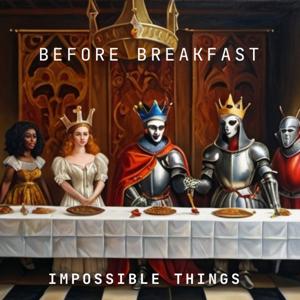


In the realm of video games, a non-player character (NPC) is a familiar concept — an entity that populates the environment but does not participate in the game with agency. NPCs follow scripts, repeat dialogue, and serve specific functions: to guide, obstruct, or decorate the player’s journey. But what if this concept isn’t limited to digital spaces? What if, in the dimension we call reality, there exist entities — human or otherwise — whose purpose is not to evolve or explore, but to regulate, stabilize, and moderate the human experience?
It begins quietly. A strange dream. A sudden synchronicity. A feeling that something — everything — is about to change. Then, without warning, the ground beneath your psyche gives way. You’re no longer who you thought you were. The world no longer makes sense. And the truths you once clung to dissolve into ambiguity.
Beyond its symbolic and ritualistic uses, sound — particularly in the form of controlled sonic frequencies — has gained attention in clinical and experimental settings for its potential to alleviate symptoms of psychosis and other altered states of consciousness. What was once the domain of mystics and shamans is now being explored by neuroscientists and therapists, revealing a fascinating convergence between ancient wisdom and modern science.
In the shadowy corners of folklore and forgotten ritual, a curious myth persists: that the tolling of certain bells — each tuned to a specific note — can guide souls through the realms of death and repel malevolent forces. Known colloquially as “death bells,” these instruments are said to resonate not just through air, but across metaphysical boundaries.
Hallucinations, long stigmatized as symptoms of psychosis, are increasingly being reexamined through the lens of spiritual transformation. From ancient mystics to modern seekers, altered states of consciousness have often been accompanied by vivid auditory and visual phenomena. But what causes these experiences? And why do they so often coincide with moments of profound personal awakening?
Buffalo, NY — Known for its industrial legacy and pioneering use of hydroelectric power, Buffalo has long worn the title “City of Light.” But beneath the surface of its streetlights and steel lies a deeper, more enigmatic story — one of sacred geometry, magnetic energy, and a city layout that some believe was designed to channel forces beyond the physical.
In the shadowy corridors of power, where wealth and influence often shield the guilty, the story of Jeffrey Epstein remains one of the most disturbing and unresolved scandals of our time. His death in a federal jail cell — ruled a suicide but surrounded by suspicious circumstances — did not end the questions. If anything, it intensified them. And at the center of this dark web of abuse, manipulation, and elite protectionism stands Ghislaine Maxwell, the woman who knows too much.
In a world that often equates wealth with worth, poverty can feel like a scarlet letter. But the reality is, living poor — whether by circumstance or choice — doesn’t make you less valuable, less moral, or less good. It simply makes you human.
Introduction Labels define us — sometimes externally, sometimes internally. They guide perceptions, dictate decisions, and have the potential to shape our experiences. But how much do they actually control our lives? Do they create realities we would not otherwise live?
Organized crime has long relied on coded language to communicate directives without incriminating its members. These phrases, often metaphorical, serve as veiled instructions that only insiders understand. Among them, terms like “painting houses” and “taking someone’s house” carry deadly implications, masking violent intentions behind seemingly innocuous words.
From the publisher's feed