
Sign up to save your podcasts
Or

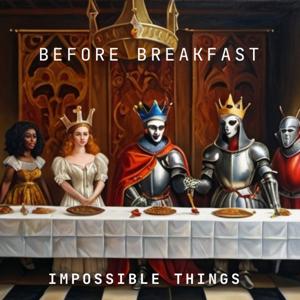


In the shadowy corners of ancient lore and modern conspiracy, a new theory is emerging—one that links three seemingly ordinary individuals to the legendary Anunnaki: Michael Tanner, Jemel Moody, and Kathlene Herberger. Are they just people... or are they reincarnated alien beings from a time before time?
Alien Origins: Sorun, Bet, and Mizzolian
In the covert world of criminal investigations, the line between law enforcement and criminality is often blurred. Police officers and federal informants tasked with infiltrating gangs and cartels must adopt the behaviors, language, and appearance of the very people they are trying to dismantle. This paradoxical strategy, while effective in gathering intelligence and securing convictions, has led to a troubling phenomenon: informants and undercover agents are frequently mistaken for gang members or cartel operatives. This confusion isn’t just a matter of optics — it has real consequences for public trust, legal accountability, and the safety of those involved.
In a quiet neighborhood once known for its resilience, a covert operation unfolded — one not orchestrated by law enforcement, but allegedly by a manipulative figure who weaponized housing vulnerability, social engineering, and digital deception to embed a network of associates under the radar of government surveillance.
In the quiet corridors of the mind, a powerful tool hums beneath the surface — self-talk. Often dismissed as idle chatter or eccentric habit, this internal dialogue is, in fact, a cornerstone of cognitive sophistication. People of higher intelligence frequently engage in self-talk not as a quirk, but as a deliberate mechanism for processing, regulating, and refining their mental landscape. This article explores the cognitive, emotional, and neurological dimensions of self-talk, revealing its role as a purposeful act of intelligence.
In a tale that blurs the lines between myth, alien technology, and cosmic justice, the goddess of death—also revered as the Queen of the Annunaki—descended from the stars to reclaim order from a notoriously unruly human family. With the precision of an interstellar strategist and the mystique of ancient power, she orchestrated a celestial intervention that would ripple across dimensions.
Across obscure forums, encrypted chats, and shadowed corners of social media, a strange pattern emerges. Names like The Piano Man surface—enigmatic figures said to possess direct knowledge of the Anunnaki, ancient beings from Sumerian lore. But these aren’t just mythic echoes. According to scattered testimonies, the Anunnaki are here, now, and they do not like being spoken about.
In the final canticle of Dante Alighieri’s Divine Comedy, the soul does not arrive at a static heaven — it awakens into alignment. Paradiso is not a reward for virtue, nor a celestial escape from earthly suffering. It is a mythic map of the soul’s emergence after descent and integration. It is the radiant culmination of a journey that began in distortion (Inferno) and passed through purification (Purgatorio). For survivors, seekers, and mythic educators, Paradiso offers a vision of spiritual sovereignty: a state of being where love is not control, truth is not dogma, and radiance is not performance — it is presence.
The ancient Sumerian pantheon offers a complex tapestry of divine figures, cosmic dramas, and origin stories. Among them, the Anunnaki stand out as powerful entities — gods of fate, justice, and the underworld. In recent reinterpretations, however, they’ve been recast as slave traders, genetic manipulators, and dimensional overlords. This article doesn’t treat those claims as historical fact, but instead examines their symbolic resonance: the Anunnaki as representations of systemic control, soul fragmentation, and the commodification of the feminine.
In the mythic architecture of Dante Alighieri’s Divine Comedy, Purgatorio is the middle realm — the bridge between the descent into shadow and the ascent into light. It is often overlooked in favor of the dramatic torments of Inferno or the celestial harmonies of Paradiso, but Purgatorio is arguably the most human, the most intimate, and the most spiritually instructive of the three. It is the realm of transformation, where the soul, having named its distortions, begins the slow, sacred work of integration.
In a world that clings to permanence, productivity, and control, death remains the final taboo. It is the great unspoken, the shadowed doorway we pretend doesn’t exist until it arrives uninvited. Our institutions sanitize it, our families fear it, and our cultures often treat it as a failure — a breakdown of the system, a loss of mastery, a disruption to the narrative of progress. Yet across mythic traditions, spiritual lineages, and the lived experiences of those who have brushed against its veil, death is not the end. It is the crossing. The undoing. The sacred rupture that precedes rebirth. What if death is not a termination, but a transmutation? Not a void, but a passage into a more expansive reality?
From the publisher's feed