CONTENT NOTE: This episode discusses the death of Nolan Wells and references to systemic racism and racial violence. Listener discretion is advised.
When 18-year-old Nolan Wells went missing on the Gulf Coast of Mississippi this summer, the question that opened this conversation emerged from Black maternal grief: Why must Black mothers display their grief for answers to come? Helen Hope Kimbrough and Dr. Charlitta Hatch talk with Dr. Tehia Glass and Dr. Erin Miller, both educators at UNC Charlotte, about what it means to raise Black sons when their safety is never a guarantee. They trace the pattern from Emmett Till through Trayvon Martin, Tamir Rice, George Floyd, and now Nolan Wells. They ask harder questions about the talks mothers have to have, the spaces where Black children aren't safe, and what white mothers and allies actually need to understand. More than grief, the conversation explores curiosity as a tool: how curiosity can shift understanding, how centering Black mothers' voices reshapes education policy, and how storytelling creates the generational change that mothers alone shouldn't have to carry.
INDEPENDENT SCHOLARS DISCLAIMER: Dr. Tehia Glass and Dr. Erin Miller are speaking in their individual capacity as educators, scholars, and parents. Their views and perspectives are their own and do not reflect the official positions or endorsement of their institution.
Dr. Tehia Glass is an Assistant Provost and Professor of Educational Psychology at UNC Charlotte with over two decades of experience in education and organizational change. She specializes in culturally responsive teaching and critical conversations about race. Dr. Glass is a TED speaker, co-author of Teaching for Justice and Belonging, co-founder of the Self, Systems, and Social Transformation Graduate Certificate Program, and a contributor to EdWeek, CNN, and MSNBC. Her work centers on creating spaces where people feel seen, supported, and empowered to thrive.
Connect with Dr. Glass:
Dr. Erin Miller is a Professor in Reading and Elementary Education at UNC Charlotte, where she directs the Self, Systems, and Social Transformation Graduate Certificate Program. An award-winning educator and co-editor of an international education journal, Dr. Miller specializes in anti-racist pedagogies and critical race theory in education. Her research focuses on racial identity development, social justice, and culturally sustaining literacy practices.
Connect with Dr. Miller:
Resources mentioned:
Self, Systems, and Social Transformation Graduate Certificate Program
Teaching for Justice and Belonging by Dr. Tehia Starker Glass
3 Foundations for Mothers Fighting for Systemic Change:
Ask questions before you judge. When you lead with curiosity instead of assumptions, you create space for real dialogue instead of defensiveness – and that's where understanding begins.
Center the voices of mothers whose children are most affected. Don't expect mothers to come to the spaces you design; go to where they are. Education reform and systemic change can't happen without centering the expertise of the mothers living it.
Mothers' stories change generations. When mothers share honest stories about raising their children, they unlock hearts in their households and ripple out into their communities. That's the generational power mothers carry.
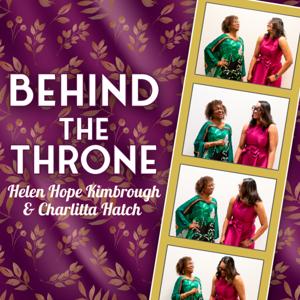
Mothers are the queens of the castle, but let’s be real: it’s not all ball gowns and glass slippers. On this podcast, we’re giving you a peek Behind the Throne at the privilege and responsibility of wearing the crown. Hosted by Helen Hope Kimbrough - a proud wife and mom of two adult sons - and Dr. Charlitta Hatch, a proud wife married to her high school sweetheart, and a proud mom of two little ones. Get ready as we share jewels with each other and you around all things connected to motherhood!
Connect with Us!: