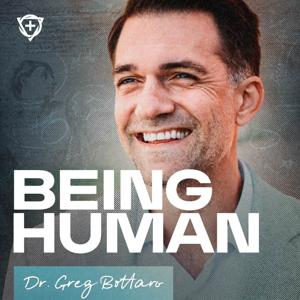
Being Human
Download on the App Store
  • Favorites

    62

    Followers

  • Latest release

    Today

  • Typical duration

    51 min

    per episode

Based on Podcast App listening data

All Being Human episodes

  • Episode 276: Back to Eden: Overcoming the Fear of Being Alone Through Divine Love

    Being seen is not the same as being known. The life of the party can be the most isolated person in the room — filling every silence, commanding every gaze, and going home to an emptiness no audience has ever touched. In this episode, Dr. Greg goes into the loneliest part of the histrionic pattern: why the most socially active person in the room can also be the most profoundly alone, and why only God can reach what no human mirror ever could.

    Key Topics:

    • Why being the most social person in the room can also leave you the most alone
    • What it reveals when provoking a reaction starts to feel more real than having a real conversation
    • How early wounds teach you that your existence depends on other people's responses
    • Why heat is not warmth — and reaction is not connection
    • What Henri Nouwen's I-Thou relationship reveals about why an audience never actually fills you
    • Why no parent was ever meant to give you what you most deeply need
    • Why God is not just the answer to this wound — but the only one it makes sense to bring it to

    Learn More:

    • Need help? Schedule a free CatholicPsych consultation
    • Being Human series on the Histrionic Defense Patterns:
      • Ep. #275: Hiding the Real You: The Histrionic Battle for Intimacy
      • Ep. #274: To Be Loved Is to Perform: Inside the Histrionic Compulsion for Attention and Validation
    • Gaudium et Spes — See paragraph 22 for the full quote of "Christ reveals man to himself and makes his supreme calling clear"
    • Henri Nouwen Society — explore Henri Nouwen's writings on the I-Thou relationship
    • Start of the Being Human series on the Borderline Defense Patterns:
      • Ep. #269: BORDERLINE: The Push-Pull Between a Fear of Abandonment and Annihilation
    • Start of the Being Human series on the Dependent Defense Patterns:
      • Ep. #265: Jerry Maguire, Gollum, and the Fear of Not Existing: A Deep Dive into the Dependent Defense Pattern
    • Start of the Being Human series on the Narcissistic Defense Patterns:
      • Ep. #261: Narcissism and the Terror of Being Ordinary: Why Real Change Happens through Love not Willpower
    • Want to help? Learn more about our Certification in Professional Accompaniment

    Follow Us on Socials: Instagram | Facebook | YouTube | Twitter (X) | LinkedIn

    45 min
  • Episode 275: Hiding the Real You: The Histrionic Battle for Intimacy

    What if the person who lights up every room is actually living in fear and darkness? The humor, the charisma, the ease with which they hold attention - beneath the surface, there's often a fragile system always scanning for the next signal that they're still seen.

    In this episode, Dr. Greg explores how anxious attachment shapes the histrionic pattern - why performance becomes protection, why real closeness can feel threatening even when intimacy is desperately wanted, and how this plays out in relationships and in the spiritual life.

    Key Topics:

    • Why you can light up every room and still feel completely alone
    • How charm can be a defense, not a personality trait
    • Why real closeness can feel more threatening than rejection
    • How anxiety, not vanity, drives the need to be seen
    • Why any reaction, even a negative one, feels better than being ignored
    • Why boredom feels existentially threatening, not just uncomfortable
    • How intensity gets mistaken for intimacy, and what keeps real closeness out of reach

    Learn More:

    • Need help? Schedule a free CatholicPsych consultation.
    • Previous episode in this series - Histrionic Part 1:
      • Ep. #274: To Be Loved Is to Perform: Inside the Histrionic Compulsion for Attention and Validation
    • Home of the Being Human podcast – Easily search 250+ episodes on topics of interest.
    • Amoris Laetitia – Post-Synodal Apostolic Exhortation by Pope Francis on Love and the Family
    • Summit of Integration 2026 – Sign up to learn more about this year's event!
    • The Personalist Cure – Upcoming new book by Dr. Greg Bottaro
    • Don't Be Afraid of Screwing Up Your Kids - Because You Already Are – Dr. Greg's guest appearance on the Messy Family Podcast
    • Start of the Being Human series on the Borderline Defense Patterns:
      • Ep. #269: BORDERLINE: The Push-Pull Between a Fear of Abandonment and Annihilation
    • Start of the Being Human series on the Dependent Defense Patterns:
      • Ep. #265: Jerry Maguire, Gollum, and the Fear of Not Existing
    • Start of the Being Human series on the Narcissistic Defense Patterns:
      • Ep. #261: Narcissism and the Terror of Being Ordinary
    • Previous episodes on parts work:
      • Ep. #34: A New Theory! w/a Catholic Lens
      • Ep. #35: Why Do I Feel Like I Have Conflicting Thoughts? w/ Dr. Peter Malinoski
    • Previous episode on attachment theory:
      • Ep. #63: Attachment Theory: What It Is, What It Isn't, and How It Affects Your Relationships
    • Want to help? Learn more about our Certification in Professional Accompaniment

    Follow Us on Socials: Instagram | Facebook | YouTube | Twitter (X) | LinkedIn

    51 min
  • Episode 274: To Be Loved Is to Perform: Inside the Histrionic Compulsion for Attention and Validation

    "Unless someone notices you, you don't matter." For some people, that's not a passing fear — it's the operating system. In this episode, Dr. Greg opens a new series on histrionic personality patterns, exploring what's really underneath the compulsion for attention and validation: not vanity, not drama, but a terror of non-existence so deep it shapes everything.

    Key Topics:

    • Why attention-seeking can be less about selfishness and more about survival
    • How identity gets built from the outside in — and what gets lost in the process
    • Why the funniest, most entertaining person in the room may be the loneliest
    • What it means when emotional intensity gets mistaken for intimacy
    • How family systems shape and reward the role of the one who keeps everyone watching
    • Why solitude feels so threatening — and what that reveals about all of us
    • How the spiritual life can become its own kind of performance

    Learn More:

    • Need help? Schedule a free CatholicPsych consultation
    • Video reflection from James Van Der Beek (Dawson from Dawson's Creek) on identity, suffering, and faith
    • Start of the Being Human series on the Borderline Defense Patterns:
      • Ep. #269: BORDERLINE: The Push-Pull Between a Fear of Abandonment and Annihilation
    • Start of the Being Human series on the Dependent Defense Patterns:
      • Ep. #265: Jerry Maguire, Gollum, and the Fear of Not Existing
    • Start of the Being Human series on the Narcissistic Defense Patterns:
      • Ep. #261: Narcissism and the Terror of Being Ordinary
    • Previous episodes on parts work:
      • Ep. #34: A New Theory! w/a Catholic Lens
      • Ep. #35: Why Do I Feel Like I Have Conflicting Thoughts? w/ Dr. Peter Malinoski
      • Ep. #49: Internal Family Systems & External Family Tensions
    • Previous episode on attachment theory:
      • Ep. #63: Attachment Theory: What It Is, What It Isn't, and How It Affects Your Relationships
    • Want to help? Learn more about our Certification in Professional Accompaniment

    Follow Us on Socials: Instagram | Facebook | YouTube | Twitter (X) | LinkedIn

    35 min
  • Episode 273: Why Borderline Patterns Are So Hard to Heal (But Not Impossible)

    Borderline patterns are notoriously hard to treat — but the problem isn't a lack of research. It's that the secular framework approaches healing from a disintegrated view of the person. In this final episode of the series, Dr. Greg explores why lasting healing goes deeper than symptom management, what conditions actually make transformation possible, and how the Catholic understanding of the person changes everything.

    Key Topics:

    • Why secular treatment can reduce symptoms but can't reach the wound underneath
    • How projective identification, emotional projection, and crisis bonding emerge from a fragmented self — not from bad character
    • Why healing has to happen in relationship, because that's where the wound began
    • What it actually means to rebuild a coherent sense of self from the inside out
    • Why lasting healing requires stable, unidirectional support over time — and why a romantic relationship can't provide it
    • How faith, psychology, and science work together to restore integration and agency

    Learn More:

    • Need help? Schedule a free CatholicPsych consultation
    • Love and Responsibility by St. John Paul II
    • Correcting Aquinas: JP2's Truth Bomb on Gender and Human Dignity (Ep. #197) — why marriage can't be a place of healing when the power dynamics are built on a lie
    • Previous episode in this series on the Borderline Defense Patterns:
      • Ep. #272: You Are Not Your Feelings: From Borderline Chaos to Inner Coherence
      • Ep. #271: Forgive, Explode, Repeat: Humanizing Borderline Personality with St. John Paul II
      • Ep. #270: I Hate You, Don't Leave Me: The Chaos of the Disorganized Attachment
      • Ep. #269: BORDERLINE: The Push-Pull Between a Fear of Abandonment and Annihilation
    • Start of the Being Human series on the Dependent Defense Patterns:
      • Ep. #265: Jerry Maguire, Gollum, and the Fear of Not Existing
    • Start of the Being Human series on the Narcissistic Defense Patterns:
      • Ep. #261: Narcissism and the Terror of Being Ordinary
    • Want to help? Learn more about our Certification in Professional Accompaniment

    Follow Us on Socials: Instagram | Facebook | YouTube | Twitter (X) | LinkedIn

    46 min
  • Episode 272: You Are Not Your Feelings: From Borderline Chaos to Inner Coherence

    Breathing exercises help. But they have a ceiling. For someone whose interior world is constant emotional chaos, no amount of skill-building will reach the level where real healing happens. In this episode, Dr. Greg unpacks what actually transforms borderline patterns — not DBT techniques or symptom management, but the kind of sustained, stable relationship that reorganizes the subconscious and restores a coherent sense of self.

    Key Topics:

    • Why skills like DBT can help but can't replace what's actually missing
    • What it feels like to be subject to your emotions rather than the one having them
    • Why healing looks like forming a continuous "I" — not feeling better in the moment
    • How a consistent, stable relationship quietly rewires the interior life over time
    • Why the same patterns that made life chaotic can become a superpower in healing
    • What it means to move from surviving to true encounter — and why that distinction matters

    Learn More:

    • Need help? Schedule a free CatholicPsych consultation
    • Previous episode in this series on the Borderline Defense Patterns:
      • Ep. #271: Forgive, Explode, Repeat: Humanizing Borderline Personality with St. John Paul II
      • Ep. #270: I Hate You, Don't Leave Me: The Chaos of the Disorganized Attachment
      • Ep. #269: BORDERLINE: The Push-Pull Between a Fear of Abandonment and Annihilation
    • Start of the Being Human series on the Dependent Defense Patterns:
      • Ep. #265: Jerry Maguire, Gollum, and the Fear of Not Existing
    • Start of the Being Human series on the Narcissistic Defense Patterns:
      • Ep. #261: Narcissism and the Terror of Being Ordinary
    • Stop Walking on Eggshells – A guide for navigating relationships affected by borderline personality patterns
    • Want to go deeper into discernment? Explore our Discernment of Spirits course.
    • Want to help? Learn more about our Certification in Professional Accompaniment

    Follow Us on Socials: Instagram | Facebook | YouTube | Twitter (X) | LinkedIn

    1 hr 3 min
  • Episode 271: Forgive, Explode, Repeat: Humanizing Borderline Personality with St. John Paul II

    Forgive. Explode. Repeat. That's the cycle — and no matter how much effort goes into the repair, it keeps starting over. In this episode, Dr. Greg explores why genuine healing can't happen inside the cycle itself, what "walking on eggshells" misses about the person suffering, and how St. John Paul II's vision of the human person restores dignity to everyone caught in these patterns.

    Key Topics:

    • Why repair doesn't actually heal — and what's really driving the reset
    • Why calm can feel more threatening than crisis
    • What "walking on eggshells" gets right and what it leaves out
    • How the rupture-repair cycle creates the illusion of intimacy without building it
    • Why both people in the pair end up losing themselves
    • How Catholic anthropology sees the person beneath the pattern

    Learn More:

    • Need help? Schedule a free CatholicPsych consultation
    • Previous episode in this series on the Borderline Defense Patterns:
      • Ep. #270: I Hate You, Don't Leave Me: The Chaos of the Disorganized Attachment
      • Ep. #269: BORDERLINE: The Push-Pull Between a Fear of Abandonment and Annihilation
    • Start of the Being Human series on the Dependent Defense Patterns:
      • Ep. #265: Jerry Maguire, Gollum, and the Fear of Not Existing
    • Start of the Being Human series on the Narcissistic Defense Patterns:
      • Ep. #261: Narcissism and the Terror of Being Ordinary
    • Person and Act by Karol Wojtyla (Pope St. John Paul II)
    • Stop Walking on Eggshells – A guide for navigating relationships affected by borderline personality patterns
    • Want to help? Learn more about our Certification in Professional Accompaniment

    Follow Us on Socials: Instagram | Facebook | YouTube | Twitter (X) | LinkedIn

    57 min
  • Episode 270: I Hate You, Don't Leave Me: The Chaos of the Disorganized Attachment

    "I love you… now go away." That's the kind of chaos disorganized attachment creates. It's not drama or manipulation. It's deep inner turmoil that makes love feel dangerous and safety hard to trust. In this episode, Dr. Greg explores how childhood wounds shape these push-pull patterns, why closeness can feel threatening even when love is real, and how disorganized attachment helps make sense of borderline personality patterns.

    Key Topics:

    • Why someone can put you on a pedestal one day and tear you down the next
    • How childhood wounds create push-pull patterns that feel impossible to escape
    • Why closeness can feel like a threat, even when love is real
    • How disorganized attachment helps explain borderline personality patterns
    • Why these patterns are rooted in inner turmoil, not simple manipulation
    • How healing begins by making sense of the chaos instead of being swallowed by it

    Learn More:

    • Need help? Schedule a free CatholicPsych consultation
    • Previous episode on attachment theory:
      • Ep. #63: Attachment Theory: What It Is, What It Isn't, and How It Affects Your Relationships
    • Previous episode in this series on the Borderline Defense Patterns:
      • Ep. #269: BORDERLINE: The Push-Pull Between a Fear of Abandonment and Annihilation
    • Start of the Being Human series on the Dependent Defense Patterns:
      • Ep. #265: Jerry Maguire, Gollum, and the Fear of Not Existing
    • Start of the Being Human series on the Narcissistic Defense Patterns:
      • Ep. #261: Narcissism and the Terror of Being Ordinary
    • Stop Walking on Eggshells – A guide for navigating relationships affected by borderline personality patterns
    • Want to help? Learn more about our Certification in Professional Accompaniment
    Follow Us on Socials: Instagram | Facebook | YouTube | Twitter (X) | LinkedIn

    39 min
  • Episode 269: BORDERLINE: The Push-Pull Between a Fear of Abandonment and Annihilation

    Borderline personality patterns are often misunderstood and mislabeled—but beneath the surface is a painful struggle shaped by identity instability, emotional overwhelm, and the exhausting push–pull between fearing abandonment and fearing annihilation. In this episode, Dr. Greg brings clarity and compassion to this pattern, offering language and hope for anyone who recognizes these dynamics in themselves or in someone they love.

    Key Topics:

    • Why borderline patterns are so often misunderstood
    • The exhausting push–pull between fearing abandonment and fearing annihilation
    • How identity instability fuels intense relationship dynamics
    • Why emotions can feel overwhelming and all-consuming
    • Why conflict and drama can start to feel like proof of connection
    • How integration and truth open the path toward healing

    Learn More:

    • Need help? Schedule a free CatholicPsych consultation
    • Start of the Being Human series on the Dependent Defense Pattern:
      • Ep. #265: Jerry Maguire, Gollum, and the Fear of Not Existing
    • Start of the Being Human series on the Narcissistic Defense Pattern:
      • Ep. #261: Narcissism and the Terror of Being Ordinary
    • Stop Walking on Eggshells – A guide for navigating relationships affected by borderline personality patterns
    • Want to help? Learn more about our Certification in Professional Accompaniment

    Follow Us on Socials: Instagram | Facebook | YouTube | Twitter (X) | LinkedIn

    54 min
  • Episode 268: What Free Love Ought to Mean: Healing Codependent Wounds and Learning to Love Freely

    Even if you're Christian — even if your spouse is a genuinely good person — you can still feel deeply unfulfilled. In this episode, Dr. Greg explores how asking another person to carry your identity, security, and worth turns love into survival — and leaves both people depleted.

    Key Topics:

    • How misplaced dependence slowly erodes love
    • Why identity collapses when relationships become sources of self-worth
    • The difference between free self-gift and anxious attachment
    • How to properly order your love

    Learn More:

    • Pilgrimage to Poland - Learn more about this interior journey with St. John Paul II
    • Summit of Integration 2026 - Sign up to learn more about this year's event!
    • Healing Retreat in Wyoming - Learn more about our upcoming retreat experience.
    • Being Human episodes on the Dependent Defense Pattern:
      • Ep. #267: Not All Satisfaction Is Good: Understanding Codependency As Relationship Cancer
      • Ep. #266: You're Giving Too Much! Uncovering How Anxiety Disguises Itself as Holiness
      • Ep. #265: Jerry Maguire, Gollum, and the Fear of Not Existing
    • Gaudium et Spes - Pastoral Constitution on the Church in the Modern World by Pope Paul VI
    • Need help? Schedule a free CatholicPsych consultation
    • Want to help? Learn more about our Certification in Professional Accompaniment

    Follow Us on Socials: Instagram | Facebook | YouTube | Twitter (X) | LinkedIn

    58 min
  • Episode 267: Not All Satisfaction Is Good: Understanding Codependency As Relationship Cancer

    What if you're mistaking something emotionally dangerous for love? In this episode, Dr. Greg tackles a painful but common pattern: relationships that look close, committed, and appear to be flourishing, yet quietly trap both people in fear, dependence, and anxiety.

    Key Topics:

    • Why both partners can feel "happy" even as the relationship becomes unhealthy
    • How codependency distorts the kind of free, fruitful relationships God calls us to
    • Why awareness and willpower aren't enough to break these cycles – and what we can do to heal them

    Learn More:

    • Pilgrimage to Poland - Learn more about this interior journey with St. John Paul II
    • Being Human episodes on the Dependent Defense Pattern:
      • Ep. #266: You're Giving Too Much! Uncovering How Anxiety Disguises Itself as Holiness
      • Ep. #265: Jerry Maguire, Gollum, and the Fear of Not Existing
    • Person and Act by Karol Wojtyla (Pope Saint John Paul II)
    • Love and Responsibility by Karol Wojtyla (Pope Saint John Paul II)
    • Discernment of Spirits - Learn more through the lens of Catholic anthropology and Catholic mindfulness
    • Need help? Schedule a free CatholicPsych consultation
    • Want to help? Learn more about our Certification in Professional Accompaniment

    Follow Us on Socials: Instagram | Facebook | YouTube | Twitter (X) | LinkedIn

    56 min