
Sign up to save your podcasts
Or

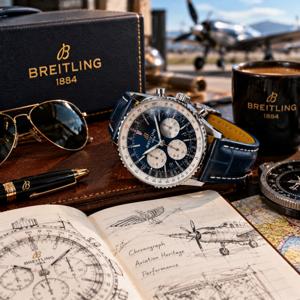


Few watchmaking themes connect engineering, adventure, and everyday practicality as naturally as aviation. Pilot watches have long been designed around clear displays, reliable timekeeping, and controls that can be understood quickly. For beginners, exploring Breitling's design heritage offers an engaging introduction to chronographs, instrument-inspired dials, materials, and the relationship between technical function and visual identity.
1. Understanding the Appeal of Aviation WatchesAviation watches developed around practical needs. Pilots and navigators needed to read the time quickly, measure elapsed intervals, and work with instruments under demanding conditions. These requirements influenced many familiar design features, including prominent numerals, contrasting hands, precise minute markings, and additional timing displays.
Over time, these functional elements became a recognizable aesthetic. A large dial, clearly defined bezel, and purposeful arrangement of information can make a watch feel technical without relying on decorative excess. The appeal extends beyond aviation professionals because the design communicates precision and readiness.
Breitling is closely associated with aviation-oriented watchmaking and chronographs. For a new enthusiast, the useful starting point is not simply identifying a famous model. It is understanding why a particular design uses its shapes, scales, and controls, and whether those details remain useful in ordinary life.
2. The Chronograph: More Than an Extra DialA chronograph is a watch function that measures elapsed time independently of the normal time display. Many chronographs use pushers beside the crown to start, stop, and reset the timing mechanism. Subdials commonly display elapsed seconds, minutes, or hours, depending on the movement and layout.
Chronographs are interesting because they combine mechanical complexity with a clear practical purpose. They can be used to time a journey, a cooking interval, an exercise session, or any event where elapsed time matters. Their additional hands and scales also create a distinctive visual identity.
However, more information requires more careful design. A well-organized chronograph should allow the wearer to distinguish the normal time display from the timing functions. When comparing models, examine the contrast of the hands, the spacing of the subdials, and whether the pushers are comfortable to operate.
3. Learn to Read a Technical DialA technical dial may initially appear crowded to a beginner. Multiple scales, small counters, and additional markings can compete for attention unless their purposes are understood. Begin by identifying the central hands, hour markers, minute track, and any subdials. Then determine what each additional scale measures.
Contrast is essential. Bright markers against a dark background can improve readability, while luminous material may help in low-light conditions. The exact performance depends on the watch and its materials, so it is worth checking the specifications rather than assuming that every sporty design has the same capabilities.
Pay attention to typography as well. Numeral shape, marker thickness, and the spacing of labels affect how quickly information can be recognized. A strong technical design creates a hierarchy: the most important information should be easiest to find, while secondary functions remain accessible without overwhelming the display.
4. Bezel Design and the Language of InstrumentsThe bezel frames the dial and can serve a practical purpose. Depending on the watch, it may carry timing markings, a slide-rule scale, or other reference information. A rotating timing bezel can help measure elapsed intervals, while a fixed scale may support calculations when used according to its intended design.
These features can make a watch feel like a compact instrument. Their usefulness, however, depends on the specific scale and how it is operated. A beginner should learn what a bezel does before treating it as a decorative feature or assuming that every marked bezel has the same function.
From a design perspective, the bezel also influences the apparent size of the dial. A broad bezel can make the display feel more compact, while a narrow one may leave more visual space for hands and markers. Small differences in proportions can significantly change the watch's personality.
Collector's tip: When examining a chronograph or pilot-style watch, identify the purpose of each scale before judging its appearance. Understanding function often makes the design more interesting and helps you decide whether the extra detail is useful to you.
5. Case Materials, Weight, and Everyday ComfortMaterial selection affects a watch's appearance, weight, durability, and maintenance. Stainless steel is widely used because it offers a versatile combination of strength and corrosion resistance. Titanium is lighter and may suit wearers who prefer a less substantial feel. Other materials can introduce different colors, textures, or surface properties.
A large aviation-inspired watch may look impressive, but dimensions matter when it is worn for a full day. Case diameter, thickness, lug-to-lug length, and bracelet design all influence comfort. A thick case may catch beneath a shirt cuff, while a heavy bracelet may feel tiring during extended wear.
Whenever possible, try a watch on in person. If that is not an option, compare its published measurements with a watch you already own and find comfortable. Consider how the crown and pushers sit against your hand, whether the strap adjusts securely, and how the weight feels when your wrist moves.
6. Mechanical and Quartz MovementsThe movement is the mechanism that measures time and drives the display. Quartz watches use an electronic circuit regulated by a vibrating quartz crystal. They are generally convenient and require relatively little routine attention, making them practical for everyday timekeeping.
Mechanical watches store energy in a mainspring and release it through gears and a regulating mechanism. Automatic mechanical movements use wrist motion to wind the mainspring. Enthusiasts often value these movements for their engineering and traditional craftsmanship, although they require appropriate care and may need professional servicing.
Chronographs can use either quartz or mechanical movements. The right choice depends on your priorities: convenience, mechanical interest, accuracy expectations, service costs, and budget. A mechanical movement is not automatically the best choice for every beginner, just as a quartz movement should not be dismissed simply because it uses electronics.
7. Researching Breitling-Inspired Designs ResponsiblyWhen exploring aviation-inspired watches, compare the design, movement, dimensions, and functions rather than relying on a brand name alone. Look at the dial layout, the operation of the chronograph, the case finishing, and the bracelet or strap. These details help explain why two watches that share a broad visual style may offer very different experiences.
Readers researching Replica Breitling should distinguish between a product's visual resemblance to a recognized design and verified information about its origin and construction. A similar appearance does not establish that a watch is an authentic product from the original manufacturer, nor does it prove the quality of the movement or materials.
Before making a purchase, examine the product description, seller reputation, return policy, and available documentation. If authenticity matters, seek appropriate verification from a qualified professional. Do not rely solely on photographs, promotional language, or a low price to determine whether a watch is genuine.
A consistent comparison method is useful. Record the reference number, movement type, case dimensions, functions, materials, water-resistance rating, warranty terms, and expected servicing costs. This approach turns browsing into a structured decision rather than a reaction to attractive imagery.
8. Water Resistance and Practical UseSome sports and aviation watches are designed with water resistance, but the exact rating varies by model. Water resistance is not a permanent guarantee: seals can age, and damage or improper handling may compromise protection. Always consult the manufacturer's guidance for the specific watch before exposing it to water.
Also consider the environment in which you plan to wear the watch. A chronograph may be useful for everyday timing, but its additional pushers and subdials may be unnecessary if you prefer a simple display. A large, technical watch can complement casual clothing, while a slimmer model may be easier to wear in a formal setting.
The most practical watch is not necessarily the one with the greatest number of features. It is the one whose functions, dimensions, and care requirements fit your daily routine.
9. Budget for Ownership, Not Just the PurchaseLong-term ownership costs deserve attention before you buy. Depending on the watch, expenses may include servicing, strap replacement, repairs, bracelet adjustment, and insurance. Mechanical chronographs can be more complicated to service than simpler movements, so maintenance expectations should form part of your budget.
For pre-owned watches, ask about condition and service history. Check whether the seller provides documentation and a clear return policy. If a watch has not been serviced for a long time, the cost of restoring it may change the overall value of the purchase.
Avoid assuming that a particular model will increase in value. Demand and resale prices change, and future performance is uncertain. Choose a watch because you understand its design and can comfortably afford its ownership costs, not because someone promises a financial return.
Conclusion: Appreciate the Function Behind the FormAviation-oriented watch design provides a fascinating starting point for anyone learning about horology. Chronographs reveal how mechanical functions can be integrated into a readable display, bezels demonstrate the relationship between utility and geometry, and case materials show how engineering choices influence comfort and appearance.
As you explore, look beyond the silhouette and learn what each component does. Verify specifications, consider the practical realities of ownership, and distinguish visual similarity from confirmed authenticity. With patience and a curious eye, you can develop a genuine appreciation for watch design without needing to own every model that catches your attention.
From the publisher's feed