
Sign up to save your podcasts
Or

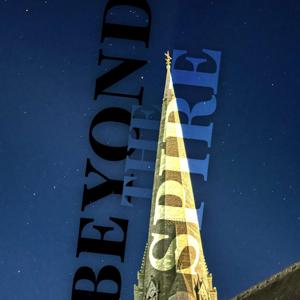


After tracing chant from its roots to the present, “Beyond the Spire” closes by asking whether this ancient music still has a future. The answer is an emphatic yes: Gregorian chant slows modern haste, unites voices in common prayer, forms memory, and keeps doctrine sounding in the life of the Church, inseparable from the Roman rite.
The episode ends not in nostalgia, but in an appeal to learn, listen, participate, and help restore the Church’s own song.
Content
Sponsors
External Links
Available on all podcasts platforms
Watch on YouTube @Beyond_the_Spire
Listen to the album: Now on Spotify
—
More about St Walburge’s Shrine
Website: icksp.org.uk/preston
YouTube: @ICKSPPrestonSt.Walburge
Instagram: st_walburge_s_preston
Facebook: icksp.preston
TikTok: stwalburge.icksp
This instalment examines the proper place of the organ in a liturgical world centred on Gregorian chant. The very title expresses the principle: the greatest instrument appears most noble when it knows how not to dominate. The episode considers accompaniment, alternatim practice, the maintenance of pitch, and the danger of imposing harmonic or rhythmic habits foreign to chant. It is an important practical meditation on hierarchy in sacred music.
Content
Guest
Sponsors
External Links
Available on all podcasts platforms
Watch on YouTube @Beyond_the_Spire
Listen to the album: Now on Spotify
—
More about St Walburge’s Shrine
Website: icksp.org.uk/preston
YouTube: @ICKSPPrestonSt.Walburge
Instagram: st_walburge_s_preston
Facebook: icksp.preston
TikTok: stwalburge.icksp
This episode examines singing Gregorian chant today, noting how contemporary habits, technology, and expectations differ dramatically from the past. It reflects on hearing with modern ears, the realities of current liturgical settings, and the task of introducing an ancient sacred language to communities. Chant requires patience, attentive listening, discipline, and liturgical objectivity—traits often in tension with modern culture. The discussion considers obstacles such as weakened formation, low confidence, and parish difficulties, alongside opportunities like new resources, renewed interest, and the potential for meaningful transmission. Gregorian chant is ancient yet not obsolete; the challenge is to let it live authentically in today’s world.
Content
Sponsors
External Links
Available on all podcasts platforms
Watch on YouTube @Beyond_the_Spire
Listen to the album: Now on Spotify
—
More about St Walburge’s Shrine
Website: icksp.org.uk/preston
YouTube: @ICKSPPrestonSt.Walburge
Instagram: st_walburge_s_preston
Facebook: icksp.preston
TikTok: stwalburge.icksp
This episode leaves the direct analysis of melodies and turns to the nineteenth-century recovery of Gregorian chant. At its centre stands Dom Prosper Guéranger and Solesmes Abbey, presented as decisive in restoring both Roman liturgy and Roman chant after a long period of decline, which drives further more than a musicological school or study: a living tradition, one that joins scholarship, liturgy, theology, and spiritual discipline in a single vision. The conversation frames that work not as nostalgia, but as a broad spiritual, theological, and cultural renewal rooted in Romanitas: noble simplicity, doctrinal unity, universality, and fidelity to the Roman Church, all embodied in chant. The result is a compelling defence of tradition as something alive rather than museum-like. It is one of the most important historical episodes in the series.
Content
Guests
Sponsors
External Links
Available on all podcasts platforms
Watch on YouTube @Beyond_the_Spire
Listen to the album: Now on Spotify
—
More about St Walburge’s Shrine
Website: icksp.org.uk/preston
YouTube: @ICKSPPrestonSt.Walburge
Instagram: st_walburge_s_preston
Facebook: icksp.preston
TikTok: stwalburge.icksp
This episode studies the gradual eclipse of Gregorian chant in the later history of Western church music. As musical culture changed, and as Renaissance and later styles introduced different ideals of beauty, authorship, and expression, chant no longer occupied the same central place in practice. The episode does not present this decline as a simple catastrophe with one cause, but as the result of another mind and another world slowly taking shape. It is a sober meditation on what happens when the Church’s own song loses its native environment: chant declines when the world that naturally understands it declines as well.
Content
Guests
Sponsors
External Links
Available on all podcasts platforms
Watch on YouTube @Beyond_the_Spire
Listen to the album: Now on Spotify
—
More about St Walburge’s Shrine
Website: icksp.org.uk/preston
YouTube: @ICKSPPrestonSt.Walburge
Instagram: st_walburge_s_preston
Facebook: icksp.preston
TikTok: stwalburge.icksp
From early organum to Palestrina and the Counter-Reformation, the discussion traces the gradual separation between chant as prayerful utterance and music as increasingly complex art. The Council of Trent established rules for chant, not as an enemy of beauty, but as a defender of intelligibility and liturgical purpose. Polyphony brought enrichment and trial: Palestrina becomes emblematic of the effort to preserve beauty without sacrificing clarity. This episode is especially useful for understanding the Church’s criteria in matters of sacred music.
Content
Guests
Sponsors
External Links
Available on all podcasts platforms
Watch on YouTube @Beyond_the_Spire
Listen to the album: Now on Spotify
—
More about St Walburge’s Shrine
Website: icksp.org.uk/preston
YouTube: @ICKSPPrestonSt.Walburge
Instagram: st_walburge_s_preston
Facebook: icksp.preston
TikTok: stwalburge.icksp
This is one of the most beautiful conceptual episodes in the series, because it treats the Easter liturgy like several cameras turned toward one mystery. Resurrexi (mode 4) gives the interior face of Easter, Vesperi autem sabbati (mode 8) its public proclamation, and Victimæ Paschali Laudes (mode 1) its dramatic catechesis. We may expect Easter to begin in dazzling brightness, but this episode shows that Gregorian chant often chooses a subtler path. The introit remains soft, recitative-like, and contemplative, even on the Church’s greatest feast. What emerges is a richly layered theology of Resurrection in sound.
Content
Source song
Sponsors
External Links
Available on all podcasts platforms
Watch on YouTube @Beyond_the_Spire
Listen to the album: Now on Spotify
—
More about St Walburge’s Shrine
Website: icksp.org.uk/preston
YouTube: @ICKSPPrestonSt.Walburge
Instagram: st_walburge_s_preston
Facebook: icksp.preston
TikTok: stwalburge.icksp
This Good Friday episode unfolds in two linked stages: first the presentation of the Cross, then the grave voice of Christ in the Reproaches. There is a shift from mode 6 to mode 1, a change that keeps the same general range yet alters the inner light of the music. That shift helps listeners hear the passage from solemn invitation to sorrowful questioning, the Lord’s serious and tender address to His people. The whole piece becomes a spiritual path from adoration to compunction born of reverence rather than emotional pressure.
Content
Source song
Sponsors
External Links
Available on all podcasts platforms
Watch on YouTube @Beyond_the_Spire
Listen to the album: Now on Spotify
—
More about St Walburge’s Shrine
Website: icksp.org.uk/preston
YouTube: @ICKSPPrestonSt.Walburge
Instagram: st_walburge_s_preston
Facebook: icksp.preston
TikTok: stwalburge.icksp
In this episode, the Church’s liturgy is heard turning in a single movement from triumph to sorrow. Palm Sunday begins with the king entering Jerusalem, but the introit for Mass already opens onto the mystery of rejection and suffering, leading the listener inward, toward supplication and the coming Passion. What matters most is that the chant does not dramatise Christ as defeated, but presents His prayer as confident, calm, and obedient. The modal language of the chant carries this movement from public acclaim to grave interior prayer: music becomes a lesson in how the Passion is to be contemplated.
Content
Source song
Sponsors
External Links
Available on all podcasts platforms
Watch on YouTube @Beyond_the_Spire
Listen to the album: Now on Spotify
—
More about St Walburge’s Shrine
Website: icksp.org.uk/preston
YouTube: @ICKSPPrestonSt.Walburge
Instagram: st_walburge_s_preston
Facebook: icksp.preston
TikTok: stwalburge.icksp
Here the series turns from explanation to direct experience by placing the listener inside the Christmas Midnight Mass. The introit Dominus Dixit Ad Me is presented as a real sung prayer: rather than chasing polish, the programme embraces the concrete reality of liturgical prayer and lets the chant sound as it did in ceremony. Its simple line, gentle movement, and delicate emphasis on key words are read as signs of theological depth rather than musical poverty. In Gregorian chant, the greatest mysteries are often spoken with the quietest voice.
Content
Source song
Sponsors
External Links
Available on all podcasts platforms
Watch on YouTube @Beyond_the_Spire
Listen to the album: Now on Spotify
—
More about St Walburge’s Shrine
Website: icksp.org.uk/preston
YouTube: @ICKSPPrestonSt.Walburge
Instagram: st_walburge_s_preston
Facebook: icksp.preston
TikTok: stwalburge.icksp