
Sign up to save your podcasts
Or



What if the pressure to be the “good one” was actually a trauma response?
In Episode 10 of Beyond the Spot, Tracy Gantlin-Monroy unpacks the origins and impacts of the “model minority” myth—a narrative that has shaped and harmed Asian American, Latinx, and immigrant communities for generations.
We explore how survival-based personas like perfectionism, overachievement, and silence are often rooted in collective trauma, assimilation pressure, and intergenerational fear. Through a Brainspotting lens, Tracy reveals how “good behavior” is not always goodness—but a nervous system seeking safety.
This episode is a call to deconstruct false proximity to whiteness, reframe internalized performance, and restore humanity across all cultures.
Whether you're a clinician, community leader, or someone healing from the myth yourself—this one’s for you.
Our emotions were never the problem—our silence was survival. In this episode, Tracy Gantlin-Monroy, MDiv, LPC, Brainspotting Trainer, reclaims the rage and grief of Black, Brown, and Indigenous women—and exposes how those feelings have been pathologized under the white gaze.
From the “Angry Black Woman” trope. The “spicy Latina.” The “stoic Native.” To emotional invisibility in the therapy room, Tracy breaks down how Brainspotting supports embodied reclamation—and how healing becomes possible when the full spectrum of expression is welcomed.
She also calls in white-bodied clinicians and co-conspirators: Liberation costs comfort. Authenticity requires discomfort. And healing demands truth.
This episode is a sanctuary for grief, a song for rage, and a reckoning for those ready to feel.
Summary: For generations, BIPOC communities have been told we’re “too emotional.” Too angry. Too dramatic. Too loud. Too sensitive. Too much.
But what if our emotions were never the problem—just the truth?
In this episode of Beyond the Spot, Tracy Gantlin-Monroy, MDiv, LPC, Brainspotting Trainer, invites us to reclaim the full spectrum of our emotional expression—from ancestral grief to righteous rage.
She breaks down how tropes like the “Angry Black Woman,” the “model minority,” and the “stoic Native” suppress embodied truth—and how Brainspotting helps us liberate what the nervous system never forgot.
Tracy also speaks directly to white-bodied co-conspirators about the cost of choosing justice, and how true allyship requires emotional honesty and the willingness to be uncomfortable.
Because healing doesn’t require silence. It requires space. And our bodies already know what to do with that space—if we let them.
Is Spirituality Missing from Therapy?
A Call Back to Our Ancestors with Tracy Gantlin-Monroy, MDiv, LPC, Brainspotting Trainer
What happens when therapy leaves spirit at the door?
In this episode, Tracy Gantlin-Monroy challenges the Western clinical model’s detachment from the sacred and calls for a return to spiritually rooted healing. With reverence and clarity, she explores how ancestral practices, ritual, and embodied spirituality are not only valid in the therapy room—but vital.
From Brainspotting as modern soul retrieval to breath as prayer, Tracy shares how therapists and clients alike can reconnect with what many lineages have always known: healing is sacred, not sterile.
This episode is a call back—not just to tradition, but to the sacred memory inside the body.
Journal Prompt Listeners
“What did the women, elders, or spirit-keepers in your life do that brought peace—before they had access to therapy?”
“If you could speak to your lineage today… what would your nervous system ask for?”
What Radical Attunement Looks Like with Tracy Gantlin-Monroy, MDiv, LPC, Brainspotting Trainer
What if survival isn’t the goal—but the beginning?
In this episode, Tracy Gantlin-Monroy explores what it means to move beyond surviving into resonance—where the nervous system feels safe enough to be fully seen. With deep grounding in Brainspotting, somatics, and cultural awareness, Tracy names how trauma teaches us to scan and perform, while true healing invites rest, presence, and radical attunement.
She calls the roll across BIPOC, Jewish, Queer, and historically silenced communities, honoring the survival strategies that have carried generations. Then, she shows how Brainspotting supports the return to resonance—not as a clinical outcome, but as a birthright.
This episode is a call to feel, a reminder that being met with presence is not a luxury—it’s liberation.
Brainspotting isn’t just for private practice or clinical jargon—it belongs in the barbershop, the community clinic, the classroom, community associations, ancient healing circles, on the corner, on the catamaran, the veranda during the storm, the living room, under the tree, and the hood. Brainspotting is a powerful therapeutic tool—but unlike many modalities rooted in Western clinical systems, it was designed with indigenous communities in mind, given it’s inherent nature towards the dual attunement frame, relational & neurobiological. And, the uncertainty principle.
In this episode, Tracy Gantlin-Monroy breaks down how Brainspotting honors the language of the people, culture, and brought to the people it was designed to reach; all people—and, absolutely must serve. Drawing from her lived experience as a clinician, trainer, and cultural translator, Tracy reframes neuroscience as a tool for liberation, not elitism.
This is a conversation about access, embodiment, and reclaiming the nervous system’s power—right where people live.
What does it mean when therapy claims to be “neutral”? And who does that neutrality actually protect?
In this episode, Tracy Gantlin-Monroy, MDiv, LPC, challenges the myth of neutrality in clinical spaces—exploring how silence around whiteness, race, power, and culture often reinforces harm. Drawing from her own lived experience as an American Black therapist and her recent training in neuroscience, trauma, and psychotherapy with Dr. Damir del Monte in Poland, Tracy expands the conversation beyond social justice and into the nervous system.
She explores how trauma is processed in the brain and body, how “prediction errors” create openings for healing, and how therapy becomes a new experience that rewires perception—when done with cultural and somatic attunement.
Misinformation in Mental Health: What’s Not Being Said Beyond the Spot with Tracy Gantlin-Monroy, MDiv, LPC
In this episode, Tracy unpacks the rising tide of mental health misinformation and how it’s reshaping the healing landscape—for better and worse.
With the rise of Instagram “therapists,” viral trauma trends, and algorithm-approved narratives, many people are unknowingly absorbing false or harmful beliefs about what healing should look like.
Tracy challenges popular myths like:
She names how unqualified voices, oversimplified posts, and content-driven healing can:
Grounded in her expertise in Brainspotting, somatic therapy, and clinical care, Tracy shares what actually supports nervous system repair—including slowness, silence, and deep attunement.
Key Themes:
In Episode 2 of Beyond the Spot, Tracy explores what happens when trauma is not just remembered through thought—but through sensation, posture, stillness, and sound. This episode is an invitation to listen to the wisdom of your body and honor the role culture plays in nervous system healing.
Drawing from her clinical background in Somatic Experiencing and Brainspotting, Tracy guides us through the ways the body communicates before words arrive—and how culture offers the rituals, rhythms, and refuge that support regulation. Whether you’ve been disconnected from your body, misunderstood in therapy, or misdiagnosed entirely, this conversation offers a new path home.
This episode also dismantles the idea that healing is just about “coping,” and introduces listeners to the power of culturally rooted somatic care—care that doesn’t force the story, but follows the signal.
In this first episode of Beyond the Spot, Tracy Gantlin-Monroy, MDiv, LPC, lays the foundation for the journey ahead—unpacking what Brainspotting really is and why it matters.
Forget the myths. This isn’t hypnosis, and it’s not just another trauma trend. It’s a body-based, neuroscience-backed, culturally attuned modality that helps your system finish what trauma interrupted.
Tracy shares how Brainspotting creates space for silence, resonance, and truth—especially for those who have been misdiagnosed, dismissed, or told to “just talk about it.”
This is the episode that sets the tone: honest, grounded, and revolutionary. Because the healing doesn’t start with retelling. It starts with being seen.
From the publisher's feed
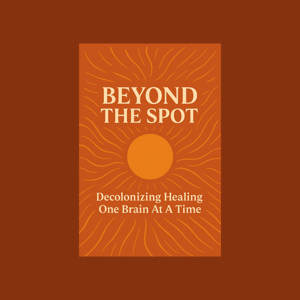
Beyond the Spot: Decolonizing Healing One Brain at a Time is a bold and restorative podcast hosted by Tracy Gantlin-Monroy, MDiv, LPC, and the first Black female Brainspotting…
Join Tracy as she challenges mental health misinformation, uplifts body-based wisdom, and invites you to reclaim healing as a birthright. For clinicians, seekers, and anyone ready to go deeper than talk therapy.