Sign up to save your podcasts
Or


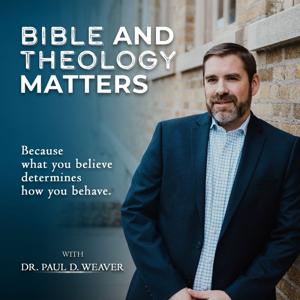
By Dr. Paul D. Weaver - DTS Professor and Biblical Scholar
5
5858 ratings
The podcast currently has 211 episodes available.
The most played episodes among Podcast App listeners.

Can Christians trust the Genesis creation account as real history? Does Genesis 1–11 describe actual events, or should these opening chapters of the Bible be understood primarily as theological literature, myth, or symbolism?In this episode of the Bible and Theology Matters Podcast, Dr. Paul Weaver is joined by Dr. Marcus Ross, a paleontologist, geologist, former professor of geology at Liberty University, and a prominent voice in the Young Earth Creationism movement. Together, they explore some of the most important questions surrounding Genesis, creation, Adam and Eve, Noah's Flood, biblical history, and the relationship between Scripture and science.Dr. Ross explains why his commitment to Young Earth Creationism is fundamentally rooted in his interpretation of Scripture and outlines five defining components of the position: a recent creation, six consecutive days of creation, a historical Adam and Eve as the first humans, the cosmic consequences of the Fall, and a global Flood in the days of Noah.The conversation also examines why the historical nature of Genesis matters for the rest of the biblical story. Dr. Ross and Dr. Weaver discuss the literary and theological richness of Genesis 1–11 while arguing that theological purpose does not require abandoning historical reality. They compare Genesis with other ancient Near Eastern creation stories, consider the mytho-historical approach to Genesis, and explore how Jesus, Paul, and the rest of Scripture treat Adam and the creation account.In this episode, you'll discover:What Young Earth Creationism actually teachesThe five key components of a biblical Young Earth Creationist worldviewWhy a scientist can maintain confidence in the authority and reliability of ScriptureWhether Genesis 1–11 is history, theology, myth, or a combination of literary genresWhy Genesis can be both historically grounded and theologically purposefulHow Genesis differs from ancient Near Eastern creation accountsWhy the historicity of Adam and Eve matters for Christian theologyWhat Romans 5, 1 Corinthians 15, Acts 17, and the genealogy of Luke contribute to the discussionHow the first Adam and the "second Adam," Jesus Christ, are connected in the gospelWhy the Fall has consequences that extend beyond Adam and EveWhether Noah's Flood should be understood as global or localHow Jesus connects Genesis 1 and Genesis 2 as part of a unified creation accountWhy the debate over Genesis affects far more than the age of the earthAt the heart of this conversation is a larger question: Is Genesis the historical foundation of the biblical story? From creation and the Fall to sin, redemption, Israel, and ultimately Jesus Christ, the opening chapters of Genesis provide essential context for understanding the rest of Scripture.Whether you are wrestling with questions about creation versus evolution, the age of the earth, biblical inerrancy, Adam and Eve, dinosaurs and fossils, Noah's Flood, or how science and the Bible relate, this conversation offers a thoughtful and engaging exploration of why Genesis still matters.Subscribe to Bible and Theology MattersIf this episode encouraged you, please like, subscribe, leave a review, and share this conversation with someone who is interested in the Bible, theology, creation, and Christian worldview.The Bible and Theology Matters Podcast exists to help Christians grow in their knowledge of the Word of God and in their relationship with the God of the Word.Because what you really believe determines how you really behave.#YoungEarthCreationism #Genesis #Creation #BiblicalCreation #AdamAndEve #NoahsFlood #BibleAndTheologyMatters #ChristianApologetics #BiblicalWorldview #CreationVsEvolution #BiblicalInerrancy #GenesisHistory #MarcusRoss

Did the Gospel writers change historical events to make a theological point? Or can the differences between the Gospels be explained through normal historical reporting and paraphrase?In Part 2 of this discussion on genre criticism, Dr. Paul Weaver continues his conversation with Dr. Lydia McGrew about the growing debate over how Christians should understand the Gospel accounts—and particularly the claim that the Gospel writers used “literary devices” to reshape or relocate historical events.Dr. McGrew challenges approaches that explain Gospel differences by appealing to compositional techniques such as displacement, arguing that some proposed “literary devices” go beyond ordinary paraphrase. She also addresses questions surrounding Jesus’ “I am” sayings, the Gospel of John, harmonization, eyewitness differences, and the historical reliability of Scripture.In this episode, they discuss:Whether Jesus’ “I am” sayings in John should be understood as historical“Before Abraham was, I am” and “I and the Father are one”The relationship between the Gospel of John and the Synoptic GospelsWhat counts as legitimate paraphrase—and what goes beyond itWhether Gospel differences require literary or compositional explanationsWhy Christians should not be afraid of harmonizing the GospelsHow apparent contradictions can sometimes support rather than undermine eyewitness independenceWhy Christians should critically engage with fellow Christian scholarsThe danger of dismissing arguments through labels such as “hyper-conservative” or “fundamentalist”What the early Church Fathers believed about the historical nature of the GospelsHow Christians can grow in confidence in the reliability and historicity of the Gospel accountsMcGrew's central encouragement is not simply to take one scholar's word over another, but to read the arguments, examine the evidence, define terms carefully, and think critically.If the historical reliability of the Gospels matters to you, this is an important conversation about how we interpret Gospel differences—and what is at stake when we explain them.Watch Part 2 of this conversation and join the discussion.

In this first part of a two-part conversation, Dr. Paul Weaver speaks with Dr. Lydia McGrew about one of the most important—and controversial—issues facing the evangelical church: genre criticism and its implications for the historical reliability of the Gospels.What happens when we interpret Matthew, Mark, Luke, and John through the lens of literary conventions and Greco-Roman biography? Did the Gospel writers rearrange events or alter historical details for literary purposes? And where is the line between legitimate literary technique and changing what actually happened?In this episode, they discuss:Genre criticism and how it is being applied to the GospelsThe Gospels as Greco-Roman biographies (bioi)Literary devices, authorial intent, and historical accuracyWhether Gospel writers rearranged events or changed detailsThe relationship between genre criticism and biblical inerrancyWhy these questions matter for Gospel reliability and Christian confidence in ScriptureDr. Lydia McGrew is an analytic philosopher specializing in epistemology and the historical reliability of the New Testament. She is the author of Hidden in Plain View, The Mirror or the Mask, The Eye of the Beholder, and Testimonies to the Truth.Watch Part 1 now, and join us for Part 2 as the conversation continues. If you find this discussion helpful, share it with someone who wants to think more deeply about the reliability of the Gospels and the authority of Scripture.Subscribe to Bible & Theology Matters for more conversations about Scripture, theology, apologetics, and the truth of Christianity.Because what you really believe determines how you really behave.

Can you be a serious scientist and still believe Genesis is real history?In Part 2 of this conversation on the Bible and Theology Matters Podcast, Dr. Paul Weaver continues his discussion with paleontologist and geologist Dr. Marcus Ross about Young Earth Creationism, Genesis, science, biblical authority, and the relationship between faith and scientific research.How should Christians respond when scientific conclusions appear to conflict with Scripture? Does saying that "the Bible is not a science textbook" mean that Genesis should not be understood as history? And can ancient Near Eastern creation stories help us understand Genesis without becoming the lens through which we interpret it?Dr. Ross argues that while the Bible is not a modern science textbook, it does make meaningful historical claims about reality. Those historical claims, he explains, can provide important starting points for scientific investigation and the development of scientific models.In this conversation, Dr. Weaver and Dr. Ross also explore the relationship between ancient Near Eastern literature and Genesis. While comparative studies can provide helpful linguistic and cultural background, they argue that Genesis should ultimately be interpreted according to its own literary and theological context rather than having an external genre imposed upon it.Dr. Ross also shares his personal journey as a young earth creationist studying geology and paleontology in secular universities. He discusses the challenges he faced, the questions and tensions he encountered, and why he believes rigorous scientific research and confidence in the historical claims of Genesis do not have to be mutually exclusive.In this episode, you'll discover:How ancient Near Eastern creation stories can—and cannot—help us understand GenesisWhy Genesis should not simply be interpreted through the lens of Enuma Elish, Gilgamesh, or other ancient textsWhat it means to distinguish between "intrinsic" and "extrinsic" genresHow the Bible can make historical claims without functioning as a modern scientific textbookWhy Dr. Marcus Ross believes Genesis provides historical "tie points" for scientific investigationCan a scientist believe in Young Earth Creationism?What challenges young earth creationists can face in secular academic settingsHow Young Earth Creationism has developed as an area of scientific researchHow Christians should approach apparent conflicts between science and ScriptureWhy science and theology should both be examined carefully when their conclusions appear to differWhy Dr. Ross believes Scripture has a unique authority as God's propositional revelationResources for Christians who want to explore creation, origins, and Genesis more deeplyFor Christians wrestling with questions about creation versus evolution, the age of the earth, Noah's Flood, fossils, geology, biblical inerrancy, science and faith, or the historical reliability of Genesis, this episode offers a thoughtful conversation about how Christians can engage difficult questions without abandoning either intellectual rigor or confidence in Scripture.🎙️ Listen to Part 1 of this conversation: https://youtu.be/r4OxQ49-qkgAbout Dr. Marcus RossDr. Marcus Ross is a paleontologist and geologist who has studied and taught in the fields of geology, paleontology, and origins. He joins Dr. Paul Weaver to discuss the biblical and scientific questions surrounding Young Earth Creationism and the historical interpretation of Genesis.He is also the CEO of Cornerstone Educational Supply: https://cornerstone-edsupply.com/Subscribe to Bible and Theology MattersIf you enjoyed this episode, please like, subscribe, leave a review, and share this conversation with someone wrestling with questions about the Bible, theology, science, and creation.

Why does Moses still matter today?In this episode of the Bible and Theology Matters Podcast, host Dr. Paul Weaver is joined by Dr. Michael Emmons, Chris Katulka, and Steve Herzig to explore the life, leadership, and legacy of Moses—one of the most influential figures in the Bible.Discover how God transformed a Hebrew child rescued from death, a prince raised in Pharaoh's palace, and a shepherd in Midian into the deliverer of Israel and mediator of the Mosaic Covenant. Learn the theological significance of the Exodus, the Passover, the Ten Plagues, the Red Sea crossing, Mount Sinai, and the giving of God's Law.This conversation examines Moses' role in God's redemptive plan, his unique relationship with God, his failures and triumphs, and how his life points forward to Jesus Christ.In This EpisodeThe miraculous birth and preservation of MosesMoses' upbringing in Pharaoh's householdThe significance of the tribe of LeviMoses' flight to Midian and years as a shepherdThe burning bush and God's call on Moses' lifeThe Ten Plagues and God's judgment on EgyptThe Passover and Israel's deliveranceCrossing the Red SeaThe Mosaic Covenant and the LawMoses as mediator between God and IsraelMoses' failure at MeribahThe death of Moses and the Promised LandLessons Christians can learn from Moses todayKey Biblical PassagesExodus 1–20Numbers 12Numbers 20Deuteronomy 34Acts 7Matthew 17Hebrews 8About Bible and Theology MattersBible and Theology Matters exists to equip believers with biblical truth, theological clarity, and practical application for faithful Christian living.🔔 Subscribe for more episodes on biblical theology, Christian doctrine, apologetics, discipleship, and Scripture.
The podcast currently has 211 episodes available.

8,598 Listeners

2,568 Listeners

1,524 Listeners

1,252 Listeners

1,033 Listeners

3,161 Listeners

1,276 Listeners

2,817 Listeners

21,196 Listeners

5,434 Listeners

5,367 Listeners

384 Listeners

1,605 Listeners

2,923 Listeners

275 Listeners