
Sign up to save your podcasts
Or

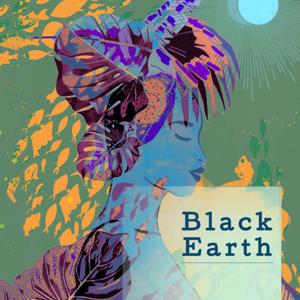


Season 2 is complete!
In this episode, the Black Earth team, Marion and Anesu, reflect on their highlights and lessons from Season 2. We reflect on how our relationships with nature are evolving, the importance of radical imagination and re-defining community. We also discuss what active hope means in a world undergoing immense change and crises.
Thank you for being part of our amazing listener community from more than 110 countries! See you in Season 3, which will bloom early 2024. In the meantime, you can listen to our other episodes, stay updated by subscribing to our podcast wherever you listen to your favourite podcasts and connect with us on Instagram and LinkedIn @blackearthpodcast.
Episode timestamps
00:00 - Welcome to our final episode
02:26 - How our relationship with nature is changing
13:00 - Our reflections on Season 2
19:32 - How Valerie’s episode inspired Marion to reframe her definition of community
28:25 - How Evie’s episode has inspired Anesu to practice imagination daily
31:26 - The importance of reclaiming radical imagination
38:35 - Active hope in a world of immense change and crises
01:01:00 - How to support Black Earth Outro
Support Black Earth Podcast
Connect with us on Instagram, LinkedIn and Tiktok: @blackearthpodcast
Subscribe and read episode transcripts: https://www.blackearthpodcast.com/
Support us through Patreon: https://www.patreon.com/BlackEarthPodcast
In our final conversation of Season 2, Environmentalism Reimagined, we meet with Atwooki, creator of Yuniya.
Named after her grandmother, Yuniya is a storytelling platform using African mythology to educate children, parents and caregivers about climate change and Earth care.
Join us in this inspirational conversation as we explore how African mythology and storytelling is making climate action and ‘joyful activism’ more relatable, empowering and culturally relevant.
Through reclaiming African knowledge and building relationships across generations, Yuniya is bringing conversations on climate change, out from policy spaces and street protests into homes and community centres, where they belong.
This is an episode of active hope, enjoy!
Episode time stamps
00:00 - Intro to episode
02:52 - Atwooki’s relationship with nature
06:23 - How a conversation with her son, led Atwooki to create Yuniya
15:11 - What Yuniya do
20:04 - The life-changing impact of Yuniya on children, parents and caregivers
23:31 - How Yuniya has empowered a boy to lead a campaign to change the world map
28:35 - The importance of community education spaces in black liberation movements
30:38 - Marion shares a framework to define what growth looks like in social change
34:05 - Lessons on how we can engage children on climate change and joyful activism in an empowering way
39:48 - How to support black parents and caregivers of black children to feel empowered in Earth care
46:51 - Why the binary of ‘individual action versus systemic change’ limits our possibilities to engage everybody
52:16 - Atwooki’s recommendations to policy-makers
54:31 - How to support Atwooki and Yuniya
01:01:00 - How to support Black Earth
Support Atwooki and Yuniya
Yuniya - https://yuniya.com/pages/home
Support Black Earth Podcast
Connect with us on Instagram, LinkedIn and Tiktok: @blackearthpodcast
Subscribe and read episode transcripts: https://www.blackearthpodcast.com/
Support us through Patreon: https://www.patreon.com/BlackEarthPodcast
Song credits
The Kora music in this episode is courtesy of Malamin and Yuniya platform
Resource mentioned in the episode
A framework on measuring impact in social change (Scaling Up, Scaling Out, Scaling Deep) by Michele-lee Moore, Darcy Riddell, and Dan Vocisano
https://www.researchgate.net/publication/298971574_Scaling_Out_Scaling_Up_Scaling_Deep_Strategies_of_Non-profits_in_Advancing_Systemic_Social_Innovation
Valerie Novack is an incredible policy researcher working at the intersections of disability justice, emergency management response and inclusive city design.
In today’s episode, we dive deep into disability justice and the connections with Earth care. We explore some core elements of disability justice including rest, sustainability, the ability to learn and interdependence and why they are key to helping us reimagine the environmental movement.
Valerie also explains why our definition of community should include our more-than-human beings and how that is connected to disability justice.
This episode is not one to be missed!
Episode timestamps
00:00 Introduction
03:12 Valerie’s relationship with nature
06:27 How Valerie got into disability justice
16:18 What is disability justice
23:40 How rest and sustainability enables disability justice in Earth care
30:02 How the ability to learn enables disability justice in Earth care
31:37 How interdependence is crucial for disability justice
35:32 How and why ableism shows up in Earth care
39:50 Individual action versus systems change
46:18 Why our definition of community should include our relationships with other species
52:15 How disability justice invites us to live values aligned with Earth care
59:55 Disability and wholeness
01:07:00 How to support Valerie and Valerie’s work
01:09:00 How to support Black Earth Podcast
Read the disability justice principles by Sins Invalid
https://www.sinsinvalid.org/blog/10-principles-of-disability-justice
Support Valerie Novack
Valerie on X - https://twitter.com/MADtastically
Support Black Earth Podcast
Connect with us on Instagram, LinkedIn and Tiktok: @blackearthpodcast
Subscribe and read episode transcripts: https://www.blackearthpodcast.com/
Support us through Patreon: https://www.patreon.com/BlackEarthPodcast
Wanjiku 'Wawa' Gatheru is the pioneering Executive Director and Founder of Black Girl Environmentalist. Black Girl Environmentalist is a U.S. organisation dedicated to addressing the leadership pathway and retention issue in the climate movement for Black girls, women and gender-expansive people in the United States.
In this inspiring episode, we explore the mission and vision of Black Girl Environmentalist and its impact in the world. Wawa and I discuss important elements to help you create an empowering, mission-aligned and impactful career in the environmental justice movement. As the rising and returning generation of environmentalists, we also take time to re-member and honor the contributions of our African American elders to the modern environmental justice movement.
Evie is a writer, a domestic abuse survivor and specialist, and the founder of Peaks of Colour. Peaks of Colour is a nature-for-healing community group by and for people of colour in England.
In this powerful episode, Evie and I reflect on their experiences as a domestic abuse survivor and specialist and their journey of healing through reconnecting with nature.
We explore abolitionist visions for earth care through Peaks of Colour group.
We discuss important elements for abolitionist Earth care including pleasure, community and land justice.
Evie shares more details on their upcoming book, Radical Rest, and why it is important for anyone committed to Earth care.
Trigger warning: Today's episode contains some serious themes, including Evie's experiences of surviving domestic violence, intimate partner violence, and white supremacy terrorism.
Episode timestamps
0:00 Introducing Evie
03:02 Evie’s relationship with nature
7:55 Evie’s experiences of surviving domestic violence and intimate partner violence
15:20 Evie’s experiences of healing themselves and working in the Violence against Women and Girls sector
25:34 Peaks of Colour and what abolitionist earth care means
39:45 The importance of embodied practice for trauma survivors and why it’s important to lead with what feels good
48:09 How black people can create safety from racialised violence whilst outdoors with nature
57:21 Evie’s upcoming book on ‘Radical Rest’ and why it’s time for soft life in black womanhood
1:07:00 How to support Evie
1:10:00 How to support Black Earth
Support Evie Muir
Support Peaks of Colour - https://www.peaksofcolour.org/
Support Evie Muir - https://eviemuir.com/
Support Black Earth Podcast
Connect with us on Instagram, LinkedIn and Tiktok: @blackearthpodcast
Subscribe and read episode transcripts: https://www.blackearthpodcast.com/
Support us through Patreon: https://www.patreon.com/BlackEarthPodcast
Derval Barzey is the creator of the Climate Conscious podcast, which amplifies the Caribbean perspective on climate change and sustainable development. She's also a leader and expert on the just energy transition in the Caribbean.
In today's episode, we explore what it means to build a homegrown movement in the Caribbean that fosters sustainable development, empowers all people, and ensures meaningful progress on climate justice.
We discuss what a just energy transition looks like in the Caribbean as well as Derval’s motivation for setting up the Caribbean Women for Climate Justice conferences.
Derval also shares with us impactful ways the Caribbean diaspora can contribute to homegrown climate justice in the region.
Episode timestamps
00:00 - Introduction to Derval
03:01 - Derval’s relationship with nature
05:32 - Derval’s appreciation for nature in urban and rural spaces
07:32 - Why Derval chose to work in the energy sector
11:53 - What a just energy transition means
15:02 - Why equity matters in the just energy transition and what it looks like
25:04 - Why Derval set up the Caribbean Women for Climate Justice conference
33:50 - What homegrown sustainable development looks like in the Caribbean
46:22 - Solutions and pathways for homegrown sustainable development in the Caribbean
49:20 - Effective contributions the diaspora can make to realise climate justice in the Caribbean
55:06 - Derval’s reflections on her podcast, Climate Conscious podcast
58:55 - How you can support Derval
01:00:00 - How you can support Black Earth Podcast
If you liked this episode, check out our other podcast episodes with similar themes
Support Derval Barzey
Listen and subscribe to Climate Conscious Podcast - https://theclimateconscious.buzzsprout.com/
Watch and share recordings of the Caribbean Women for Climate Justice Conference #CW4CJ on YouTube
Support Black Earth Podcast
Connect with us on Instagram, LinkedIn and Tiktok: @blackearthpodcast
Subscribe and read episode transcripts: https://www.blackearthpodcast.com/
Support us through Patreon: https://www.patreon.com/BlackEarthPodcast
Indigenous Peoples make up around five percent of humanity’s population and yet they are some of the world’s best stewards of nature. Their scientific knowledge and ways of living are rooted in a respect for all life on Earth that informs the way they take care of nature. Indigenous Peoples are leading a new revolution in humanity’s relationship with nature.
In this episode, we meet the inspiring Hindou Oumarou Ibrahim. Hindou is an Indigenous leader from the Mbororo peoples of the Sahel region, Africa. She is the Coordinator of the Association of Peul Women and Autochthonous Peoples of Chad (AFPAT) and advocates for Indigenous leadership and knowledge in international nature and climate policy.
Join us as we learn about the central role of African Indigenous women in earth care. We also discuss the impacts of climate injustice on Indigenous peoples around the world and solutions to address climate injustice. Hindou also shares encouraging advice to Indigenous girls, women and communities facing climate injustice.
Episode time stamps
00:00 Welcoming Hindou
02:43 Hindou’s relationship with nature
04:38 How belonging to the Mbororo peoples has shaped Hindou’s respect and understanding of nature
08:32 Why Hindou’s best weather app is her grandmother
14:45 The central role of African Indigenous women in community decision-making
21:18 The impacts of climate change on Indigenous communities and how Indigenous Peoples are responding
30:48 What we and ‘developed nations’ need to do for climate justice
35:36 Hindou’s advice to Indigenous women and girls living with the impacts of climate change
38:36 How you can support Hindou
39:19 How you can support Black Earth
Support Hindou Oumarou Ibrahim
Connect and Follow Hindou on X and Instagram: @hindououmar
Support Association of Peul Women and Autochthonous Peoples of Chad (AFPAT): https://www.afpat.net/
Support Black Earth Podcast
Connect with us on Instagram, LinkedIn and Tiktok: @blackearthpodcast
Visit our site and read episode transcripts: https://www.blackearthpodcast.com/
Support us through Patreon: https://www.patreon.com/BlackEarthPodcast
Poppy is a Nigerian-British ecological home grower. Her fundamental belief that we are nature informs her work inspiring and educating millions of people on how to grow food, plants and herbal medicines in their gardens.
Join us in this inspiring conversation as we explore Poppy’s journey from fashion modelling to gardening, and what it means to grow in harmony with Earth. We also discuss how gardening helps us re-imagine the environmental movement and our relationship with nature.
Resources mentioned in the conversation
Book: Urban jungle by Ben Wilson
Article on Ecosia blog: ‘Would the conversation about climate change be different if it weren’t in English?’ by Isabella Siemann
Support Poppy Okotcha
Follow: https://www.poppyokotcha.com/
Connect with Poppy on Instagram: @poppy.okotcha
Support Black Earth Podcast
Connect with us on Instagram, LinkedIn and Tiktok: @blackearthpodcast
Subscribe and read episode transcripts: https://www.blackearthpodcast.com/
Support us through Patreon: https://www.patreon.com/BlackEarthPodcast
Welcome back to Black Earth Podcast!
In Season 2, we are re-imagining the environmental movement. Join me in conversation with the leading voices of our time, as we learn about the ideas, solutions, and collectives led by Black women, that are transforming the way we live, we love, and we act for nature.
Support Black Earth Podcast
Connect with us on Instagram, LinkedIn and Tiktok: @blackearthpodcast
Visit our site: https://www.blackearthpodcast.com/
Support us on Patreon: https://www.patreon.com/BlackEarthPodcast
Season 1 of Black Earth podcast is complete! In this episode, the Black Earth team (Marion and Anesu) reflect on their highlights from Season 1, and what it means to re-member our place and relationship with nature. We are joined by three listeners of the Black Earth Podcast community, Amber, Samia and Marjahn, who also share their highlights.
Thank you for rocking with us and see you in Season 2 which will bloom mid-year 2023. In the meantime, you can stay updated by subscribing to our podcast wherever you listen to your favourite podcasts and connect with us on Instagram, Tiktok and LinkedIn @blackearthpodcast.
Peace!
Episode time stamps
00:00 - Introduction
00:52 - Black Earth Podcast listener - Amber from Texas
01:28 - Our reflections on Amber's feedback - finding community in the environmental movement and being in nature
04:33 - Black Earth Podcast listener - Samia from UK
05:51 - Our reflections on Samia's feedback - climate reparations and reclaiming ideas that have meaning in black communities
13:45 - Profound moments from Season 1
16:43 - The importance of processing black people's deaths in a dignifying way
20:03 - Black Earth Team talk about their relationships with nature
26:56 - Black Earth Podcast guest and listener - Marjahn from Bahamas
29:57 - Our reflections on Marjahn's feedback - centering, affirming, and celebrating our place in nature
37:42 - Season 2 and how you can stay connected with Black Earth Podcast
How you can support and connect with Black Earth
Subscribe and leave a review on your favourite podcast platform
Connect with us on Instagram, Tiktok, and LinkedIn: @blackearthpodcast
Share our episodes: https://www.blackearthpodcast.com/
From the publisher's feed

30,703 Listeners

43,345 Listeners

44,994 Listeners

27,355 Listeners

5,747 Listeners

2,033 Listeners

161 Listeners
14,660 Listeners

171 Listeners

111,868 Listeners

56,446 Listeners

5,678 Listeners
9,085 Listeners

1,683 Listeners
24,536 Listeners