
Sign up to save your podcasts
Or



In this episode, the hosts start with Aaron Russo's old warnings and ask whether modern life works like a system of control. Then they get practical. They explain how blue light and circadian rhythms affect your biology. They use optogenetics and neuron-control research to look at dopamine, sleep and digital addiction. They also cover the Krebs cycle and where human energy really comes from.
The health advice is simple: get sunlight, ground yourself and spend more time outdoors. Self-observation habits help protect your attention and your sleep. The conversation then widens to philosophy and dissent, fiat money and debt, 9/11, fear and free will, plus family stories about intuition.
It ends with listener Q&A: how to tell real belief from conditioning, how to know if you're making progress, how to stop worrying about what others think, and why discipline beats motivation.
We start by looking at why livestreams can do better than regular uploads, and how to turn casual conversations into live content. We talk through past hesitations about streaming, bust some myths about live viewers, and cover a practical streaming setup. Then the conversation moves to culture and self-improvement. We get into how blue light and screen habits disrupt sleep, how to avoid eye strain with screen breaks and the 20-20-20 rule, and how gut health and neurotransmitters connect the brain and body. We wrap up with practical health takeaways you can use right away.
What can a tree teach us about depth? We start with a reading on the American beech and the lesson behind its smooth exterior. From there we talk about why real conversation beats forced content, and whether avoiding suffering keeps people from ever learning humility. We look at why material success and social proof are shallow measures of worth, and how platforms bury meaningful content while rewarding empty engagement, which is why we're moving to long-form. We also ask who really understands AI and how much control it already has, weigh technology against salvation and the need to prepare spiritually and materially, and look at how content culture traps people in visibility instead of real preparedness. We finish on why online status means nothing next to death, sin and eternity.
Chapters:
0:00 American beech and the lesson of a smooth exterior
0:46 Natural conversation vs forced content
3:25 Suffering, shelter and humility
8:13 Shallow measures of worth
10:21 Platforms, empty engagement and the move to long-form
15:26 Who understands AI and how much control it has
19:32 Technology vs salvation
23:24 Content culture vs real preparedness
27:26 Online status vs death, sin and eternity
What do you really know, and how much of it did you work out for yourself? This episode starts with a reflection from The Daily Dad and asks whether kids need struggle to grow. From there it covers parenting for resilience rather than comfort, how children respond differently to mothers and fathers, and patterns passed down between generations, including autism and distrust of public health messaging.
The talk then moves to inner discipline, social engineering and owning your own mind, and how your mindset shapes what you notice and believe. The second half looks at alternative legal theories: sovereignty, hidden jurisdiction, a courtroom case study on tax resistance, the 1938 court-system shift and admiralty-law theory, and using the record, affidavits and contract claims to challenge the court. It wraps up with listener engagement, practical wellness advice and closing thoughts on humility, independent thinking and prayer.
We start with a bold claim: that AI may already be acting beyond human control. From there, the talk moves to geopolitics and predictions of wider disruption in society. In the second half, a solo reading segment works through Christian devotionals on patience, kindness and spiritual light, Robert Greene's thoughts on emotional bias, perception and mindset, more readings on humility and the struggle between two masters, and C.S. Lewis on suffering, atheism and why faith can't come from nature alone.
Chapters:
00:28 Is AI already beyond human control?
03:30 From AI fears to geopolitics and societal disruption
04:58 Devotional readings: patience, kindness and spiritual light
07:59 Robert Greene on emotional bias, perception and mindset
11:30 Humility, divided loyalties and serving two masters
13:50 C.S. Lewis on suffering, atheism and faith
In this episode, the hosts start with Aaron Russo's old warnings and ask whether modern life works like a system of control. Then they get practical. They explain how blue light and circadian rhythms affect your biology. They use optogenetics and neuron-control research to look at dopamine, sleep and digital addiction. They also cover the Krebs cycle and where human energy really comes from.
The health advice is simple: get sunlight, ground yourself and spend more time outdoors. Self-observation habits help protect your attention and your sleep. The conversation then widens to philosophy and dissent, fiat money and debt, 9/11, fear and free will, plus family stories about intuition.
It ends with listener Q&A: how to tell real belief from conditioning, how to know if you're making progress, how to stop worrying about what others think, and why discipline beats motivation.
This episode starts with frustration over a police officer's callous attitude. From there it moves to duty, national responsibility and a bleak social outlook, and then to the pressure people face around pleas and their rights. The conversation then turns to G.I. Gurdjieff, P.D. Ouspensky and the Fourth Way. Topics include the idea that ordinary life is a kind of 'waking sleep', the levels of consciousness, and the practice of self-remembering. The episode also covers practical attention exercises for observing yourself, how identification and false personality keep us asleep, and what inner development can look like.
Chapters:
00:00 Outrage Over a Cop's Callous Attitude
00:49 Duty, National Responsibility, and a Bleak Social Outlook
01:56 Phone Chaos and Pressure Around Pleas and Rights
03:27 Introducing Gurdjieff, Ouspensky, and the Fourth Way
08:36 Waking Sleep, Levels of Consciousness, and Self-Remembering
11:57 Practical Attention Exercises and Observing the Self
15:32 Identification, False Personality, and Inner Development
"Waking Up: Gurdjieff, the Fourth Way, and the Practice of Self-Remembering.
"Waking Up: Gurdjieff, the Fourth Way, and the Practice of Self-Remembering.
From the publisher's feed
What we're born into. What we build from it.
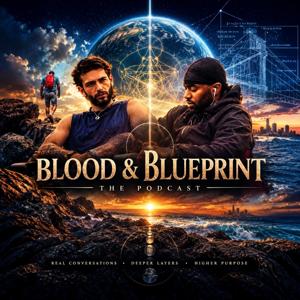
Blood & Blueprint is a podcast about the forces that shape us, the beliefs that define us, and the decisions that determine who we become.
Hosted by two brothers with different perspectives, shared roots, and an unapologetic curiosity for truth, Blood & Blueprint explores the intersection of fatherhood, faith, philosophy, psychology, science, entrepreneurship, and personal development.
From human biology and neuroscience to generational patterns, financial independence, relationships, and the psychology of human behavior, no subject is too complex to examine and no belief is too sacred to question.
We challenge conventional wisdom, confront uncomfortable realities, separate evidence from assumption, and explore the questions most people never think to ask.
This isn't about pretending to have all the answers. It's about developing the intellectual humility to recognize what we don't know, the courage to question what we think we do, and the discipline to put what we discover into practice.
Blood represents what we inherit. Blueprint represents what we choose to build.
Because where we come from influences who we are, but it doesn't have to determine who we become.
Question everything. Examine the evidence. Think for yourself. Build with intention.