
Sign up to save your podcasts
Or

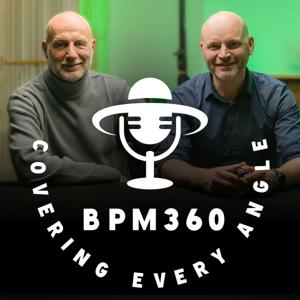


The fifth episode of the BPM 360 podcast, hosted by Caspar and Russell, delves deeper into the complexities of ownership within business process management. The discussion extends the conversation from the functional to the holistic integration of end-to-end process management.
Key Topics Discussed:
Extended Ownership Discussion:
The hosts revisit the topic of ownership, emphasizing its importance in the broader scope of process management rather than just focusing on depth. They discuss how ownership influences both the management of change and the operational outcomes of processes.
Domain-Specific Ownership Challenges:
Caspar and Russell explore how different departments like production, procurement, and compliance each face unique challenges and often develop their functional ownership without a cohesive strategy across the organization.
End-to-End Ownership:
A significant portion of the conversation is dedicated to establishing end-to-end ownership, which involves enhancing communication and process integration across various departments to optimize overall functionality.
Global and Local Integration:
They highlight the need for aligning process optimization and standardization not only at a local level but also on a global scale, which poses additional challenges and requires a thoughtful approach to managing complexity.
Methodology and Tool Ownership:
Discussion about the disparity in methods and tools used across departments, underlining the lack of unified ownership for methodologies, which could be addressed through a center of excellence.
Real-World Examples:
Russell uses his experience in supply chain management to illustrate the practical challenges and implications of end-to-end ownership, particularly how misalignments between business strategy and process execution can lead to inefficiencies.
Process Ownership Across Domains:
They debate the placement of ownership for cross-domain processes like Procure2Pay, discussing how different industries might approach the assignment of end-to-end process ownership depending on their operational focus and organizational structure.
Observations and Insights:
This episode highlights the necessity of bridging the gaps between different functional areas through integrated process ownership. The hosts advocate for a strategic alignment that transcends departmental boundaries, ensuring that end-to-end processes are managed effectively to support organizational goals. This comprehensive approach to ownership is crucial for overcoming the siloed nature of many large organizations and achieving a seamless operational flow.
We hope you enjoy our BPM Podcast.
Subscribe and stay tuned for more.
Please send us your comments and questions to
[email protected]
In this Episode, Caspar and Russell dig into the depths of Governance and Accountability
Key Topics Discussed:
Concept of Ownership:
Ownership in the context of governance is about who controls various parts of the process landscape. The discussion opens by defining ownership simply as controlling aspects of a process, with nuances and subtleties involved.
Distribution of Ownership:
The podcast emphasizes that ownership should not be concentrated but distributed among various stakeholders. This distribution is crucial for successful governance and process management.
Accountability vs. Responsibility:
A distinction is made between accountability (ultimate responsibility where the buck stops) and responsibility (day-to-day management of tasks which can be delegated). Ownership primarily pertains to accountability.
Process Ownership:
The conversation delves into practical aspects of process ownership, using procurement as an example. The Chief Procurement Officer (CPO) at DSM is cited as being accountable for procurement processes at a strategic level, whereas operational execution is managed by individual purchasing managers at plant levels.
Operative and Strategic Roles:
The talk distinguishes between strategic oversight and operative execution, noting that strategic process owners might not handle daily operations but ensure processes are optimized for those who do.
Role of Process Owners as Leaders:
Process owners are viewed as leaders who set examples and lead by example, crucial for cultivating a culture of compliance and excellence within an organization.
Challenges of Process Ownership:
Establishing clear lines of accountability in process ownership, especially in complex organizations with global operations, is highlighted as a challenge. The need for different leadership styles in process ownership is discussed, suggesting the necessity for both assertive and diplomatic approaches depending on the process type.
Observations and Insights:
The discussion reflects on the role of process owners in fostering organizational efficiency and accountability, touching on both the philosophical and practical aspects of governance and ownership. The nuanced debate about the different aspects of ownership, such as accountability, responsibility, and strategic vs. operational roles, offers a comprehensive insight into effective process management.
We hope you enjoy our BPM Podcast.
Subscribe and stay tuned for more.
Please send us your comments and questions to
[email protected]
In this episode of the BPM 360 podcast, hosts Russell and Caspar discuss how to navigate through the different Perspectives and Culture Challenges in Stakeholder Management in Business Process Management (BPM) initiatives. They highlight the following key points:
We hope you enjoy our BPM Podcast.
Subscribe and stay tuned for more.
Please send us your comments and questions to
[email protected]
In this episode of the BPM 360 podcast, hosts Russell and Caspar delve into the importance of executive sponsorship in the success of Business Process Management (BPM) initiatives. They highlight the following key points:
Overall, the podcast emphasizes the complexity of implementing BPM, the critical role of executive sponsorship in overcoming these challenges, and the strategic alignment of BPM initiatives with the organization's broader goals.
We hope you enjoy our BPM Podcast.
Subscribe and stay tuned for more.
Please send us your comments and questions to
[email protected]
The Podcast is all about Business Process Management (BPM). We, That's Casper Jans and Russell Gomersall, want to cover every angle of this topic we are so passionate about. In this first episode, we take on a high level view on the key success factors:
In the following episodes we will be diving deeper into each of the categories.
We hope you enjoy our BPM Podcast.
Subscribe and stay tuned for more.
Please send us your comments and questions to
[email protected]
From the publisher's feed
We are a podcast on all things related to Business Process Management, hosted by BPM-experts Russell Gomersall and Caspar Jans (who combine a whopping 40+ years of BPM and Industry experience).
0 Listeners