
Sign up to save your podcasts
Or

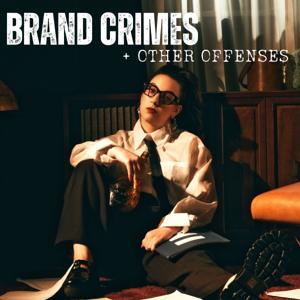


This weeks episode is a TREAT! I got to sit down with my girl Sarah, IN PERSON, to talk all things marketing, brand and PR and really get into the depths of it.
Sarah Memmer is a marketing and PR strategist and the founder of Memmer Media. Her system has driven over $10M in client revenue and earned features in People Magazine, The Drew Barrymore Show, The New York Times, and Good Morning America, all without a single pitch.
She works with female service providers who are done chasing visibility and ready to build the kind of trust that makes the right clients come to them. Her Gravity Formula treats marketing, sales, and PR as one connected system instead of three separate jobs, and it’s the foundation of her mastermind, Magnetic Mastermind.
Sarah is also hosting a FREE masterclass that you all should 100% take advantage of:
Built To Sell Masterclass: the 3 part system that takes someone from curious into client.
learn the 9 principles that take your marketing from running on referrals, luck, and your own effort to one connected system that attracts the right clients, builds trust before you pitch, and converts on command.
Thursday, October 15th at 4pm PT / 7pm ET
IT’S FREE!!!!!!
Sign up here: https://bit.ly/3VcIgXD
Instagram: instagram.com/itssarahmemmer
Website: https://memmermedia.com/
How much of your life actually belongs on the internet when your personal brand is also responsible for making you money?
Sasha sits down with Brianna of Socially by Bri to talk about what building a personal brand actually looks like when you stop trying to follow every rule the internet gives you. Bri has grown an audience of roughly 80,000 by sharing social media, wellness, money, school, fitness, and the messy parts of figuring out life at 24. Somehow, that very personal content has also helped attract major clients, organic Google visibility, and even clients who discovered her through ChatGPT.
But personal branding doesn't mean giving strangers unlimited access to your life.
Sasha and Bri get into the difference between being relatable and oversharing, why you don't need to niche every part of your personality, and how to decide which trends actually belong in your content. They also talk about what businesses misunderstand when outsourcing social media, why your social media manager cannot be solely responsible for your sales, and why founders still have to participate if they want their content to work.
And as engagement changes and people become increasingly selective about what they consume, they make the case for something businesses may not want to hear: social media was never supposed to be your entire marketing strategy.
Your personal brand can be messy, multifaceted, experimental, and human. The goal is knowing yourself well enough to recognize what belongs in the brand and what should stay yours.
Timeline
01:14 — Meet Brianna of Socially by Bri
15:21 — Building a Personal Brand Without Niching Down
34:02 — Trends, Changing Attention, and the Future of Social Media
50:46 — Biggest Advice for Social Media
Connect with Bri
Website: https://sociallybrimedia.com/
Instagram: @sociallyybri
What if the thing holding your brand back isn’t your strategy, but how willing you are to actually let people see you?
Sasha sits down with Madeline Sargent, founder of Madly Creative and host of She Says It, for a conversation about brand storytelling, founder visibility, client relationships, and what happens when you stop trying to run your business by somebody else’s rules.
They get into why successful businesses sometimes need to go back to the story and differentiators they’ve overlooked, why visibility has more to do with identity than following the latest content trend, and why telling your story doesn’t mean putting every detail of your personal life on the internet.
Sasha and Madeline also unpack a shift that happens when you move from employee to entrepreneur and service provider to consultant. You can know what you’re doing without constantly proving that you’re the smartest person in the room. Sometimes better strategy starts with dropping the ego, asking better questions, and actually listening to the person who built the business before you decide what needs to change.
Because your experience matters. Your expertise matters. But so does understanding the human sitting across from you.
Timeline:
00:58 — Meet Madeline Sargent
03:06 — Finding the Story That Makes a Brand Different
09:30 — Visibility, Identity, and Showing Up Your Way
21:00 — Client Relationships, Boundaries, and Tough Conversations
24:05 — Letting Go of Ego and Outside Influence
What happens when the founder becomes more recognizable, trusted, and culturally relevant than the company they built?
Founder-led branding works. In fact, founder visibility might be one of the biggest competitive advantages a growing company has right now. Your competitors can replicate your offers, technology, or marketing strategy. They cannot replicate your experience, perspective, relationships, reputation, or reason for building the company.
But there’s a difference between using founder visibility to build trust and accidentally making the founder the entire product.
In this case file, we’re investigating the line between a founder-led brand and a founder-dependent brand, including what happens when all of the trust, demand, relationships, thought leadership, and brand equity live with one human. We’re looking at Tesla and Elon Musk, Apple and Steve Jobs, and Skims and Kim Kardashian to see what happens when founder equity transfers successfully to the company and what happens when it doesn’t.
Because founder-led means the founder creates attention. Founder-dependent means only the founder can create attention.
The goal isn’t to become less visible. Use yourself to create attention, establish trust, introduce your worldview, and create gravity. Then figure out how to transfer that equity into your products, team, intellectual property, customer experience, and culture so the thing you’re building can eventually become bigger than you.
The verdict? Guilty.
Use yourself to build the brand. Just don’t accidentally become the only thing holding it together.
Timeline
02:44 — When the Founder Becomes the Product
08:04 — The Founder Halo Effect and Its Risk
14:27 — How to Transfer Founder Equity Into the Company
16:45 — Founder-Led vs. Founder-Dependent Brands
19:36 — The Founder Dependency Audit
Your ideal client probably isn’t who you think they are.
“High-achieving women.” “Ambitious founders.” “Six-figure business owners.” These aren’t audiences. They’re adjectives, and they tell you almost nothing about whether someone will recognize the value of what you sell, spend money to solve the problem, or actually be a great client once they do.
In Season 2, Episode 2 of Brand Crimes and Other Offences, we’re investigating The Audience Crime: building an ideal customer around what someone looks like on paper instead of understanding how they think and buy. Income doesn’t tell you urgency. Demographics don’t tell you what someone values. And knowing your ideal client shops at Whole Foods and does Pilates definitely doesn’t tell you what happens when she realizes she has a $50,000 problem.
Your best customers are more likely connected by their buying behavior, mindset, motivation, and compatibility with your business than by a neat list of demographics. By the end, you’ll know what audience data is actually worth paying attention to, how to identify the moment someone becomes ready to buy, and how to build an ideal client profile around the people you’d genuinely want ten more of.
Here’s the Audit I Want You to Do:
Pull up your last ten customers or clients.
Not your imaginary dream customers.
Actual humans who gave you actual money.
Now look for patterns.
Ask:
That last question matters more than you might think.
Your highest-paying client isn’t automatically your ideal client. Your easiest sale isn’t automatically your ideal client. You’re looking for the overlap between people who buy well, fit well, get results, are profitable, and refer well.
Your New Ideal Client Profile
Forget the Sims-character avatar filled with demographics nobody actually uses. Start here instead:
WHO: What meaningful context actually affects the purchase?
MOMENT: What is happening in their life or business when they become ready to solve this?
MINDSET: What do they currently believe about the problem?
MOTIVATION: What outcome matters enough for them to spend money now?
BUYING BEHAVIOR: What do they value when choosing how and who to buy from?
COMPATIBILITY: What makes them an exceptional customer for your business?
Your audience isn’t simply the person who could buy from you. It’s the person who recognizes the problem, values the solution, is ready to act, fits the way you work, and becomes more valuable to your business after the transaction, not less.
That’s a very different definition of an ideal customer.
The verdict? Guilty.
Timeline
02:39 — The Audience Crime
04:00— Audience Description vs. Buyer Intelligence
13:38 — The Buying Behaviors That Actually Matter
13:54 — The 10-Customer Audit
20:28 — Building Your New Ideal Client Profile
Scaling sounds sexy until you realize growth creates an entirely new set of problems.
In this episode of Brand Crimes, I sit down with entrepreneur Alyssa Moorhead to talk about what actually happens behind the scenes when you go from running the business yourself to building the team, systems, and sales infrastructure required to support real growth.
With more than 11 years in business and experience growing a team of 12, Alyssa shares what she’s learned about intentionally planning for scale, investing in support before you’re drowning, and building a business that doesn’t depend entirely on the founder.
We also get into one of the biggest crimes happening in business right now: terrible lead generation.
You know the DMs.
The fake compliment. The copy-and-paste pitch. The conversation that somehow turns into a sales call three messages later.
Alyssa breaks down why those tactics are losing effectiveness, how changing consumer behavior is affecting sales, and the relationship-first DM strategy her team uses instead.
In This Episode, We Talk About:
The Biggest Takeaway
You cannot scale a business that isn't built to hold the growth you're asking for.
More clients, more revenue, and more visibility also create more responsibility, more delivery, more communication, and more complexity.
The goal isn't simply to get bigger.
It's to intentionally build the people, processes, and relationships that allow the business to become bigger without breaking everything that got you there.
About Alyssa Moorhead
Alyssa Moorhead is an entrepreneur with more than 11 years of experience building businesses across marketing, sales coaching, and lead generation. Today, her work focuses on helping businesses create more effective lead-generation systems rooted in personalized outreach, genuine relationship building, and better sales conversations.
Connect With Alyssa
Want to learn more about Alyssa and her approach to lead generation, sales, and scaling?
Instagram: @alyssalmoorhead
Website: alyssamoorhead.com
Follow Alyssa for more insights on building better sales conversations, generating leads without the copy-and-paste nonsense, and creating a business built to scale.
Listen to the Full Episode
If you're growing a business, thinking about building a team, or wondering why your current outreach isn't converting the way it used to, this episode is for you.
You're making money, you're posting, you're selling and somehow you're still broke. Today's case file isn't about a Fortune 500 company that blew it in a boardroom, it's about the pattern playing out inside small businesses every single day, and the financial crime most founders don't even realize they're committing.
I sat down with Megan, The Hot Girl CFO: fractional CFO, strategic bookkeeper, and now tax service provider, and we got into all of it...
This one is for every founder who has ever looked at their Stripe dashboard and wondered where the money actually went.
In this episode:
Connect with Megan:
For decades, brands sold a version of success built on distance.
The perfect home.
The perfect body.
The perfect vacation.
The perfect life.
Marketing wasn't just selling products, it was selling proximity to an identity consumers hoped to achieve.
But today's consumers aren't rejecting aspiration.
They're rejecting outdated aspiration.
In this first episode of Season 2 of Brand Crimes, we investigate one of the biggest shifts happening in branding today: why the aspirational brand as we once knew it is fading, and what has replaced it.
We'll explore how social media collapsed the distance between brands and consumers, why trust has become more valuable than perfection, and how companies like Rhode, SKIMS, and Jacquemus, are redefining what modern aspiration actually looks like.
If you're building a brand in 2026, this isn't just a conversation about aesthetics. It's a conversation about culture, consumer psychology, and the future of brand strategy.
In This Episode
Key Takeaways
Aspiration isn't dead.
Consumers still want beautiful products, meaningful experiences, and ambitious brands. What changed is how they want those brands to show up.
Distance no longer creates desire.
Consumers expect access, transparency, and a sense of connection with the brands they support.
Premium doesn't mean polished.
The strongest brands combine exceptional execution with a clear point of view and a recognizable personality.
People buy identities, not products.
The brands winning today don't just solve problems, they create worlds people want to belong to.
Brands Mentioned
Question of the Week:
Has the aspirational brand really died, or has our definition of aspiration simply evolved?
I'd love to hear your thoughts.
Tag @brandcrimespodcast or share your biggest takeaway after listening.
You think your influencer campaign is working.
The FTC thinks it’s a liability.
Right now, brands are running influencer programs like it’s still 2019… loose contracts, vague disclosure, no monitoring, no documentation. Meanwhile, enforcement has ramped up fast, penalties are sitting at $53,088 per post, and every single piece of content counts as its own violation.
So that “successful” campaign? It can turn into a multi-million dollar problem overnight.
In this episode, I’m breaking down what actually changed, why brands are so exposed right now, and how influencer marketing quietly became one of the highest-risk areas in modern marketing.
We’re getting into the real math, the lawsuits nobody wants to talk about, and the compliance infrastructure most brands don’t have but absolutely need.
Find me on Instagram | TikTok | Website | LinkedIn | Blog
00:00 Brand Crimes Intro
00:28 The FTC Letter Shock
01:55 The Real Crime
03:56 Campaign Math Nightmare
06:02 Rules Changed Fast
08:56 Enforcement Gets Real
11:43 What’s Coming Next
15:09 Who Actually Gets Targeted
16:46 What Compliance Really Looks Like
20:51 What You Need to Fix Now
23:22 Final Warning
What’s happening in marketing right now is not a “future of AI” conversation. It’s not a trend. It’s not something to casually keep an eye on.
It’s already happening.
Teams are being restructured because the math no longer works. Not because people are bad at their jobs, but because a lot of those jobs were built on limitations that don’t exist anymore and the layer getting hit first is the middle.
If your role is built around analyzing, optimizing, coordinating, or managing execution, this episode is going to hit a little close to home.
I’m breaking down how marketing actually functions behind the scenes, what changes when a multi-million dollar team can be replaced by a fraction of that cost, and why companies are making these decisions faster than people expected.
Then we zoom out… because it’s not just internal.
Consumers aren’t behaving the same way either.
People aren’t searching like they used to. They’re asking. And AI is deciding what gets recommended before most brands ever get seen.
At the same time, people can feel when something is overly automated, and they don’t like it. So now brands are trying to be more efficient internally while still feeling human externally… which is where things start to get messy.
We’re also getting into what’s actually still valuable, what skills are becoming non-negotiable, and why marketing is starting to compress into something that looks very different from what most people built their careers on.
If you’ve been feeling like things are shifting but you can’t quite put your finger on it, this is that conversation.
Episode Timeline
00:00 Show Intro
00:28 The Layoff Story
01:22 What’s Actually Happening
02:38 How Marketing Works
03:32 The Economics Shift
04:47 Why The Middle Is Getting Hit
08:07 Search vs AI Behavior
08:53 AI As Gatekeeper
12:29 Consumer Response
15:14 The Hourglass Model
15:55 Human Advantage
18:14 Skill Shift
19:42 Risk Check
21:49 Timeline
23:24 What To Do
25:15 Final Reality Check
From the publisher's feed
Brand Crimes & Other Offenses is the cultural court where strategy meets misconduct.
Each week, host Sasha Monique, brand architect and creative strategist,…
From iconic rebrands and PR disasters to psychological frameworks, cultural trends, and confessions from founders, Sasha brings street-luxe intelligence, razor-sharp commentary, and unapologetic clarity to every episode.
Part investigation.
Part education.
Part creative therapy session.
All precision.
Whether you're a CMO, a founder, a strategist, or a culture lover, this is where you come to understand the world of brands through a smarter, sharper, more culturally relevant lens.