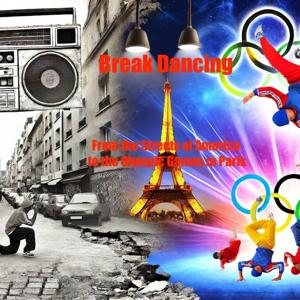
Breakdancing: From the Streets of America To The Olympic Games

Breakdancing: From the Streets of America To The Olympic Games

By Inception Point AISportsNewsArtsEntertainment News
Download on the App Store

Breakdancing: From the Streets of America To The Olympic Games episodes

  • Breakdancing- From the Streets of America to the Olympic Games in Paris
    Breakdancing: From the Streets of America to the Olympic Games in Paris In the pulsating heart of urban America during the late 1970s, a new cultural movement was being born. Its roots dug deep into the concrete jungles of New York City, where the gritty realities of life intersected with the boundless creativity of its youth. Amid the towering skyscrapers and graffiti-laden walls, the sound of boom boxes echoed through the streets, carrying with them the beats of a revolution. This was the birthplace of breakdancing, an art form born out of struggle, resilience, and an insatiable desire for expression. Origins: A Dance for the Disenfranchised Breakdancing, or "breaking" as it is often called, was not conceived in the polished studios of professional dancers but rather in the marginalized neighborhoods of the Bronx. The youth, primarily African American and Latino, found in breakdancing a form of escapism and self-expression. It was a way to channel the energy of their environment—both its frustrations and its joys—into something positive and transformative. In the beginning, breaking was a fusion of movements inspired by various sources. Influences ranged from James Brown's electrifying dance moves to the martial arts films that were popular at the time. The dance was raw, unrefined, and as diverse as the individuals who practiced it. The streets served as the stage, and the beats, often provided by DJs spinning records at block parties, were the lifeblood that drove the rhythm of the dance. Breaking was more than just a dance; it was a form of battle. Dancers, known as "B-boys" and "B-girls," would engage in intense dance-offs, each trying to outdo the other with more intricate and physically demanding moves. These battles were a way of earning respect and recognition within the community. They were a testament to the dancer's skill, creativity, and resilience. The Evolution: From the Streets to the Mainstream As breaking gained popularity in New York, it began to spread to other urban centers across the United States. The dance became a defining element of the burgeoning hip-hop culture, which included rapping, DJing, and graffiti art. Hip-hop was a voice for the voiceless, a way for marginalized communities to tell their stories and assert their identity. The 1980s marked a pivotal moment in the evolution of breakdancing. It began to gain mainstream attention, thanks in part to movies like "Wild Style" (1982), "Beat Street" (1984), and "Breakin'" (1984). These films brought breaking to a wider audience and introduced the world to the vibrant culture of hip-hop. Breakdancing crews, such as the Rock Steady Crew and the New York City Breakers, became household names, showcasing their moves on television shows like "Soul Train" and "The Tonight Show." As breaking transitioned from the streets to the mainstream, it began to evolve. The dance became more structured, with a greater emphasis on technique and choreography. Competitions were organized,
    This content was created in partnership and with the help of Artificial Intelligence AI.

    15 min

About Breakdancing: From the Streets of America To The Olympic Games

From the publisher's feed

Breakdancing: From the Streets of America to the Olympic Games in Paris In the pulsating heart of urban America during the late 1970s, a new cultural movement was being born. Its roots dug deep into the concrete jungles of New York City, where the gritty realities of life intersected with the boundless creativity of its youth. Amid the towering skyscrapers and graffiti-laden walls, the sound of boom boxes echoed through the streets, carrying with them the beats of a revolution. This was the birthplace of breakdancing, an art form born out of struggle, resilience, and an insatiable desire for expression. Origins: A Dance for the Disenfranchised Breakdancing, or "breaking" as it is often called, was not conceived in the polished studios of professional dancers but rather in the marginalized neighborhoods of the Bronx. The youth, primarily African American and Latino, found in breakdancing a form of escapism and self-expression. It was a way to channel the energy of their environment—both its frustrations and its joys—into something positive and transformative. In the beginning, breaking was a fusion of movements inspired by various sources. Influences ranged from James Brown's electrifying dance moves to the martial arts films that were popular at the time. The dance was raw, unrefined, and as diverse as the individuals who practiced it. The streets served as the stage, and the beats, often provided by DJs spinning records at block parties, were the lifeblood that drove the rhythm of the dance. Breaking was more than just a dance; it was a form of battle. Dancers, known as "B-boys" and "B-girls," would engage in intense dance-offs, each trying to outdo the other with more intricate and physically demanding moves. These battles were a way of earning respect and recognition within the community. They were a testament to the dancer's skill, creativity, and resilience. The Evolution: From the Streets to the Mainstream As breaking gained popularity in New York, it began to spread to other urban centers across the United States. The dance became a defining element of the burgeoning hip-hop culture, which included rapping, DJing, and graffiti art. Hip-hop was a voice for the voiceless, a way for marginalized communities to tell their stories and assert their identity. The 1980s marked a pivotal moment in the evolution of breakdancing. It began to gain mainstream attention, thanks in part to movies like "Wild Style" (1982), "Beat Street" (1984), and "Breakin'" (1984). These films brought breaking to a wider audience and introduced the world to the vibrant culture of hip-hop. Breakdancing crews, such as the Rock Steady Crew and the New York City Breakers, became household names, showcasing their moves on television shows like "Soul Train" and "The Tonight Show." As breaking transitioned from the streets to the mainstream, it began to evolve. The dance became more structured, with a greater emphasis on technique and choreography. Competitions were organized,