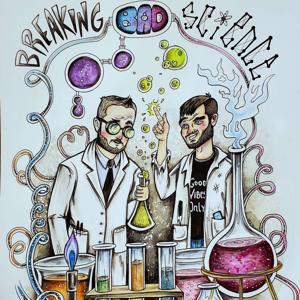
Breaking Bad Science

Breaking Bad Science

Download on the App Store

Breaking Bad Science episodes

  • Episode 43 - The Psychology of Cults

    We’d love to hear from you ([email protected])

    Look us up on social media 

    Facebook: https://www.facebook.com/groups/385282925919540

    Instagram: https://www.instagram.com/breakingbadsciencepodcast/

    Website: http://www.breakingbadscience.com/

    Patreon: https://www.patreon.com/breakingbadscience

    In the late 1980's a former NFL defensive end stabbed 2 men with zero provocation, and if you ask him it was done at the urging of his leader to which he was devout. In the mid to late 2010's the hit show Smallville took on an entirely different meaning when the world realized a star actress was recruiting other women to be branded and exploited. In both cases we can't help but ask ourselves, how does this happen? How does a human being find themselves in a situation where these things happen? In a word, cults, but it's so much more than that. Join hosts Shanti and Danny as we dig into manipulation, fear, blackmail, and the disturbing minds of what passes for a "leader" in this world's cults. 

    References

    1. Naftulin, J.; The Science-Backed Psychology Techniques Nxivm Used to ‘Fetishize Vulnerability’ and Manipulate Members into Sex. Insider. 27-Oct-2020. https://www.insider.com/nxivm-used-real-psychology-to-fetishize-vulnerability-manipulate-2020-9
    2. Scheeres, J.; The Yaweh ben Yahweh Cult. CrimeLibrary. 03.-Jun-2013. https://web.archive.org/web/20130603192839/http://www.trutv.com:80/library/crime/notorious_murders/classics/yahweh_cult/12.html
    3. Best, J.; Cults: A Psychological Perspective. Theses and Dissertations 361. Columbus State University. 2018. https://csuepress.columbusstate.edu/theses_dissertations/361


    Support the show

    44 min
  • Episode 42 - Starlink and Elon Musk

    We’d love to hear from you ([email protected])

    Look us up on social media 

    Facebook: https://www.facebook.com/groups/385282925919540

    Instagram: https://www.instagram.com/breakingbadsciencepodcast/

    Website: http://www.breakingbadscience.com/

    Patreon: https://www.patreon.com/breakingbadscience

    In the 80's a hero known as Al Gore produced one of the greatest inventions of all time..the internet. Ok well maybe that's just a comment quoted out of context that comedians at the time found hilarious and some of us still do. Today, though, Elon Musk is doing something with the internet early users like myself would never have thought possible. What is Starlink and what is the point? Join hosts Shanti and Danny as we discuss the introduction of Starlink, what makes it so impressive, and what it may mean for our future. 

    References:

    1. Mikkelson, D.; Did Al Gore Say ‘I Invented the Internet’?. Snopes.com. 05-May-2005. https://www.snopes.com/fact-check/internet-of-lies/
    2. N2YO. Search Satellite DataBase. N2YO.com. Search criteria “Starlink”. 28-Mar-2021. https://www.n2yo.com/database/?name=starlink#results
    3. Osborne, S.; SiriusXM - Satellites and Repeaters. Sirius Buzz. 07-Oct-2012. https://siriusbuzz.com/siriusxm-satellites-and-repeaters.php
    4. The editors of Encyclopaedia Britannica. Orbit. Encyclopaedia Britanica. https://www.britannica.com/science/orbit-astronomy

    Support the show

    37 min
  • Episode 41 - Stem Cells

    We’d love to hear from you ([email protected])

    Look us up on social media 

    Facebook: https://www.facebook.com/groups/385282925919540

    Instagram: https://www.instagram.com/breakingbadsciencepodcast/

    Website: http://www.breakingbadscience.com/

    Patreon: https://www.patreon.com/breakingbadscience

    Stem cells are a mysterious cellular construct with some pretty unique properties. Properties which have led to intense discussions about life, aging, cancer, the nature of disease itself, and even religion.  But what are they? Why was the discovery of these cells so important? Why are they so controversial and how has that controversy affected research in the last few decades? Join hosts Shanti and Danny as we discuss stem cells, the confusion surrounding them, and why the controversy is not only important but necessary in this episode of Breaking Bad Science. 

    References

    1. Platt, A.; A Brief History of U.S. Stem Cell Policy. Research America. 2020. https://www.researchamerica.org/advocacy-action/issues-researchamerica-advocates/stem-cell-research/brief-history-us-stem-cell
    2. Hwang, N., et. al.; Controlled Differentiation of Stem Cells. Advanced Drug Delivery Reviews. 11-Oct-2007. 60:2 (199 - 214). Doi: https://doi.org/10.1016/j.addr.2007.08.036
    3. Robinton, D., Daley, G.; The Promise of Induced Pluripotent Stem Cells in Research and Therapy. Nature. 18-Jan-2012. 481 (295 - 305). Doi: https://doi.org/10.1038/nature10761
    4. Chin, M., et. al.; Induced Pluripotent Stem Cells and Embryonic Stem Cells are Distinguished by Gene Expression Signatures. Cell - Stem Cell. 2-Jul-2009. 5:1 (111 - 123). Doi: https://doi.org/10.1016/j.stem.2009.06.008
    5. Biehl, J., Russell, B.; Introduction to Stem Cell Therapy. Journal of Cardiovascular Nursing. Mar/Apr-2009. 24:2 (98 - 105). Doi: https://doi.org/10.1097/JCN.0b013e318197a6a5
    6. Ayala, F.; Cloning Humans? Biological, Ethical, and Social Considerations. PNAS. 21-Jul-2015. 112:29 (8879 - 8886). Doi: https://doi.org/10.1073/pnas.1501798112
    7. Hernandez, D.; 500 Years Later, da Vinci’s Mechanical Lion is Brought to Life. Popular Mechanic. 19-Sep-2019. https://www.popularmechanics.com/technology/a29020685/leonardo-da-vinci-mechanical-lion-display/
    8. Ayob, A., Ramasamy, T.; Cancer Stem Cells as Key Drivers of Tumour Progression. Journal of Biomedical Science. 06-Mar-2018. 25:20. Doi: https://doi.org/10.1186/s12929-018-0426-4
    9. Kim, K.S.; Converting Human Skin Cells to Neurons: A New Tool to Study and Treat Brain Disorders? Cell - Stem Cell. 2-Sep-2011. 9:3 (179 - 181). Doi: https://doi.org/10.1016/j.stem.2011.08.004

    Support the show

    51 min
  • Episode 40 - Cryptocurrency

    We’d love to hear from you ([email protected])

    Look us up on social media 

    Facebook: https://www.facebook.com/groups/385282925919540

    Instagram: https://www.instagram.com/breakingbadsciencepodcast/

    Website: http://www.breakingbadscience.com/

    Patreon: https://www.patreon.com/breakingbadscience

    Trying to draw a similarity between a hitman, miners, and paying $590 million for 2 pizzas sounds like some sort of 6 degrees of Kevin Bacon weirdness, but it turns out it's not really that hard. The cornerstone here, the Kevin Bacon if you will, is Bitcoin, which is....Currency, but not, you know, kind of like when we  went from having gold, furs, salt, and goods to trade to using coins and paper. Except in this case with no tangibility. So what is it? Why does it exist and how is it being used? Most importantly, how is it shaping our future?

    References

    1. Hong, E.; How Does Bitcoin Mining Work. Investopedia. 01-Mar-2021. https://www.investopedia.com/tech/how-does-bitcoin-mining-work/
    2. Kharif, O.; Man Who Spent $446 Million on Pizza Has Advice for Tesla Fans. Bloomberg. 10-Feb-2021. https://www.bloomberg.com/news/newsletters/2021-02-10/who-bought-pizza-with-bitcoin-he-has-some-advice-for-tesla-fans
    3. Ongweso, E.; The Bizarre Tale of a Wisconsin Woman Who Tried to Hire a Hitman with Bitcoin. Vice. 09-Feb-2021. https://www.vice.com/en/article/pkdwj7/the-bizarre-tale-of-a-wisconsin-woman-who-tried-to-hire-a-hitman-with-bitcoin

    Support the show

    57 min
  • Episode 39 - Artificial Sweeteners

    We’d love to hear from you ([email protected])

    Look us up on social media 

    Facebook: https://www.facebook.com/groups/385282925919540

    Instagram: https://www.instagram.com/breakingbadsciencepodcast/

    Website: http://www.breakingbadscience.com/

    Patreon: https://www.patreon.com/breakingbadscience

    There's no doubt at this point that eating foods high in sugar can lead to diabetes and heart conditions. Because of this, the market for sugar substitutes has been a highly valuable industry. Honestly though, are these substitutes healthy? Are we consuming something worse in an effort simply to keep us from becoming overweight or developing these or other diseases or are these concerns mere hokum and Tom foolery? Join hosts Shanti and Danny as they discuss not just the health benefits and risks of artificial sweeteners, but also, hokum and Tom foolery.


    References

    1. National Cancer Institute. Artificial Sweeteners and Cancer. National Cancer Institute. 10-Aug-2016. https://www.cancer.gov/about-cancer/causes-prevention/risk/diet/artificial-sweeteners-fact-sheet
    2. Strawbridge, H.; Artificial Sweeteners: Sugar-free, but at What Cost?. Harvard Health Publishing. 16-Jul-2012. https://www.health.harvard.edu/blog/artificial-sweeteners-sugar-free-but-at-what-cost-201207165030
    3. Lenoir, M., et. al.; Intense Sweetness Surpasses Cocaine Reward. PLoS One. 01-Aug-2007. 2:8. Doi: https://doi.org/10.1371/journal.pone.0000698

    Support the show

    32 min
  • Episode 38 Evolution and Synthetic Biology

    We’d love to hear from you ([email protected])

    Look us up on social media 

    Facebook: https://www.facebook.com/groups/385282925919540

    Instagram: https://www.instagram.com/breakingbadsciencepodcast/

    Website: http://www.breakingbadscience.com/

    Patreon: https://www.patreon.com/breakingbadscience

    If we evolved from monkeys, why are there still monkeys? This is the most common question associated with misunderstandings in the concepts of evolution. So what is evolution? What are the misunderstandings surrounding the subject? How does the whole monkey thing work? Join hosts Shanti and Danny as they talk again with synthetic biologist Dr. Sonya Iverson about the misconceptions and mysteries surrounding evolution.

    Reference

    1. Darwin, C., Kebler, L.; On the Origin of Species: By Means of Natural Selection. London: J Murray. 1859. http://darwin-online.org.uk/converted/pdf/1861_OriginNY_F382.pdf
    2. Magadum, S., et. al.; Gene Duplication as a Major Force in Evolution. Journal of Genetics. Apr-2013. 92:1 (155 - 161). Doi: https://doi.org/doi:10.1007/s12041-013-0212-8
    3. Cook, L., Saccheri, I.; The Peppered Moth and Industrial Melanism: Evolution of a Natural Selection Case Study. Heredity. 05-Dec-2012. 110 (207 - 212). Doi:https://doi.org/10.1038/hdy.2012.92
    4. Asfaw, B., et. al.; Australopithecus garhi: A New Species of Early Hominid from Ethiopia. Science. 23-Apr-1999. 284:5414 (629 - 635). Doi: https://doi.org/10.1126/science.284.5414.629
    5. Chen, L., et. al.; Identifying and Interpreting Apparent Neanderthal Ancestry in African Individuals. Cell. 30-Jan-2020. 180:4 (677 - 687). Doi: https://doi.org/10.1016/j.cell.2020.01.012
    6. Chien, A., et. al.; Deoxyribonucleic Acid Polymerase from the Extreme Thermophile Thermus Aquaticus. Journal of Bacteriology. Sep-1979. 127:3 (1550 - 1557). Doi: https://doi.org/10.1128/jb.127.3.1550-1557.1976
    7. Wyckelsma, V., et. al.; Loss of 𝛂-Actin-3 During Human Evolution Provides Superior Cold Resilience and Muscle Heat Generation. American Journal of Human Genetics. 17-Feb-2021. Doi: https://doi.org/10.1016/j.ajhg.2021.01.013
    8. Wang, Z., et. al.; Unique Expression Patterns of Multiple Key Genes Associated with the Evolution of Mammalian Flight. Proceedings in Biological Sciences. 22-May-2014. 281:1783. Doi: https://doi.org/10.1098/rspb.2013.3133
    9. González-Recio, O. et. al.; Past, Present, and Future of Epigenetics Applied to Livestock Breeding. Frontiers in Genetics. 28-sep-2015. 6:305.  Doi: https://doi.org/10.3389/fgene.2015.00305

    Support the show

    52 min
  • Episode 37 - Climate Change, Global Warming, and Judith Curry

    We’d love to hear from you ([email protected])

    Look us up on social media 

    Facebook: https://www.facebook.com/groups/385282925919540

    Instagram: https://www.instagram.com/breakingbadsciencepodcast/

    Website: http://www.breakingbadscience.com/

    Patreon: https://www.patreon.com/breakingbadscience

    The world is on fire. It's a natural cycle. Global warming. Climate Change. What does any of this mean? Why are people worried? Should people be worried? Is it a global threat? A hoax? Who is Judith Curry? Join hosts Shanti and Danny as they try to weed out what information is really out there and what science is saying right now about global climate change and why or if it should matter. 

    References

    1. Petit, J., Raynaud, D.; Forty Years of Ice-Core Records of CO2. Nature. 26-Mar-2020. 579 (505 - 507). https://media.nature.com/original/magazine-assets/d41586-020-00809-8/d41586-020-00809-8.pdf
    2. Natural Environment Research Council. Ice Cores and Climate Change. British Antarctic Survey. Mar-2014. https://www.bas.ac.uk/data/our-data/publication/ice-cores-and-climate-change/
    3. Global Climate Change; Climate Change: How Do We Know. NASA. https://climate.nasa.gov/evidence/
    4. Global Monitoring Laboratory. Trends in Atmospheric Carbon Dioxide. NOAA. Accessed 21-Feb-2021. https://www.esrl.noaa.gov/gmd/ccgg/trends/
    5. Lemonick, M.; Climate Heretic: Judith Curry Turns on Her Colleagues. Nature. 01-Nov-2010. Doi: https://doi.org/doi:10.1038/news.2010.577

    Support the show

    47 min
  • Episode 36 - Hypnosis: Science or Sci-Fi?

    We’d love to hear from you ([email protected])

    Look us up on social media 

    Facebook: https://www.facebook.com/groups/385282925919540

    Instagram: https://www.instagram.com/breakingbadsciencepodcast/

    Website: http://www.breakingbadscience.com/

    Patreon: https://www.patreon.com/breakingbadscience

    This week we're talking about something that's roots go back so far that an entire dungeons and dragons class is based on it. For those of you who don't get the reference, we’re talking Old Norse ancient. The concept became so popular that comic book characters are literally named after the man who westernized the principle. Yet it's so misunderstood that every cop drama has a case involving it, comedies mock it's possibilities, and we place its effects in league with illusionists and magicians. Somehow, though, it may be used in clinical practices as well. So what is it? In a word..Hypnosis, but what does that word truly mean and is it really possible? Join hosts Shanti and Danny as we welcome our first M.D. to the podcast, Dr. Brian Wasicek and discuss this fascinating topic. 

    References

    1. Dingfelder, S.; The First Modern Pyschology Study: Or How Benjamin Franklin Unmasked a Fraud and Demonstrated the Power of the Mind. American Psychological Association. July-2010. 41:7 (30). https://www.apa.org/monitor/2010/07-08/franklin
    2. Esdaile, J.; Mesmerism in India and its Practical Application in Surgery and Medicine. Hartford: Silas Andrus and Son. 1851. https://archive.org/details/63721400R.nlm.nih.gov
    3. Dahlgren, L., et. al.; Differential Effects of Hypnotic Suggestion on Multiple Dimensions of Pain. Journal of Pain and Symptom Management. 06-Aug-1995. 10:6 (464 - 470). Doi: https://doi.org/10.1016/0885-3924(95)00055-4
    4. Surman, O., et. al.; Hypnosis in the Treatment of Warts. Archives of General Psychiatry.  Mar-1973. 28:3 (439 - 441). Doi: https://doi.org/10.1001/archpsyc.1973.01750330111018

    Support the show

    49 min
  • Episode 35 The Science of Learning

    We’d love to hear from you ([email protected])

    Look us up on social media 

    Facebook: https://www.facebook.com/groups/385282925919540

    Instagram: https://www.instagram.com/breakingbadsciencepodcast/

    Website: http://www.breakingbadscience.com/

    Patreon: https://www.patreon.com/breakingbadscience

    To early humans, hitting a rock with another rock and seeing what happened constituted learning. Well that, or even hitting another human with a rock to see what happened was learning. Eventually, the Greeks learned the importance of teaching as a tool for the advancement of society. Then it became a tool for the advancement of the rich.  Throughout this entire time, though, learning looked nothing like it does today. When did what we know as learning truly start, why is it done the way it is, and is it the best system possible plus what is pedagogy? Joine hosts Shanti and Danny as we explore what learning really means, how it was developed, and what it means to accumulate knowledge in the 21st century. 

    References

    1. Edgar, D.; Learning Theories and Historical Events Affecting Instructional Design in Education: Recitation Literacy Toward Extraction Literacy Practices. SAGE Open. Oct-01-2012. (1 - 9). Doi: https://doi.org/10.1177/2158244012462707

    Support the show

    58 min
  • Episode 34 - Digital Eye Strain and Blue Light Glasses

    We’d love to hear from you ([email protected])

    Look us up on social media 

    Facebook: https://www.facebook.com/groups/385282925919540

    Instagram: https://www.instagram.com/breakingbadsciencepodcast/

    Website: http://www.breakingbadscience.com/

    Patreon: https://www.patreon.com/breakingbadscience

    I imagine I'm not the only one whose parents told them not to sit so close to the TV because, “it will rot your brain," or some semblance of that statement. Looking back, though, where would they even get that information from? TV technology changed so rapidly throughout the 80s, 90s, and 2000's I don't see how any scientific evidence could even have  existed; let alone long term studies on development. Years later I’ve come to recognize the idea that not everything we tend to believe is backed up by science. So what about this one? Are screens bad? Do they rot your brain or hurt your eyes? More importantly can the all powerful BLUE LIGHT GLASSES! actually help? Join hosts Shanti and Danny as we discuss how damaging this technology can be and the legitimacy of blue light blocking glasses. 

    References

    1. Coles-Brennan, C., et. al.; Management of Digital Eye Strain. Clinical and Experimental Optometry. 23-May-2018. 102: 1. Doi: https://doi.org/10.1111/cxo.12798
    2. Shantakumari, N., et. al.; Computer Use and Vision-related Problems Among University Students in Ajman, United Arab Emirate. Annals of Medical and Health Sciences Research. Mar-2014. 4:2 (258 - 263). Doi: https://doi.org/10.4103/2141-9248.129058
    3. Riddell, P., et. al.; The Effect of Colored Lenses on the Visual Evoked Response in Children with Visual Stress. Optometry and Vision Science. May-2006. 84:5 (299 - 305). Doi: https://doi.org/10.1097/01.opx.0000216125.83236.af
    4. Palavets, T., et. al.; Blue-Blocking Filters and Digital Eyestrain. Optometry and Vision Science. Jan-2019. 96:1 (48 - 54). Doi: https://doi.org/10.1097/OPX.0000000000001318

    Support the show

    36 min

About Breaking Bad Science

From the publisher's feed

Our podcast goes over how to navigate the world of science and how to determine for yourself what and who you can believe in with confidence. Join us as we learn, grow and push scientific…