
Sign up to save your podcasts
Or

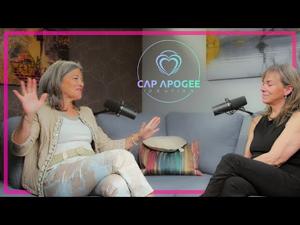


Can chronic diseases be treated without relying only on medication?
In this episode, Dr. Iveta Nagyova shares her journey from clinical psychology to integrative medicine and discusses the growing importance of non-pharmacological interventions in healthcare.
Her research highlights how behavioral science, environment, and lifestyle interventions can improve patient well-being, treatment adherence, and quality of life for people living with chronic conditions.
---
💡 YOU MAY BE INTERESTED IN THESE QUESTIONS
✔ What are non-pharmacological interventions?
✔ How can architecture influence health and well-being?
✔ What role does behavioral science play in healthcare?
---
📌 HIGHLIGHTS
00:30 Improving human well-being
03:25 Rethinking chronic disease care
05:52 How environment shapes health
09:35 Behavioral science in healthcare
---
👉 Watch now and share your thoughts in the comments.
📢 Subscribe for more inspiring conversations.
---
# About Dr. Iveta Nagyova
Dr. Iveta Nagyova (PhD, FABMR) is Senior Research Leader and Head of the Department of Social and Behavioural Medicine at **Pavol Jozef Safarik University in Kosice, Slovakia**.
She has held leadership roles within the **European Public Health Association (EUPHA)** and works with the **WHO Regional Office for Europe** on innovation in public health, behavioural insights, and chronic disease prevention.
Her research focuses on behavioural medicine, non-pharmacological therapies, and innovative approaches to improve quality of life for people living with chronic conditions.
---
🦋🩵🦋
Dans cet épisode, Dr Iveta Nagyova, psychologue et chercheuse en santé publique, discute de l’importance des interventions non pharmacologiques dans la prévention et la gestion des maladies chroniques.
Elle explique comment les sciences du comportement, l’environnement et les approches intégratives peuvent améliorer la santé mentale, la qualité de vie et l’adhésion aux traitements.
---
💡 CES QUESTIONS POURRAIENT VOUS INTÉRESSER
✔ Quelles sont les interventions non pharmacologiques ?
✔ Comment l’environnement et l’architecture influencent-ils la santé ?
✔ Quel rôle jouent les sciences du comportement dans les soins de santé ?
---
#capapogee
#integrativehealth
#behavioralmedicine
#chronicdisease
#healthprevention
---
Pourquoi votre douleur revient-elle malgré les traitements?
Brigitte Marchand reçoit BetsyAnn Baron pour parler de fascias, douleurs chroniques, posture, mouvement, thérapie myofasciale et santé intégrative. Découvrez pourquoi la douleur est souvent une conséquence plutôt que la véritable cause… et comment mieux comprendre votre corps pour retrouver plus de liberté de mouvement.
💡 CES QUESTIONS POURRAIENT VOUS INTÉRESSER
✔️ Pourquoi ai-je toujours mal au même endroit malgré les traitements?
✔️ Quel rôle jouent réellement les fascias dans les douleurs chroniques? ✔️ Comment retrouver une posture plus naturelle et réduire les compensations du corps?
📌 MOMENTS FORTS 00:00 La douleur trompeuse 02:21 Une carrière exceptionnelle 04:44 Comprendre les fascias 6:07 Le corps compense 10:29 Soigner en équipe 11:37 Explorer son mouvement La douleur au dos, au cou ou aux genoux n'est souvent que la partie visible de l'iceberg. Dans cet épisode de Cap Apogée, BetsyAnn Baron explique comment les fascias, les compensations du corps et notre façon de bouger influencent la douleur chronique. Ancienne danseuse étoile des Grands Ballets Canadiens, elle partage une approche unique qui allie mouvement, conscience corporelle et thérapie myofasciale structurale. Vous découvrirez pourquoi traiter uniquement la zone douloureuse ne suffit pas toujours, comment le corps développe des adaptations invisibles et pourquoi une meilleure compréhension de votre posture peut transformer durablement votre santé.
🎙 À PROPOS DE NOTRE INVITÉE BetsyAnn Baron est une ancienne danseuse principale des Grands Ballets Canadiens et fondatrice de Baron Bodywork. Elle enseigne la thérapie myofasciale structurale auprès de nombreux professionnels de la santé et collabore avec des physiothérapeutes, ostéopathes, acupuncteurs et médecins. Son approche met l'accent sur le mouvement, la conscience corporelle et les fascias pour favoriser une récupération durable.
💬 Et vous, quelle douleur revient le plus souvent dans votre quotidien? Partagez votre expérience dans les commentaires.
👍 Si cette discussion vous aide à mieux comprendre votre corps, aimez la vidéo et abonnez-vous à Cap Apogée pour découvrir chaque semaine des experts qui transforment notre vision de la santé.
🦋🩵🦋 🇬🇧 Could your pain come from somewhere else?
Brigitte Marchand welcomes BetsyAnn Baron to discuss fascia, chronic pain, posture and myofascial therapy. Learn why pain is often a symptom rather than the true cause, and how better body awareness can improve long-term health.
🎙 ABOUT OUR GUEST BetsyAnn Baron is a former principal dancer with Les Grands Ballets Canadiens and the founder of Baron Bodywork. She teaches structural myofascial therapy to numerous health professionals and collaborates with physical therapists, osteopaths, acupuncturists, and physicians. Her approach emphasizes movement, body awareness, and fascia to promote lasting recovery.
👍 Subscribe for more conversations on integrative health and longevity. --- #Fascia #ChronicPain #IntegrativeHealth #DouleurChronique #brigittemarchand
Can chronic diseases be treated without relying only on medication?
In this episode, Dr. Iveta Nagyova shares her journey from clinical psychology to integrative medicine and discusses the growing importance of non-pharmacological interventions in healthcare.
Her research highlights how behavioral science, environment, and lifestyle interventions can improve patient well-being, treatment adherence, and quality of life for people living with chronic conditions.
---
💡 YOU MAY BE INTERESTED IN THESE QUESTIONS
✔ What are non-pharmacological interventions?
✔ How can architecture influence health and well-being?
✔ What role does behavioral science play in healthcare?
---
📌 HIGHLIGHTS
00:30 Improving human well-being
03:25 Rethinking chronic disease care
05:52 How environment shapes health
09:35 Behavioral science in healthcare
---
👉 Watch now and share your thoughts in the comments.
📢 Subscribe for more inspiring conversations.
---
# About Dr. Iveta Nagyova
Dr. Iveta Nagyova (PhD, FABMR) is Senior Research Leader and Head of the Department of Social and Behavioural Medicine at **Pavol Jozef Safarik University in Kosice, Slovakia**.
She has held leadership roles within the **European Public Health Association (EUPHA)** and works with the **WHO Regional Office for Europe** on innovation in public health, behavioural insights, and chronic disease prevention.
Her research focuses on behavioural medicine, non-pharmacological therapies, and innovative approaches to improve quality of life for people living with chronic conditions.
---
🦋🩵🦋
Dans cet épisode, Dr Iveta Nagyova, psychologue et chercheuse en santé publique, discute de l’importance des interventions non pharmacologiques dans la prévention et la gestion des maladies chroniques.
Elle explique comment les sciences du comportement, l’environnement et les approches intégratives peuvent améliorer la santé mentale, la qualité de vie et l’adhésion aux traitements.
---
💡 CES QUESTIONS POURRAIENT VOUS INTÉRESSER
✔ Quelles sont les interventions non pharmacologiques ?
✔ Comment l’environnement et l’architecture influencent-ils la santé ?
✔ Quel rôle jouent les sciences du comportement dans les soins de santé ?
---
#capapogee
#integrativehealth
#behavioralmedicine
#chronicdisease
#healthprevention
---
Vous avez parfois l’impression que les soins sont trop fragmentés et que les professionnels travaillent en silos ? Bruno Bothier, de Human First, parle de santé intégrative, parcours de soins, démarche qualité et coordination des professionnels de santé. Dans cet épisode, découvrez comment remettre l’humain au centre des soins et créer des parcours plus cohérents, structurés et profondément humains. 💡 CES QUESTIONS POURRAIENT VOUS INTÉRESSER • Comment mieux coordonner les différents professionnels de santé ? • Pourquoi les soins en silo peuvent-ils nuire à la cohérence du parcours du patient ? • Comment redonner du sens au quotidien des professionnels de santé ? 📌 MOMENTS FORTS 00:00 — Human First et santé intégrative 02:00 — Structurer les parcours de soins 04:00 — Créer une équipe interdisciplinaire 06:00 — Redonner du sens aux soignants 08:00 — Sortir des soins en silo 10:00 — L’humain au centre des soins 💬 VOTRE AVIS NOUS INTÉRESSE Selon vous, comment pourrait-on mieux coordonner les professionnels de santé pour offrir des soins plus humains et cohérents ? Partagez votre réflexion dans les commentaires. 👍 Aimez la vidéo si elle vous a fait réfléchir et abonnez-vous à Cap Apogée pour découvrir d’autres conversations sur la santé, l’humain et l’évolution des pratiques de soins. 👤 À PROPOS DE BRUNO BOTHIER Bruno Bothier est responsable de la stratégie et du développement de Human First, une démarche de labellisation en santé intégrative. Ingénieur informatique de formation, il a travaillé pendant près de 30 ans dans ce domaine avant de s’orienter vers la santé. Son expérience personnelle comme aidant auprès de sa mère a profondément influencé sa vision des soins et son engagement envers une approche plus humaine et intégrative. Il contribue aujourd’hui au développement d’une démarche visant à mieux structurer les parcours de soins et à rapprocher les différents acteurs de santé. 🇬🇧 ENGLISH What if healthcare could be more coordinated, human and connected? Bruno Bothier from Human First discusses integrative health, coordinated care, interdisciplinary collaboration and putting people first. Discover how better-structured care pathways can benefit both patients and healthcare professionals. 💡 YOU MIGHT BE INTERESTED IN THESE QUESTIONS • How can we move beyond siloed healthcare? • How can integrative health improve patient care? • How can we bring more meaning to healthcare professionals? 👤 ABOUT BRUNO BOTHIER Bruno Bothier is in charge of strategy and development at Human First, a certification program for integrative health. A computer engineer by training, he worked in that field for nearly 30 years before transitioning to the healthcare sector. His personal experience as a caregiver for his mother has profoundly influenced his vision of care and his commitment to a more humane and integrative approach. Today, he is helping to develop an initiative aimed at better structuring care pathways and bringing together the various stakeholders in the healthcare system. 👍 Subscribe to Cap Apogée for more conversations about health and human-centered care. --- #IntegrativeHealth #Healthcare #PatientCenteredCare #SantéIntégrative #SantéHumaine
Bridget Marchand is a pharmacist, mentor, and entrepreneur passionate about healthcare innovation. With nearly 40 years of experience spanning art and design, science, community pharmacy, and entrepreneurship, she continues to explore one essential question: how can we turn knowledge into lasting change in health?
Through her podcast and YouTube channel, she creates a space for reflection and dialogue that bridges science and human experience, prevention and research, and treatment and clinical practice. Her goal is to give others a voice, spark curiosity, and foster a more holistic understanding of health.
Her vision is grounded in a powerful belief: Knowledge changes minds. Experience changes people. Leadership changes systems. She invites everyone to move from knowledge to awareness, and from awareness to action, to create meaningful and lasting change in healthcare.
🦋🩵🦋
Bridget Marchand est pharmacienne, mentore et entrepreneure passionnée par l’innovation en santé. Après près de 40 ans de parcours, de l’art et du design aux sciences et à la pharmacie communautaire, elle souhaite répondre à une question essentielle : comment transformer nos connaissances en changements durables pour la santé?
À travers son balado et sa chaîne YouTube, elle crée un espace de réflexion et de dialogue qui relie la science à l’expérience humaine, la prévention à la recherche et les traitements à la pratique clinique. Son objectif est de donner la parole à différentes voix, de stimuler la curiosité et de favoriser une compréhension plus globale de la santé.
Sa vision repose sur une conviction forte : les connaissances changent les esprits, l’expérience transforme les personnes et le leadership transforme les systèmes. Elle invite chacun à passer de la connaissance à la prise de conscience, puis à l’action, pour faire émerger des changements concrets et durables en santé.
---
#HealthcareInnovation
#HealthAndWellness
#ScienceAndHumanity
#PreventiveHealth
#LeadershipInHealthcare
Et si certaines de nos limites venaient d’une cage que nous avons nous-mêmes construite ?
Dans cet épisode de Science Conscience – Votre santé, votre pouvoir, Brigitte Marchand reçoit Isabelle Wachsmuth, représentante de l’Organisation mondiale de la santé et leader en innovation, pour explorer une vision de la santé fondée sur l’interconnexion entre l’humain, son environnement et les systèmes dans lesquels il évolue.
Biologie, environnement, épigénétique, intelligence collective, cocréation et biomimétisme : Isabelle nous invite à décloisonner les savoirs et à regarder la santé au-delà du corps et des disciplines traditionnelles.
Comment sortir de nos automatismes et de nos « cages invisibles » ? Comment notre environnement influence-t-il notre santé ? Et que pouvons-nous apprendre de l’intelligence du vivant pour retrouver notre axe ?
Une conversation qui invite à changer de perspective et à considérer la santé comme un équilibre vivant entre soi, les autres et notre environnement.
À propos de l’invitée
🇬🇧 ABOUT THIS EPISODE
What if some of our limitations came from an invisible cage we built ourselves?
In this episode of Science Conscience – Votre santé, votre pouvoir, Brigitte Marchand welcomes Isabelle Wachsmuth, a World Health Organization representative and innovation leader, for a conversation about global health, collective intelligence, interconnectedness and the living world.
Drawing connections between biology, the environment, epigenetics, co-creation and biomimicry, Isabelle invites us to move beyond traditional boundaries and consider health as something deeply connected to the systems and environments in which we live.
How can we move beyond our automatic patterns and invisible limitations? How does our environment influence our health? And what can the intelligence of living systems teach us about finding greater balance?
About our guest
Vous avez l’impression de faire du yoyo avec votre poids, de manquer d’énergie ou de ne plus reconnaître votre corps ?
Dans cet épisode de Science Conscience – Votre santé, votre pouvoir, Brigitte Marchand reçoit Antonietta Griguolo, ostéopathe, pour une conversation autour du poids, de la fatigue, des changements hormonaux et de la santé globale.
Après près de 20 ans dans le domaine de la comptabilité, Antonietta a vécu son propre parcours de transformation qui l’a amenée à revoir son alimentation, son mode de vie et sa compréhension de la santé — jusqu’à entreprendre un important changement de carrière.
Elle partage aujourd’hui comment cette expérience influence sa pratique en ostéopathie et pourquoi l’écoute, l’accompagnement et la collaboration entre différentes disciplines peuvent jouer un rôle important lorsque les enjeux de santé deviennent plus complexes.
À propos de l’invitée
🇬🇧 ABOUT THIS EPISODE
Have you struggled with weight fluctuations, fatigue or hormonal changes and wondered how to regain a sense of balance?
In this episode of Science Conscience – Votre santé, votre pouvoir, Brigitte Marchand welcomes Antonietta Griguolo, osteopath, for a conversation about weight, hormonal changes, nutrition and a more holistic approach to health.
After nearly 20 years in accounting, Antonietta’s own health journey led her to rethink her lifestyle and eventually make a major career change. She shares how that experience now shapes the way she supports her patients and why listening, guidance and interdisciplinary collaboration can become particularly valuable when health issues are complex.
About our guest
We are delighted to welcome Dr. Joe Dispenza, joining us virtually, and Dr. Hemal Patel, joining us in person, at the Integrative Health Congress 2027 in Québec, Canada.
January 21 to 23, 2027
Centre de congrès de Saint-Hyacinthe
1325, rue Daniel-Johnson O
Saint-Hyacinthe, Quebec
J2S 8S4, Canada
TO LEARN MORE:
https://www.congressanteintegrative.com/
---
#drjoedispenza #HemalPatelphd #mindbodymedicine #integrativehealth #MeditationResearch #humain360
Pourquoi est-il si difficile de changer nos habitudes, même lorsque nous savons ce qui est bon pour nous ?
Dans cette deuxième partie de sa conversation avec Alex Boily, Brigitte Marchand explore ce qui nous permet réellement de passer de l’intention à l’action.
Motivation, alimentation, habitudes de vie, identité et prévention : Alex propose une vision de la santé dans laquelle chacun peut reprendre une part de pouvoir sur son parcours et avancer progressivement, sans chercher la perfection.
Mais derrière le changement d’habitudes se trouve une question plus profonde : comment devient-on la personne capable de changer ? La perception que nous avons de nous-mêmes influence-t-elle notre capacité à adopter de nouvelles habitudes et à les maintenir ?
La conversation aborde également la santé intégrative, la prévention, la médicalisation et la volonté de faire évoluer notre façon d’aborder la santé.
À propos de l’invité
🇬🇧 ABOUT THIS EPISODE
Why is it so difficult to change our habits, even when we know what is good for us?
In Part 2 of her conversation with Alex Boily, Brigitte Marchand explores what helps us move from intention to action.
From motivation and nutrition to lifestyle habits, identity and prevention, Alex shares an approach to health based on taking an active role in our own journey and making meaningful progress one step at a time.
At the heart of the conversation is a deeper question: how do we become the person capable of making lasting change?
The episode also explores integrative health, prevention and how we might rethink our approach to health and well-being.
About our guest
Pourquoi est-il si difficile de rester constant, même lorsqu’on sait que l’activité physique est bonne pour nous ?
Dans cette première partie de sa conversation avec Alex Boily, kinésiologue et entrepreneur, Brigitte Marchand explore les mécanismes qui nous permettent de passer de l’intention à l’action — et surtout de maintenir nos habitudes dans le temps.
Discipline, motivation, confiance en soi, activité physique et alimentation : Alex explique pourquoi comprendre les bénéfices d’une action et le « pourquoi » qui la sous-tend peut jouer un rôle important dans notre capacité à persévérer.
Il partage également comment la confiance en soi et notre perception de ce qui est possible peuvent influencer nos décisions, notre rapport à la peur et notre capacité à entreprendre des changements durables.
Une conversation sur ce qui nous fait avancer lorsque la motivation, elle, n’est plus au rendez-vous.
À propos de l’invité
🇬🇧 ABOUT THIS EPISODE
Why is it so difficult to stay consistent, even when we know physical activity is good for us?
In Part 1 of her conversation with Alex Boily, kinesiologist and entrepreneur, Brigitte Marchand explores what helps us move from intention to action — and maintain healthy habits over time.
From discipline and motivation to confidence, physical activity and nutrition, Alex discusses why understanding the benefits and purpose behind our actions can make a difference in our ability to stay consistent.
The conversation also explores how confidence and our perception of what is possible can influence the way we face fear, make decisions and create lasting change.
About our guest