
Sign up to save your podcasts
Or



What does philosophy have to do with artificial intelligence? More than you'd think.
Robert Matney, Chief Evangelist at Primer.ai, didn't start his career in tech. He started with epistemology and rhetoric—the study of how we know what we know, and how language shapes everything. Turns out, that's exactly the foundation you need to build AI that actually works for people.
In this conversation, we dig into what separates genuine AI innovation from the sea of hype and vaporware flooding the market. We'll talk about the real cost of throwing everything at a large language model, why empathy is the most underrated leadership skill in tech, and how a short memory and deep listening can turn conflict into collaboration.
Robert also shares how performing Shakespeare at the Globe Theatre in London shaped the way he communicates, leads, and tells stories—and why that matters more than ever in the AI era.
03:24 – From philosophy & rhetoric to natural language processing
05:41 – How we got to the AI moment we're living in now
07:18 – The autocomplete machine: AI as oracle vs. AI as tool
08:21 – What leaders get wrong when they look to AI to 'fill the gap'
09:40 – Standing out in a market full of AI hype and vaporware
11:00 – The right way to architect an AI pipeline (and why most companies won't)
12:17 – Who Primer.ai serves: public sector, defense, intelligence
13:32 – Empathy as the core of team leadership and product development
15:02 – The short memory principle: how to keep ego out of partnerships
17:36 – How Primer.ai shortens time-to-insight for executives and analysts
21:56 – Shakespeare at the Globe: what performance taught Robert about leadership
24:46 – Robert's upbringing: a stern naval officer father, an artistic mother, and the roots of empathy
29:05 – Being a 'cognitive tourist': what that means and why it matters
30:28 – The one thing to take back to your team on Monday
32:09 – Where to connect with Robert Matney
If you lead a team in tech, product, or engineering, this one will stay with you.
🔔 Subscribe so you never miss a conversation that actually challenges how you lead
💬 Comment with the insight that hit hardest—Robert's take on empathy and AI? The short memory rule? Tell us.
🔗 Share this with a leader in tech who needs to hear that empathy isn't soft—it's the strategy
Most leaders don’t struggle with effort. They struggle with originality.
At some point, copying competitors starts to feel safe. Benchmarks look comforting. Best practices feel responsible. And quietly, innovation dies.
This conversation with Jono Bacon pulls that pattern apart.
We talk about why breakthrough ideas rarely come from dashboards, how community and human behavior reveal opportunity faster than KPIs, and why the most valuable innovation often lives in places leaders aren’t measuring at all.
Key Discussion Points
00:00 – Why copying competitors kills innovation
02:40 – The danger of “best practices” thinking
04:00 – Open source, community, and human motivation
07:30 – Why designing for the “average user” fails
10:20 – Measuring what matters vs what’s easy
12:30 – Innovation inside large vs early-stage companies
15:10 – Vision beats process every time
17:20 – Experiments, not pilots
20:30 – Why past success blocks curiosity
22:45 – Finding opportunity where competitors aren’t looking
25:15 – The real mindset behind breakthrough leaders
28:30 – One idea leaders can apply immediately
33:20 – Creativity, music, and building without permission
If you’ve ever felt stuck shipping “the next version” instead of something genuinely different, this one will land.
Take the next step:
👍 If something here made you rethink how you lead, give it a like
🔔 Follow the channel for more real leadership conversations
💬 Share the moment that challenged your thinking
🔗 Pass this along to someone stuck in “best practice” mode
#Leadership #Innovation #Strategy #ProductLeadership #CommunityBuilding #ExecutiveLeadership #OrganizationalDesign #GrowthMindset #BusinessPodcast #BuildingLegendaryLeaders
AI isn’t breaking teams. The way leaders are rolling it out is.
This conversation goes straight to the part that most AI discussions avoid: the human cost of speed. Fear disguised as silence. Burnout is hiding behind productivity. And the quiet damage that shows up when leaders treat AI like a software upgrade instead of a cultural shift.
Paul Chaney has been working in digital transformation long before it was fashionable. What he’s focused on now is where leadership is missing the mark, and what actually happens inside teams when AI moves faster than people can absorb.
If you’re responsible for adoption, change, or results, this one will land close to home.
Key Discussion Points
00:00 – Why AI adoption is not a technology problem
02:36 – What breaks first when AI moves too fast
04:12 – Speed doesn’t equal readiness
06:55 – Silence is not buy-in, it’s self-protection
08:32 – “Is AI going to take my job?”
11:43 – What techno stress actually looks like inside teams
14:57 – Why AI is not “just another tool”
17:20 – Boundaries, safety zones, and psychological safety
19:26 – Why AI feels different than every other technology before it
21:39 – The hype curve and unrealistic expectations
24:01 – What AI can do vs what humans must do
29:15 – Taking a mulligan when leadership moves too fast
31:11 – Treating AI adoption as an experiment
35:17 – Why people, not tools, are the real point
38:39 – Where to learn more about AI Technostress
If this hit close to your leadership reality:
👍 Acknowledge it
🔔 Stay connected for real leadership conversations
💬 Share what you’re seeing inside your own team
🔗 Pass this to someone responsible for AI adoption
#Leadership #AILeadership #TechnoStress #HumanCenteredAI #ExecutiveLeadership #OrganizationalChange #BuildingLegendaryLeaders
Leadership doesn’t break when strategy fails—it breaks when people stop believing in the direction.
This conversation is about what happens before execution: trust, shared vision, coaching, and the discipline required to build culture across radically different backgrounds. From scaling founder-led companies to uniting global teams, Marne Martin shares how real performance is unlocked when leaders stop controlling and start connecting.
If you’re navigating growth, acquisitions, or cultural friction—this one hits home.
00:00 – Why leadership breaks down during growth
Because leadership gets better when we actually talk about what works.
If it resonates, don't forget to:
👍 Like this video
🔔 Subscribe for more authentic conversations
💬 Comment with your biggest takeaway
🔗 Share with someone who needs to hear this
#Leadership #ExecutiveLeadership #Culture #Coaching #PeopleFirst #OrganizationalGrowth #CEO #Management #PerformanceCulture #BuildingLegendaryLeaders
Most leaders focus on processes and technology because they're easy to see and measure. But what if the real competitive advantage lies in something completely different?
Olga Violett, Vice President of Operations turned Product Management and CX Principal, shares why creating workplace happiness isn't soft skills—it's strategic leadership. She reveals how trust accelerates results, why vulnerability builds credibility rather than exposing weakness, and the ripple effect that occurs when you invest in people instead of just managing them.
This conversation challenges everything you thought you knew about feedback, team building, and what it truly takes to develop leaders, rather than just directing employees.
Key Discussion Points
03:06 - The Agile Happiness Catalyst: What It Really Means
04:27 - Why People Matter More Than Process
07:04 - Building Trust That Accelerates Results
09:06 - Developing People vs. Directing Them
12:27 - The Real Power of One-on-Ones
14:16 - Letting Teams Choose Their Own Work
16:43 - Making Feedback a Daily Tool, Not an Annual Event
20:28 - Turning Weaknesses Into Advantages
22:12 - Using Vulnerability to Build Team Trust
24:26 - Why You Should Hire for Unknown Problems
25:24 - The Ripple Effect of Mentorship
27;16 - Why Growing Your Team Grows You Faster
28:27 - The Micromanagement Trap
31:01 - The Secret to Creating Lasting Impact
33:19 - From Budapest to Building Leaders
35:10 - Growth Mindset Origins
39:13 - How to Connect with Olga
If you're still treating leadership like a title instead of a relationship, you're leaving so much on the table.
Connect with Olga Violett
#Leadership #Mentorship #WorkplaceCulture #AgileLeadership #PeopleFirst #TrustInLeadership #VulnerabilityInLeadership #TeamDevelopment #LeadershipDevelopment #TransformationalLeadership #BuildingLegendaryLeaders #ExecutiveCoaching #OrganizationalCulture #GrowthMindset #EmployeeEngagement
What happens when you walk away from being the expert and step into a role where credibility isn’t guaranteed?
This conversation explores what leadership really looks like when titles don’t carry authority, KPIs can either help or hurt, and progress depends more on listening than speaking. From engineering and quality to product marketing and P&L thinking, Warren Bryant shares what it takes to lead at a higher altitude—without losing trust, speed, or yourself in the process.
This one is for leaders navigating career pivots, complex stakeholder environments, and moments where clarity matters more than control.
Key Discussion Points
00:00 – Why leadership breaks when people are ignored
02:00 – Leading at a higher altitude: tradeoffs, roadmaps, revenue
03:45 – Why people management matters more than technical mastery
05:00 – Turning failure into momentum instead of morale loss
06:30 – Learning from what worked, not just what failed
08:00 – Setting expectations and eliminating business surprises
09:10 – When everything goes sideways despite doing “everything right”
10:45 – The KPIs that actually matter (and the ones that quietly destroy culture)
13:10 – Why bad KPIs create bad behavior
14:40 – Walking away from mastery into a completely new role
17:00 – How to rebuild credibility when you’re the outsider
19:15 – Listening past the PowerPoint to find real customer pain
21:05 – Career pivots: when to move, how to stay the course
23:00 – Leading without authority in full crisis mode
24:45 – Delegation that scales instead of bottlenecks
26:10 – Running your product line like you’re the CEO
28:00 – Early curiosity, failure, and building instincts as a leader
30:30 – Leadership lessons from racing, mentoring, and teaching others
33:40 – Why success should still be fun
If this conversation challenged how you think about leadership:
👍 Show support by liking the episode
🔔 Subscribe for honest conversations about authentic leadership
💬 Share the insight that hit closest to home
🔗 Pass this along to someone navigating a career shift or leadership stretch
#LeadershipDevelopment #ExecutiveLeadership #CareerGrowth #ProductLeadership #LeadingWithoutAuthority #BusinessStrategy #EngineeringLeadership #Management #ProfessionalDevelopment #BuildingLegendaryLeaders
Speed isn’t just a metric; it’s a leadership advantage.
In this episode, Chris Nelson breaks down how urgency, tighter feedback loops, transparency, and empowered decision-making reshape culture and accelerate execution. From shifting away from command-and-control structures to creating a cadence teams can rely on, this conversation reveals what it takes to build momentum inside fast-moving organizations.
If you're navigating transformation, scaling a team, or trying to reduce friction in communication and alignment—this conversation is going to feel uncomfortably relatable.
Key Discussion Points
Before you move on to the next thing—pause and reflect.
Speed becomes a habit only when we act with intention.
Don't forget to:
👍 Like if the message hit home
🔔 Subscribe to follow the next conversation
💬 Comment with your most significant insight
🔗 Share with someone who leads people (or wants to)
#Leadership #ExecutiveMindset #DecisionMaking #OrganizationalCulture #BusinessStrategy #LeadershipDevelopment #HighPerformanceTeams #DigitalTransformation #AgileLeadership #FutureOfWork
Bridging two brands, two cultures, and two ways of working isn’t for the faint of heart—but it’s where growth truly lives.
In this conversation, Lauren McTiernan, Senior Director of Customer Operations & Fulfillment at Crocs, breaks down what it really takes to align fast-moving teams, build shared priorities, experiment your way forward, and keep people energized when customer expectations never stop evolving.
From the realities of merging Crocs and HEYDUDE to the leadership lessons that shaped her 17-year journey, this episode delivers grounded insights for leaders navigating complexity, change, and rapid growth.
KEY DISCUSSION POINTS
Before you run to your next meeting full of “priorities,” remember to:
👍 Lift this episode up with a like
🔔 Subscribe for conversations that help you lead with clarity, calm, and courage
💬 Drop your biggest insight: which idea will you bring back to your team?
🔗 Share this with a leader who’s navigating change and needs a boost today
#LeadershipDevelopment #CultureBuilding #ChangeManagement #TeamAlignment #ContinuousImprovement #BusinessGrowth #CustomerExperience #LeadershipPodcast #Crocs #HEYDUDE #OperationalExcellence #PeopleLeadership #ScalingTeams
A conversation that cuts through the noise and goes straight to the part most people avoid—self-trust. Not the motivational-poster version, but the kind that forces you to sit still long enough to hear your own voice instead of the one telling you you’re not enough.
Sir Shefik Macauley shares how he navigated a 30+ year career spanning mass communications, Olympic tech, music, television, NASA Space Apps, global community service, and even six international knightings—all while grounding everything in presence, purpose, and the discipline of self-trust.
This episode explores presence, purpose, and what it truly means to measure success without relying on numbers. It's a reminder that the journey doesn't stop until we do—and that trusting the process is less about confidence and more about commitment.
KEY DISCUSSION POINTS
00:28 – Introducing Sir Shefik Macauley
01:15 – Emmy wins, six knightings & a career across impossible industries
02:24 – Framing today’s conversation: trust, reinvention, creativity & service
03:40 – How Shefik connected worlds: Olympics tech, NASA, NBC, community service
06:20 – Pivoting after rejection & building a career from scratch
09:05 – Longevity lessons from working with legendary artists
11:10 – Pivoting across industries while carrying relationships forward
13:05 – What trust really requires—and why it begins with self-trust
15:02 – The “voice in your head”: how to identify where it actually comes from
17:10 – Understanding your environment: the inner and outer landscape
19:30 – Trusting the destination even before you understand the path
21:48 – Navigating denial, setbacks, and expectations that collapse
24:32 – Trial, error, and experimentation as a leadership discipline
27:20 – Living in a constant state of incubation: always learning, always growing
29:05 – How Shefik earned 1,000+ LinkedIn Learning certificates
31:50 – Arriving with the right mindset & elevating everyone around you
33:42 – Balancing left brain and right brain as a creative technologist
36:10 – Why creativity + engineering aren’t opposites
37:40 – Service without burnout: how he keeps giving without collapsing
40:02 – Carrying others’ stories and baggage—and letting them carry yours
42:15 – Practical lessons for emerging leaders
44:50 – Two ears, one mouth: listening between the lines
47:30 – The journey behind being knighted six times
53:15 – Becoming a UN Special Envoy & representing a royal house
55:08 – Childhood roots: where the journey truly began
57:10 – Obstacles, denials, and how they shaped his leadership path
59:44 – Losing his first corporate job & what it taught him about loyalty
1:02:10 – How to reach Shefik + NASA Space Apps Yonkers
1:03:05 – Closing reflections and next steps for listeners
You’ll walk away with perspective-shifting lessons on failure, reinvention, managing energy, left-brain/right-brain leadership, and how to build credibility without losing yourself in the process.
If this conversation expanded your perspective:
👍 Give this video a like to support more conversations that challenge the way we lead
🔔 Subscribe so you don’t miss new stories from leaders reshaping the world
💬 Drop a comment with the insight that hit you hardest—someone else will learn from it
🔗 Share this with a leader who’s navigating reinvention, trust, or a big pivot right now
#SelfTrust #MindsetShift #PurposeDrivenLife #PersonalGrowthJourney #LeadershipMindset #TheProcess #InnerVoice #Authenticity #GrowthCulture #ContinuousImprovement
What does it take to lead when you don't have the title? Julia Elliott, Director of Product Strategy and Operations at Google, shares her unconventional path from electrical engineering to enterprise product leadership.
In this episode, you will discover:
• How an engineering mindset translates to business leadership
• The art of influencing without authority across startups and big tech
• Why understanding motivations is the key to stakeholder alignment
• How to scale from 10 to 600 people without losing agility
• The role of purpose in building legendary leadership
Leadership isn't about the title on your business card—it's about the clarity you bring and the purpose you inspire. Julia Elliott proved that influence comes from understanding people, empowering teams, and leading with intention.
So here's the question: What's the one thing you bring to the table that no one else does? Once you know that answer, you're already leading.
🔔 Subscribe to Building Legendary Leaders so you never miss an episode.
Timestamps:
00:00 - Introduction: Meet Julia Elliott
01:18 - Leading Without Authority: What We're Covering Today
03:26 - From Engineering to Product Leadership
05:18 - Why Engineers Struggle with Communication (And How Julia Bridged the Gap)
07:12 - The Group Project Advantage: Organizing Chaos Early
08:29 - Influencing Without a Title: Finding Your Brand
10:07 - Taking Enterprise to Upwork: Convincing a Consumer Company
11:21 - Advice for Early Leaders: Know Yourself First
14:17 - The Google Transition: Startup Agility Meets Tech Giant
16:35 - Navigating the Sea of Stakeholders
18:20 - Understanding Motivations: The WIIFM Principle
21:03 - Shaping Your Leadership Identity Through Purpose
23:17 - Drive: Autonomy, Mastery, and Purpose
24:29 - Engaging Talent at Scale: Empowerment Through Clarity
26:18 - Growing Up in Hershey: The Immigrant Legacy
28:15 - Carrying Forward the Legacy of Gratitude
30:24 - Parenting with Purpose: Teaching Kindness and Community
31:17 - Final Takeaway: Lead with Purpose
32:58 - How to Connect with Julia Elliott
#Leadership #ProductManagement #GoogleCareers #CareerAdvice #TechLeadership
From the publisher's feed
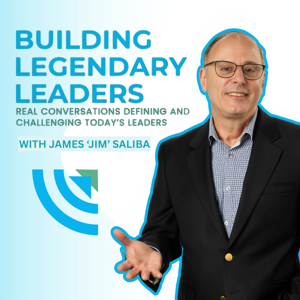
Building Legendary Leaders is a leadership podcast for executives who want to stop firefighting and start leading strategically. Hosted by executive coach James ‘Jim’ Saliba, the show brings candid…
The vision is to create a space where senior leaders can reflect openly, share lessons learned, and model the adaptability today's business climate demands. Guests include Directors, VPS, and C-suite executives, HR and L&D leaders, published authors, researchers, and influential voices shaping leadership in high-pressure industries. Their stories give listeners both the insight and the courage to lead at scale.