
Sign up to save your podcasts
Or

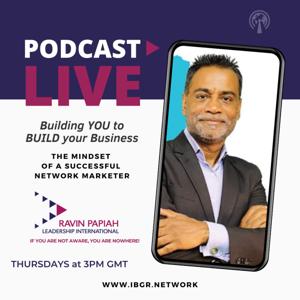


E35 Adversity as your ally
"I'd like for you to think of adversity as simply stepping-stones to live the life of your dreams," asserts Coach Michael Taylor, the author of Adversity is Your Greatest Ally. "They are neither good nor bad, until you choose to label them as such."
His book is based on his life experiences of overcoming being born in the inner city projects of Corpus Christi, Texas to a single mother with six kids who were the poster children for poverty back in the Sixties. It is also based on his ability to overcome being a child-abuse victim and a high school dropout who refused to succumb to a life of mediocrity, who was able to climb the corporate ladder, and become a mid-level manager for a multi-million dollar company at the tender age of 22. But it is also based on his ability to overcome divorce, bankruptcy, foreclosure, and a deep state of depression in which he even contemplated taking his own life.
Now 56, the middle-aged Taylor feels more like a teenager. He lives with a certain vulnerability and authenticity that inspires those he comes in contact with.
"Rest assured that you have everything you need right now to overcome any adversity placed in front of you," asserts Coach Taylor, now a highly successful businessman. "The two questions you must now ask yourself are, 'What do I want?' and 'What am I willing to do to get it?' When you can sufficiently answer these two questions you are ready to begin moving towards your destiny. The problem is, very few people can answer these two simple questions."
His mantra is very empowering: Every human being has the capacity to overcome adversity in their lives. Every adversity in our lives has a lesson and a gift that can guide us to a life of joy. Every human being is endowed with unique gifts and talents that are to be shared with the world to make it a better place.
"Every motivational speaker or spiritual teacher has the same message," concludes Coach Taylor. "There is a part of us that is divine and connected to a power greater than ourselves. What makes my story unique are the adversities I've overcome to rebuild my life and how I share that story with others."
I can help you build the correct mindset for massive success in your life, both personal and professional. IF you are willing to join my coaching, whether group coaching or one on one coaching, please e-mail me at [email protected], or watsapp me on +23052507999
If you are not aware, you are nowhere! So, pick up your smartphone, AND watsapp me NOW to change your life forever! Ravin
If you want to work with me, register using this link: https://bit.ly/3z5MuRz
Follow me and listen to my podcast: https://pod.co/epic-your-business-through-sales-leadership-the-ravin-papiah-way Top of Form
E36 – Loving Adversity – the secret to success
Whether you find obstacles in your career, studies, or personal life, adversity has the potential to be a powerful catalyst: it can make you strong or render you helpless. Ultimately, your approach to facing adversity, and your response to unexpected outcomes, is a deciding factor in whether adversity will propel you forward or stop you in your tracks.
Natalie Rabson, counsellor at Boston City Campus, says: “No one escapes difficulties. Setbacks may have the power to temporarily derail your journey, the aim at Boston is to get people to see them rather as gifts in the form of a learning experience. This gives our learners the opportunity to create empowering beliefs and recommit with greater determination in order to achieve their goals,” Natalie shares 5 key strategies to leverage the power of adversity for your greatest success.
1. Loving the negative association “Everything worthwhile in life is won through surmounting the associated negative experience,” says author Mark Manson. While it is easy to fall in love with our end goal, we need to travel the journey to reach it. And the journey may have bumps, hardships, even failure. It is unrealistic to think that there’s a direct path to getting to that destination of success. “From the outset, we have to know that there will be hard moments, difficult exams, and problems. Focussing on one step at a time, for example, one module at a time, enables you to manage each challenge instead of feeling overwhelmed by the big picture,” says Natalie.
2. The Obstacle is the Way While obstacles may appear threatening, they can also be the very thing that catalyse our growth. The pandemic has been a huge obstacle, but some have turned it into a lucrative opportunity. Others have changed the direction of their business 180 degrees. Hotels in Cape Town were offering drop off laundry services, catering, and work stations for daily rental. Choosing to see each outcome or event as an opportunity to learn and develop further, makes you a stronger person.
3. Power of Inversion Inversion is a practice of thinking the opposite of what you want. It may go against common sense but highlighting mistakes and issues you want to avoid bring inciteful wisdom into what not to do along the way. Seeing this another way, imagine the worst that could happen, then go for it. You’ve already faced the obstacle in your mind, and if failure happens, it won’t come as a shock and it won’t feel so bad.
4. Learn to love the “Nos” “You can achieve virtually anything you want–if you’re willing to hear ‘no’ often enough,” says Andrea Waltz, co-author of Go for No! While it is human nature to want to avoid the rejection associated with “No”, the fact is that hearing a ‘no’, brings you closer to getting your yes – be it for the job, the relationship, or the life you want to have. No’s should hopefully motivate you to work harder and achieve more.
5. Take action Former Canadian professional ice hockey player, Wayne Gretsky said, “You always miss 100% of the shots you don’t take.” Forget about telling yourself all the reasons why adversity is holding you back from going for that job, that relationship, or that degree; if you don’t try push past the setback you will never know what’s possible. And even if Plan A doesn’t work out, you will probably learn how to do it better and apply it to Plan B, C, D ….continuing to take action down the line until you achieve what you want. “Encountering adversity may be inevitable, so you need to choose how it will dictate your actions”, says Natalie. “Expect adversity, use it to alter your course or behaviour, and continue towards your goals”.
Most of us don't set out looking to fail at anything. And we especially don’t want to be labeled as a failure. But maybe that is a mistake.
Failure can be useful. We can learn from it, gain new insights, and do better next time. The right kind of failures give us new information and teach us something that gets us closer to our goals.
Some live by the motto: If you aren't failing you aren't taking big enough risks. Said another way, if everything you try turns out exactly as planned and feels very comfortable, you probably aren't stretching yourself. And if you aren't stretching, you aren't growing.
A fairly common understanding of failure is setting a goal, but not achieving it. We tend to believe that knowing whether or not you achieved a goal is fairly simple and straightforward. It’s often based on data. But in truth, failure is often in the eye of the beholder.
Imagine yourself in each of these three scenarios and whether you'd consider yourself to have failed:
An experienced marathon runner sets a goal to run her next marathon in under three-and-a-half hours. This goal is a full 15 minutes shorter than her prior best time. She completes the marathon in 3 hours and 36 minutes. Besting her prior record by nine minutes.
A director seeks a promotion to EVP and competes against other internal and external candidates. He receives positive feedback. But He gets told that the leadership team felt that hiring an external person would demonstrate their commitment to innovation. A top young professional at an organization gets asked to prepare a presentation for a high-profile meeting. He submits what he considers to be an excellent presentation to his boss. The boss praises the work but substantially changes the slides before the big meeting.
Notice that the differentiator in all three of these failure analysis examples is an ideal we've set in our minds.
Measuring goal achievement can be a subjective and political activity. And in each of these examples above, you can sense that the individuals tried hard and performed well in their efforts.
Perhaps that common definition of being in failure mode as "not achieving a goal" isn't so accurate and straightforward, after all.
I can help you to put your desire to work. IF you are willing to join my coaching, whether group coaching or one on one coaching, please e-mail me at [email protected], or watsapp me on +23052507999
If you are not aware, you are nowhere! So, pick up your smartphone, AND watsapp me NOW to change your life forever! Ravin
If you want to work with me, register using this link: https://bit.ly/3z5MuRz
Follow me and listen to my podcast: https://pod.co/epic-your-business-through-sales-leadership-the-ravin-papiah-way
William Arudda, in his article ‘Why Failure is essential to Success’, says that failure is not a step backward; it’s an excellent stepping stone to success. We never learn to move out of our comfort zone if we don’t overcome our fear of failure. The most progressive companies deliberately seek employees with track records reflecting both failure and success. That’s because someone who survives failure has gained irreplaceable knowledge and the unstoppable perseverance born from overcoming hardship.
To learn more about the benefits of failing, William reached out to executive coach and speaker Dr Sam Collins. A leading global voice on women as leaders and entrepreneurs, she was named one of the Top 200 Women to Impact Business & Industry by Her Majesty, the Queen of England. Sam just wrote a book about failure – her failures – and how they have had a profoundly positive impact on her life.
Listen to the live show for me sharing to you some of the conversation between William and Sam
I can help you to have massive success in your life, both personal and professional, please e-mail me at [email protected], or watsapp me on +23052507999 If you are not aware, you are nowhere! So, pick up your smartphone, AND watsapp me NOW to change your life forever! Ravin If you want to work with me, register using this link: https://bit.ly/3z5MuRz
Follow me and listen to my podcast: https://pod.co/epic-your-business-through-sales-leadership-the-ravin-papiah-way
Continuing the conversation, how do you think we can channel the energy produced from failure?
Let me give you some insights….
And that’s the rest of the conversation between William and Sam:
Arruda: And what did you learn?
Collins: My lesson was to embrace failure and see it as a stepping stone on the way to success. Failing is an inevitable part of creating your destiny, and it gave me the platform to start my own business and follow my biggest dreams. I had nothing to lose. Now, I welcome it. After learning to deal with disappointment, I knew persistence and dedication to my goals would eventually be rewarded.
Arruda: What can we learn from our failures?
Collins: If nothing else, I hope you realize failure is temporary, and failure is good even if, undeniably, it feels really bad when it happens. When something goes wrong, we need to learn to say, "Something good is happening here. Look for the greater message of the experience and expect it to, eventually, turn out for the good. Recognizing this gets easier with practice.
Arruda: In your book, you recommend “routine failing.” Can you share more about that?
Collins: I heartily recommend routine failing. It means you are actually active, doing something, moving forward. Too often we buy into what society says, or what the past has shown us, will work or not work. When we do that, we limit ourselves, and we impede our ability to make big things happen.
Listen to the live show for me to continue sharing with you the rest of the conversation between William and Sam…
I can help you build the correct mindset for massive success in your life, both personal and professional. IF you are willing to join my coaching, whether group coaching or one on one coaching, please e-mail me at [email protected], or watsapp me on +23052507999
If you are not aware, you are nowhere! So, pick up your smartphone, AND watsapp me NOW to change your life forever! Ravin
If you want to work with me, register using this link: https://bit.ly/3z5MuRz
Follow me and listen to my podcast: https://pod.co/epic-your-business-through-sales-leadership-the-ravin-papiah-way
While it seems surprising, some people undermine their own good intentions and long-term goals. Self-sabotage occurs when people hinder their own success. When people take these destructive steps, their harmful behavior can negatively impact nearly every part of their lives including their relationships and career. So, Why Do People Self-Sabotage? People thwart their progress for a variety of reasons. They may consciously or unconsciously commit acts of self-sabotage. The causes range from childhood issues to prior relationship effects. Other reasons for this type of destructive behavior vary from low self-esteem and coping problems to problems with cognitive dissonance. Conscious and Unconscious Self-Sabotage People who self-sabotage might be aware of their actions. For example, someone who's overweight and on a diet might consciously sabotage their good efforts by eating a whole carton of ice cream. Or they might unconsciously act. A person misses a work deadline. On the surface, it seems like he was running late. But the truth is he’s afraid of failure. He self-sabotages by missing the due date, thus he thwarts his goal to move up in the company. Mental health practitioners have identified common ways people self-sabotage. Three easy-to-identify ways include procrastination, perfectionism, and self-medication. Listen to the live show to learn more about self-sabotaging and how you can stop that….
I can help you build the correct mindset for massive success in your life, both personal and professional. IF you are willing to join my coaching, whether group coaching or one on one coaching, please e-mail me at [email protected], or watsapp me on +23052507999.
If you are not aware, you are nowhere! So, pick up your smartphone, AND watsapp me NOW to change your life forever! Ravin
If you want to work with me, register using this link: https://bit.ly/3z5MuRz
Follow me and listen to my podcast: https://pod.co/epic-your-business-through-sales-leadership-the-ravin-papiah-way
As it is said, in order to get success You need to take action because of Knowledge + Action = Result.
If you apply continuous actions to your knowledge you will get a result faster and this will make your life beautiful and satisfied. Even the smallest action in your life can bring a huge difference, To improve every aspect of your life action is must, To improve your action quality you need to improve your belief system and when belief system changes, believing changes and when to believe changes you get a positive outcome.
Action gives Satisfaction
Suppose you go to a restaurant and you get confused whether to have same old thing which you always have or should try something new, and you also get confused like if I try that something new then if it tastes awful then my money will be wasted, but your confusion will not go until and unless you don’t try it, I know this isn’t the best example but hope you got my point, once you try that something new, only then, you will know the answer, like whether its good or bad, and this knowledge will give you satisfaction and from next time you will make more wise decisions and choices.
No one wants to fail! That’s why thefear of failure often causes us to freeze.
The truth is, on the path to success, you’re going to stumble, run into walls, and even experience failure, but those are the most crucial parts of the learning process.
Now, I don’t like to use the word fail, because it implies that whatever we’re trying to do is a total loss; that it’s over, but that’s not true. Facing failure is the best form of hands-on learning we can get. It is often in failure that the greatest opportunities for success are found.
When things are going well, it’s tough to audit what we’re doing right. We chalk it up to luck, or we assume that we’re doing everything right. But when we fail, we’re offered the opportunity to examine what didn’t work.
To use a classic example, if you touch a hot stove and burn your hand, you know not to touch a hot stove again. The same is true in life and of our mishaps. If we take a step back and learn from the failure, then we can come up with a better, stronger plan for moving forward.
The mistake that so many people make is quitting when they hit a roadblock, but this is a missed opportunity to learn a valuable lesson. If you’re going to be a person of action and achieve great success, you have to get comfortable in learning from failure.
How do we overcome failures, obstacles and rejections?
But, if we are going to be high achievers, the first thing we have to understand is that obstacles are only failures when we accept them as failures. When faced with an obstacle, don’t view it as a failure. Look for another way around the problem.
2. Plan for the Worst. Hope for the Best.
Successful people didn’t become successful by avoiding obstacles; they become successful by learning to expect setbacks so that they can face them head-on.
Everything is easier to deal with if you’re expecting it and that’s why I always say “Plan for the worst but hope for the best.” This thought process isn’t meant to be pessimistic; it’s intended to help you mentally prepare for the possibility that something may go wrong so that you may better see it coming.
When you prepare for the worst, you remove the power that a bad situation has over you.
If you’re unprepared for a setback, then it’s much more likely to derail and discourage you which may cause you to quit. But being prepared allows you to more easily see that there’s almost always another way to achieve your goal.
3. Limit Your Disappointment
Worst of all, disappointment is a toxic feeling.
The longer you dwell on disappointment, the more it will disrupt your ability to focus on your other goals. It’s important to acknowledge your feelings because it’s never good to bottle things up, but most experts say that we should limit the amount of time we allow ourselves to feel disappointed.
We have to accept the outcome but then begin to think about our next steps. Are you going to try again? If so, what next step do you need to take? Is that goal no longer possible for you? What are you going to pursue now?
Most people are familiar with yo-yo change on personal level. If you have ever have tried to change a habit or adopt a new routine. For example exercising. You implement the new routine, go to the gym for a few weeks maybe even a couple of months. You feel great. You celebrate your success, but then something shifts. Perhaps you miss a couple of days due to illness, work or family, and before you know it your newly adopted exercise routine is all but a distance memory. You are back to your old pattern and the thought of starting again feels overwhelming.
The same thing happens when it comes to organizational change, whether you are implementing a new technology, work process or any other change. If you are using a project-based approach, you form the project team, develop your plan, implement the change, people are trained, and the project closed. Another change successfully implemented. But is it?
A few weeks or months later you notice people have created a work around for the new technology, or the IT department is spending time “tweaking” the new system to accommodate old processes, the old steps have been re-introduced to the streamlined process, or all those silos you worked so hard to break down have begun to re-appear. Employees feel like nothing has really changed.
Yo-yo change is any change that is implemented only to find a few weeks, or months after implementation, people have reverted back to their old ways of operating. Regardless of why it happens yo-yo change is destructive to your enterprise and can sabotage future change initiatives.
Yo-yo change can be highly disruptive to your life or your business . Too much yo-yo change and you create a history of failed changes that limit your organization’s ability to respond and adapt to future changes. Preventing yo-yo change matters to your bottom line, employee engagement, and your productivity before, during and after any change.
Yo-yo change erodes employees’ trust in the organization’s ability to follow through and support change. Trust is a necessary ingredient for building readiness to change. If people don’t trust that the organization has the capability and resources to maintain the changes it implements, you can’t build readiness. Without readiness, people look to maintain the current state. When employees are ready for change they will move toward it and resistance is prevented.
The erosion of trust associated with yo-yo change can set off a chain reaction—change capacity is reduced which leads to decreased employee engagement, which increases employee cynicism—making future changes more difficult.
And in Network marketing, the yo-yo effect can be as destructive as possible. When you are discouraged and quit temporarily, you have to re-start your business again, and your team members have also neglected their business. IT is harder to gain the same results you were getting before, because you have to start it all again, but you are not the same person with the same desire anymore, so you need more energy and passion and efforts which you can find to put in, so you quit again….
I can help you to have massive success in your life, both personal and professional. IF you are willing to join my coaching, whether group coaching or one on one coaching, please e-mail me at [email protected], or watsapp me on +23052507999
If you are not aware, you are nowhere! So, pick up your smartphone, AND watsapp me NOW to change your life forever! Ravin
HOW DO YOU ACHIEVE SUCCESS IN BAKING? TIPS FOR SUCCESSFUL BAKING: READ THE RECIPE THOROUGHLY. ... FOLLOW THE RECIPE CLOSELY. ... GATHER NECESSARY EQUIPMENT AND INGREDIENTS. ... USE CORRECT MEASURING TOOLS. ... CHECK OVEN. ... PROPERLY PLACE PAN(S) IN THE OVEN. ... DO NOT OPEN THE OVEN DOOR DURING BAKING. ... COOL PROPERLY.
From the publisher's feed
"If You Are Not Aware, You Are Nowhere" – Ravin S. Papiah
Ravin Souvendra Papiah started his life by being doomed by doctors of an early childhood death. Being born as a very weak child played into his favour whereby he was introduced to reading by a teacher while his friends were enjoying their recreational time outside the class, playing. He has defied the doctors and today, he stands as a father, reader, trainer, coach, public speaker, writer, politician and Influencer. He discovered that his purpose is to help others grow to their optimum self. Being an avid fan of personal growth and reading, he believes that it can transform a person and consequently, his life, thus he encourages others to do the same. He insists that every person has the potential to become who they want to become. The first step is to have faith in themselves and become more conscious of who they are now and who they can become. “When you are NOT aware, you are NOWHERE” has become the emblem of Ravin Papiah.
A 3-times Amazon No.1 Best Selling Author, and Men of the Year 2019, Superachiever recipient in Business & Entrepreneurship, Ravin Papiah is an Entrepreneur having achieved worldwide recognition with Forever Living Products. For 7 consecutive years, including 2019, he has been among the TOP 300 amongst 12 million Forever Business Owners in the world.
Each episode has additional written information your might find helpful. Here is a complete listing of Show Notes. Want to continue the conversation? Add your thoughts in the comments section available at the bottom of each page of notes on the site. Simply click "read more" and let's get the conversations started!
Download the IBGR Business Growth Radio App for Android and iOS to catch the show live and gain access to even more resources. Find the IBGR Business Growth Radio App on Google Play and in the Apple App Store.