
Sign up to save your podcasts
Or

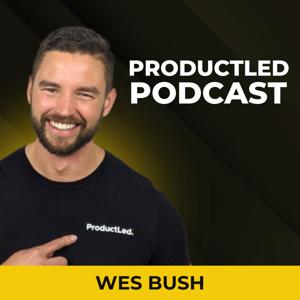

When Jeff Wang stepped into the CEO role at Windsurf, it was not part of some long-term succession plan. It happened in the middle of a full-blown crisis.
In this episode of the ProductLed Podcast, Wes Bush and Esben Friis-Jensen sit down with Jeff to unpack the wild chain of events that followed the collapsed OpenAI acquisition, the founders leaving for Google, and the intense 72-hour window Jeff had to help save the company and protect 250 jobs. He shares how Windsurf navigated that moment, how the Cognition deal came together, and what it has been like leading one of the most closely watched teams in AI coding ever since.
Jeff also gets into what made Windsurf so strategically valuable in the first place, from shipping early breakthroughs in autocomplete, chat, context engineering, and agent workflows, to building one of the first generally available coding agents on the market. Beyond the origin story, the conversation goes deep on go-to-market strategy, why free products worked early on, how token economics changed the game, and why enterprise AI adoption takes far more than handing teams a tool.
They also explore Windsurf 2.0, the shift toward managing multiple agents at once, how Jeff uses AI in his own CEO workflows, and why founders need to obsess over painful problems, customer conversations, and product-market fit instead of flashy demos.
Key Highlights:
Jeff shares the short version of the OpenAI, Google, and Cognition saga, and what it was like stepping into the CEO role during a company-defining emergency.
A look at the execution speed, product breakthroughs, and agent innovations that made Windsurf one of the most valuable teams in AI coding.
Jeff explains why developers are moving from one-on-one AI assistance to managing many agents at once, and how Windsurf 2.0 is built for that shift.
From free autocomplete to on-prem enterprise deals, Jeff walks through Windsurf’s early PLG motion and how it created awareness and pipeline.
A candid discussion on token costs, self-serve subsidies, pricing pressure, and why raising prices can reveal whether you truly have product-market fit.
Jeff shares how Windsurf sells into large companies by focusing on transformation, adoption, security, and measurable outcomes instead of seat counts.
Why playbooks, training, and solving a meaningful first use case matter more than just rolling out a shiny new tool to an engineering team.
Jeff reveals how he uses AI and custom playbooks for go-to-market research, outreach preparation, and spotting product trends before opening dashboards.
Build around painful problems, talk to hundreds of prospects, and learn to enjoy rejection because that is often where the real insight comes from.
Resources:
 View all episodes
 By Wes Bush

4.6
2121 ratings
When Jeff Wang stepped into the CEO role at Windsurf, it was not part of some long-term succession plan. It happened in the middle of a full-blown crisis.
In this episode of the ProductLed Podcast, Wes Bush and Esben Friis-Jensen sit down with Jeff to unpack the wild chain of events that followed the collapsed OpenAI acquisition, the founders leaving for Google, and the intense 72-hour window Jeff had to help save the company and protect 250 jobs. He shares how Windsurf navigated that moment, how the Cognition deal came together, and what it has been like leading one of the most closely watched teams in AI coding ever since.
Jeff also gets into what made Windsurf so strategically valuable in the first place, from shipping early breakthroughs in autocomplete, chat, context engineering, and agent workflows, to building one of the first generally available coding agents on the market. Beyond the origin story, the conversation goes deep on go-to-market strategy, why free products worked early on, how token economics changed the game, and why enterprise AI adoption takes far more than handing teams a tool.
They also explore Windsurf 2.0, the shift toward managing multiple agents at once, how Jeff uses AI in his own CEO workflows, and why founders need to obsess over painful problems, customer conversations, and product-market fit instead of flashy demos.
Key Highlights:
Jeff shares the short version of the OpenAI, Google, and Cognition saga, and what it was like stepping into the CEO role during a company-defining emergency.
A look at the execution speed, product breakthroughs, and agent innovations that made Windsurf one of the most valuable teams in AI coding.
Jeff explains why developers are moving from one-on-one AI assistance to managing many agents at once, and how Windsurf 2.0 is built for that shift.
From free autocomplete to on-prem enterprise deals, Jeff walks through Windsurf’s early PLG motion and how it created awareness and pipeline.
A candid discussion on token costs, self-serve subsidies, pricing pressure, and why raising prices can reveal whether you truly have product-market fit.
Jeff shares how Windsurf sells into large companies by focusing on transformation, adoption, security, and measurable outcomes instead of seat counts.
Why playbooks, training, and solving a meaningful first use case matter more than just rolling out a shiny new tool to an engineering team.
Jeff reveals how he uses AI and custom playbooks for go-to-market research, outreach preparation, and spotting product trends before opening dashboards.
Build around painful problems, talk to hundreds of prospects, and learn to enjoy rejection because that is often where the real insight comes from.
Resources:
175 Listeners
1,093 Listeners
2,654 Listeners

10,182 Listeners

10,745 Listeners