
Sign up to save your podcasts
Or



In this podcast, I discuss what I consider (IMO) what are the Top 9 Finales in the 9 season run of MLP FIM.
Comments are Welcomed
#MyLittlePonyFriendshipIsMagic #Top9 #MLPFIM #MLP10thAnniversary #Top5 #SeasonFinale #MLPSeriesFinale #MLPSeason1 #MLPSeason2 #MLPSeason3 #MLPSeason4 #MLPSeason5 #MLPSeason6 #MLPSeason7 #MLPSeason8 #MLPSeason9
Good Friday everyone, we have several topics to discuss today:
1. Last Night's/Thursday Night's Separate Town Halls
2. More Movies Heading To Streaming Services
3. Should The BIG10 and Possibly The PAC12 Be Allowed To Compete In The BIG BOWL Games?
4. AEW'S (All Elite Wrestling's) One Year Anniversary For Dynamite
5. Darkwing Duck (Possible Pilot) Debuts This Weekend/Monday. And Could More Disney Afternoon Rebooted "Pilots" Be On The Horizon?
6. Could The MLP 2021 Movie Be VOD Bound, instead of Theatrical Bound?
7. More on Rally4Sally, and how much farther it's gotten
8. And More Talk on Disney's new Media Strategy
Comments are Welcomed
#TopicsOnMyMind #DonaldTrump #JoeBiden #Rally4Sally #MLPMOVIE2021 #DarkwingDuck #TheDisneyAfternoon #AEW #AllEliteWrestlng #AEWDynamite #Disney #MyLittlePonyFriendshipisMagic #SallyAcorn
Here Are The Top 5:
5. https://www.deviantart.com/jaquelidor/gallery/71016535/becoming-unlimited
4. https://www.fanfiction.net/s/7601208/1/The-Stretchiest-Mobians-Alive
3. https://www.deviantart.com/grapehyacinth/gallery/51290103/what-dreams-may-become (https://www.fmisaacs.com/ and https://www.amazon.com/gp/product/B084VW9MGX?tag=books2read02-20 , https://www.amazon.com/gp/product/B0796998J6?tag=)
2. https://www.deviantart.com/jaquelidor/gallery/65803463/metamorphosed-to-malleability
1. https://www.deviantart.com/minor-alterations/gallery/67548722/demonica
Check them out and support them!
Comments are Welcomed
#Top5 #DeviantART #Fanfiction #Jaquelidor #Minor_Alterations #grapehyacinth #FMIsaacs #ChaoticLover2 #Shapeshifting #Amazon #Melting #MeltingWomen #MeltyGirls #ShapeshiftingWomen #ShapeshiftingGirls #Rally4Sally
Clip From My "#LIVE: Topics On My Mind For 9-28-2020 (Sonic The Hedgehog/My Little Pony: Friendship Is Magic )" livestream In this clip, I discuss why it took me so long to upload this onto YouTube.
Comments are Welcomed
#Rally4Sally #SonicSatAM #TheDoomsdayProject #SonicTheDoomsdayProject #SonicTheHedgehog #SallyAcorn #YouTube #DICEntertainment #4KUHD #4K #UHD
Clip From "Topics On My Mind For 9-28-2020 (Sonic The Hedgehog/My Little Pony: Friendship Is Magic )"
Comments are Welcomed
#IanFlynn #EvanStanley #SonicTheHedgehog #IDWSonic #ArchieSonic #Rally4Sally #IDWComics #ArchieComics #4KUHD #4K #UHD #SallyAcorn
Clip from my recent "Topics On My Mind" Livestream/Podcast done on 10-8-2020
Comments are Welcomed
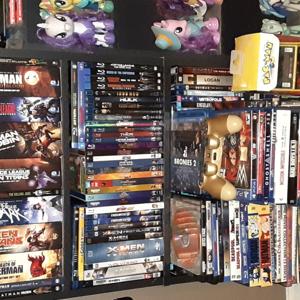
#Collectors #Comics #ComicBooks #Movies #DVD #BluRay #Toys #Figures #4KUHD #4K #UHD
Updated Audio Podcast, celebrating the 10 year anniversary Of My Little Pony: Friendship is Magic, and talking about the impact it has on pop culture and me.
Comments are Welcomed
YouTube Link: https://youtu.be/pKxNhXfiXeg
#Brony #Bronies #Pegasister #Pegasisters #MyLittlePonyFriendshipisMagic #MyLittlePony10thAnniversary #MyLittlePony #MLPFiM #MLP10Aniversario #MLP10thAnniversary #10thAnniversary #10thAnneighversary #MLPFandom #4KUHD #4K #UHD
Yes, it's hard to believe it's been 10 years this past weekend, since MLP FIM Debut on The HUB/Discovery Family.
So time to add to the congrats!
PS. Sorry if I rambled, and sounded all over the place, I was bit tired. Will possibly make up for this with another audio podcast later.
Comments are Welcomed
#Brony #Bronies #MyLittlePonyFriendshipisMagic #MyLittlePony10thAnniversary #MyLittlePony #MLPFiM #MLP10Aniversario #MLP10thAnniversary #10thAnniversary #10thAnneighversary #MLPFandom
After re-watching Lighting Bliss's review of the season 8 episode "Molt Down", she mentioned something about a follow up to "Rescue From Midnight Castle" or the '86 movie, that for some odd/strange reason never really came to be.
So here I take the opportunity to talk about that and how it shows Hasbro's reluctance to do a proper sequels to their major animated features.
Comments are Welcomed
#MLPSeason9 #MLPFIM #RainbowRoadtrip #mlprainbowroadtrip #MyLittlePonyFriendshipIsMagic #MLPFINALSEASON #TheLightingBlissShow #TheRiftCafe
SD Blu-ray From Wikipedia, the free encyclopedia SD Blu-ray disc is a Blu-ray disc on which the main feature is standard-definition video instead of the high-definition video found on typical Blu-ray discs.[1] This is often due to the highest quality version of the feature content only being available in standard definition. Examples might be a concert that was shot on standard definition video, animation produced digitally in standard definition, or a television show that was shot on film but edited and mastered on SD video with the original film subsequently lost (or deemed too costly to go back and re-edit and re-master from). SD video presented on Blu-ray has the potential to look better than that same content on DVD due to the availability of superior video codecs and higher bitrates. AVC and VP9 codecs available for Blu-ray both offer superior picture quality at a given bitrate than the older MPEG2 codec used on DVD (or comparable quality at lower bitrates). Content that might have been over-compressed on DVD with noticeable compression artifacts need not exhibit those artifacts on Blu-ray, resulting in a more faithful and detailed reproduction of the original source master. Lossless audio is also more practical and flexible on Blu-ray. DVD supports lossless PCM, but only in 48khz stereo and the additional storage space required for that lossless PCM audio leaves less available space for the video. In contrast, Blu-ray supports lossless high-resolution multi-channel audio in multiple formats, all while the larger storage available on Blu-ray makes lossless audio much more practical without impacting video quality. An example of an SD Blu-ray disc making advantage of Blu-ray's superior audio is Live at the Rainbow '74 by Queen. The visual content, filmed for TV in 1974, does not meet normal Blu-ray standards and yet releasing as an SD Blu-ray allows for the audio of the concert to be made available in the highest possible quality. Many SD Blu-ray titles are produced for the convenience and cost savings of having content on only one or two Blu-ray discs that would otherwise span many DVDs. [2](e.g. The "SD on BD" release of Samurai Pizza Cats fits all 52 episodes onto a single disc rather than 8 discs for the previous DVD release.) [3] Both Discotek Media and Section23 Films are American anime distributors that have begun releasing SD Blu-ray discs specifically due to positive feedback from their customers concerning the convenience of fitting larger numbers of episodes onto fewer discs.
And in this updated video, I also ponder if perhaps it's possible for the same thing to be done with 4K Ultra Blu-Ray.
Comments are Welcomed
#SDONBD #Blu_Ray #Zaranyzerak #StandardDefinition #DiscoTekMedia #Section23Films #SonicX #SamuraiPizzaCats #4K #UHD #4KUHD #SDON4K #WarnerHomeVideo
From the publisher's feed