
Sign up to save your podcasts
Or

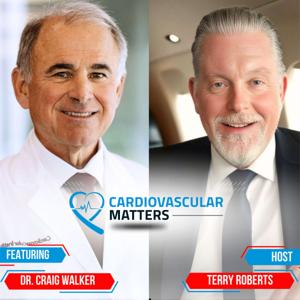


In this episode of Cardiovascular Matters, Dr. Craig Walker and Terry Roberts discuss the critical issue of critical limb ischemia (CLI), a severe form of peripheral artery disease. They explore the historical treatment approaches, the evolution of minimally invasive interventions, and the importance of a comprehensive approach to limb salvage. The conversation covers the various techniques, including balloon angioplasty, stenting, atherectomy, and lithoplasty, as well as the significance of early intervention and the role of medical therapy in managing this condition. The discussion highlights the need for increased awareness and a multidisciplinary approach to address the challenges posed by CLI.
~~~~ Key Points Discussed ~~~~
-----------------------------
Throughout the episode, Dr. Walker emphasize the need for increased awareness and a multidisciplinary approach to addressing the challenges posed by critical limb ischemia. He stress the importance of educating both healthcare providers and the general public about the severity of this condition and the availability of effective treatment options.
By sharing their extensive knowledge and experience, Dr. Walker and Terry Roberts aim to empower listeners with the information they need to advocate for their own health or that of their loved ones, and to seek the appropriate care and treatment for critical limb ischemia.
For more information, visit:
Facebook Page: facebook.com/profile.php?id=61558432490919
www.cardio.com
In this episode of Cardiovascular Matters, Dr. Craig Walker and Terry Roberts delve into the critical topic of peripheral artery disease (PAD). They highlight the alarming prevalence of PAD, with an estimated 25 million Americans affected, and emphasize its deadly nature, noting that a person with a new PAD diagnosis is as likely to die of a heart attack as a heart attack survivor.
The discussion underscores the importance of early diagnosis, even in asymptomatic patients, as this presents a valuable opportunity to implement preventive measures and potentially save lives. Dr. Walker explains the various symptoms associated with PAD, ranging from claudication (pain in the muscles during walking) to critical limb ischemia, which can lead to non-healing wounds, ulcers, and even gangrene.
The key risk factors for PAD, such as advanced age, smoking, and diabetes, are explored in depth. The presenters stress the need for healthcare providers to actively screen for PAD, particularly in high-risk populations, through simple techniques like pulse checks and pressure measurements. They also emphasize the importance of a holistic approach, focusing on risk factor modification, including smoking cessation, cholesterol management, and the implementation of walking programs.
~~~~ Key Points Discussed ~~~~
-----------------------------
The episode also touches on the various medical therapies available, such as the use of aspirin, antiplatelet agents, and the medication salostazole, which can improve blood flow to the legs. Additionally, the discussion highlights the significance of screening for associated conditions, such as coronary artery disease and carotid artery disease, to ensure a comprehensive approach to patient care.
By the end of this informative episode, viewers will have a deeper understanding of the prevalence, symptoms, and preventive measures for peripheral artery disease, empowering them to advocate for their own health and that of their loved ones.
For more information, visit:
Facebook Page: facebook.com/profile.php?id=61558432490919
www.cardio.com
In this in-depth podcast, cardiologist Dr. Craig Walker provides a thorough overview of high blood pressure (hypertension) - one of the leading risk factors for heart disease and stroke. Dr. Walker explains what blood pressure is and why it's important to control. He discusses the various causes of high blood pressure, including both primary (essential) hypertension as well as secondary causes related to underlying medical conditions. Dr. Walker stresses the importance of evaluating patients to determine if high blood pressure has a reversible medical cause. He also covers the risks of uncontrolled high blood pressure, symptoms of hypertensive crisis, lifestyle factors like salt intake, and non-pharmacological and pharmacological treatment approaches. This educational podcast is ideal for anyone looking to gain a better understanding of high blood pressure from a cardiologist's perspective.
Key points discussed in the podcast:
For more information, visit:
Facebook Page: facebook.com/profile.php?id=61558432490919
www.cardio.com
Dr. Craig Walker and Terry Roberts discuss a new class of injectable cholesterol-lowering drugs called PCSK9 inhibitors. These medications provide an additional option for lowering LDL ("bad") cholesterol beyond statin therapy alone.
Dr. Walker explains how PCSK9 normally works to block the recycling of LDL receptors in the liver, preventing further removal of LDL from the bloodstream. Two PCSK9 inhibitor drugs, Repatha and Praluent, use monoclonal antibodies to bind to PCSK9 instead, allowing LDL receptors to function properly and clear more LDL.
Viewers will learn about the mechanism of action of PCSK9 inhibitors and how they can significantly reduce cardiovascular risk by optimizing cholesterol levels.
Key Points:
For more information, visit:
Facebook Page: facebook.com/profile.php?id=61558432490919
www.cardio.com
Join Dr. Craig Walker as he provides an in-depth look at cholesterol-lowering medications, with a focus on statins. In this informative discussion, Dr. Walker breaks down the science behind these life-saving drugs, explaining how they work to reduce cholesterol production and increase its removal from the body. Learn about the two main types of statins, their differences, and why they're crucial for heart health. Dr. Walker addresses common misconceptions, discusses potential side effects like muscle aches, and offers practical advice on managing them. Discover why there's no such thing as "too low" LDL cholesterol and how regular monitoring can help optimize your treatment. Whether you're currently taking statins or considering them, this video provides valuable insights into one of the most important tools in fighting cardiovascular disease.
Key points:
• Statins are the most common cholesterol-lowering medications
• They work by reducing cholesterol production and increasing its removal
• The biggest side effect of statins is increased life expectancy
• Muscle aches are a common side effect, but can often be managed
• There's no such thing as "too low" LDL cholesterol
• Regular blood tests are important for monitoring cholesterol levels
• Statins are generally safe and effective for most patients
For more information, visit:
Facebook Page: facebook.com/profile.php?id=61558432490919
www.cardio.com
In this episode of Cardiovascular Matters, Dr. Craig Walker discusses the importance of regular preventative health screenings for men to assess risk factors and detect early signs of cardiovascular disease. He recommends basic blood tests to check cholesterol levels, inflammation markers, and overall health. Additional tests like calcium scoring of the heart arteries and treadmill stress tests can identify issues like plaque buildup and blocked vessels before symptoms appear.
Detecting problems early through screening allows lifestyle changes like diet, exercise and smoking cessation, as well as medications to lower cholesterol, blood pressure and inflammation. This prevents further disease progression and reduces the risk of future heart attacks and strokes. Dr. Walker shares stories of discovering severe but asymptomatic disease in young patients to emphasize the value of screening. He also outlines the different types of strokes and exams that can check for risks like blocked neck arteries. The podcast promotes the message that taking control of heart health through regular checkups and testing can add years to men's lives and keep them active.
Timestamps:
0:00-5:00 Introduction and family history importance
5:00-10:00 Recommended basic blood tests
10:00-13:00 Additional tests like calcium scoring
13:00-16:00 Types of strokes and how to check for risks
16:00-19:50 Importance of detecting peripheral artery disease
19:50-22:00 New medications that can help reverse disease
22:00-25:00 Story about discovering risk in young asymptomatic men
25:00-29:00 Importance of lifestyle changes plus medical treatment
29:00-32:00 Closing message on the value of preventative screening
For more information, visit:
Facebook Page: facebook.com/profile.php?id=61558432490919
www.cardio.com
In this educational podcast, Dr. Walker discusses the latest research on a new class of diabetes drugs called SGLT2 inhibitors like Jardiance. He explains how these medications work by blocking glucose reabsorption in the kidneys, causing it to be excreted in urine. While initially developed and approved for diabetes, extensive clinical trials have shown SGLT2 inhibitors provide significant benefits for heart failure, kidney disease, and weight loss. Dr. Walker reviews the evidence demonstrating their ability to reduce mortality, heart failure episodes, and progression to end-stage kidney disease. He also discusses proper hygiene practices for patients experiencing sugar in the urine. If you want to learn more about how SGLT2 inhibitors are revolutionizing treatment of diabetes and related conditions, watch this informative discussion.
Keynotes: This educational podcast discusses how the diabetes medication class called SGLT2 inhibitors such as Jardiance work by blocking glucose reabsorption in the kidneys, causing it to be excreted in urine, and reviews the extensive evidence that they provide significant benefits for heart failure, kidney disease, weight loss, and reducing mortality.
Timestamps:
0:00-4:00 Introduction and how SGLT2 inhibitors work
4:00-8:00 Benefits for heart failure
8:00-12:00 Additional benefits and approvals for kidney disease and weight loss
12:00-14:00 Hygiene considerations and reducing kidney failure risk
14:00-End Q&A and conclusions
For more information, visit:
Facebook Page: facebook.com/profile.php?id=61558432490919
www.cardio.com
In this episode of the Cardiovascular Matters podcast, host Dr. Craig Walker discusses the growing problem of obesity in America and revolutionary new medication options that are helping people safely and effectively lose weight. Dr. Walker explains how obesity increases the risk of heart disease, diabetes and other serious health conditions. He then outlines several new classes of drugs, including GLP-1 agonists, that work to control hunger and blood sugar levels while promoting weight loss. Medical device sales veteran and patient Terry Roberts shares his own positive experience using these medications. Listeners will learn about treatment options and get insight into safely and successfully managing their weight.
Key points:
Chapter Markers:
0:00-5:00 - Introduction and overview of topic
5:00-10:00 - Health risks of obesity like heart disease and diabetes
10:00-15:00 - Introduction to new classes of weight loss drugs like GLP-1 agonists
15:00-20:00 - How the drugs work to control hunger and blood sugar
20:00-25:00 - Positive results seen in weight loss and cardiovascular outcomes
25:00-30:00 - Terry Roberts shares his success with the medication plan
30:00-35:00 - Q&A and call to action for listeners considering treatment
For more information, visit:
Facebook Page: facebook.com/profile.php?id=61558432490919
www.cardio.com
This podcast discusses obesity as a major health problem and explores new medical treatments that are safe, effective and help patients feel better. The host Dr. Craig Walker and guest Terry Roberts discuss causes of obesity, health risks, challenges with past treatments and promising new medications.
Terry Roberts provides context for the episode by noting the rising rates of obesity, especially in children. He introduces Dr. Walker as an expert in treating the whole patient and addressing root causes of health issues like obesity.
Dr. Walker explains obesity has many causes related to lifestyle like eating highly processed foods and lack of exercise, but some patients struggle to lose weight no matter their efforts. Genetic and physiological factors play a role in why weight is difficult for some to lose.
Dr. Walker outlines the various health problems and diseases linked to obesity like heart disease, hypertension, diabetes, sleep apnea and more. Being overweight also increases orthopedic problems and lowers quality of life.
Previous weight loss options had problems. Medications that blocked nutrient absorption caused diarrhea, and amphetamine-like drugs were addictive and unsuitable for long-term use. Invasive surgeries also had high risks and complications.
Terry Roberts shares his own weight loss journey with encouragement from Dr. Walker. Dr. Walker discusses new medications that help the body release fat cells more easily and make patients feel good, unlike past options. When combined with lifestyle changes, these new treatments can safely and effectively help patients lose weight and improve health.
Key points:
For more information, visit:
Facebook Page: facebook.com/profile.php?id=61558432490919
www.cardio.com
In this episode of Cardiovascular Matters, Dr. Craig Walker discusses the post-procedure care and follow up for patients who have undergone treatments for venous disease. He covers different types of procedures like stenting of the iliac veins, removal of deep vein clots, and closure of superficial and perforator veins.
Dr. Walker explains the recovery process for each type of procedure. For iliac vein stenting, patients may experience some back pain that typically lasts less than a week. They are also prescribed antiplatelet drugs for at least 3 months. For deep vein clot removal, patients need to take anticoagulants like Xarelto for at least 6 months to a year to prevent clots from returning. Superficial and perforator vein closures have a very short recovery with just pressure applied after the procedure.
He stresses the importance of follow up care, especially for patients who underwent treatment for venous ulcers. Their wounds are checked the following week to ensure proper healing. Various wound dressings and skin substitutes can be used to help large ulcers close. All patients are advised to continue walking and focus on weight loss to prevent recurrence of venous disease.
Dr. Walker and Terry Roberts emphasize that venous disease is more prevalent than other conditions but often ignored. Post-procedure lifestyle changes and medication can help patients finally get relief from debilitating symptoms they may have suffered with for decades.
Key points:
- Recovery timelines for different venous procedures
- Medications prescribed after stenting, clot removal etc
- Importance of follow up checks for ulcer patients
- Ongoing lifestyle measures like compression stockings, exercise
- Impact of venous disease and relief it provides patients
For more information, visit:
Facebook Page: facebook.com/profile.php?id=61558432490919
www.cardio.com
From the publisher's feed
Cardiovascular matters is here to give you the best information available concerning the causes, symtoms, treatments and prevention of health related issues stemming from cardiovascular…