
Sign up to save your podcasts
Or

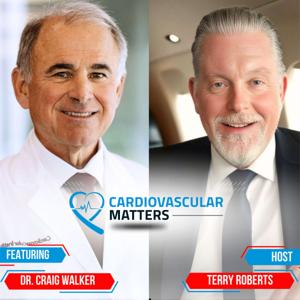


This episode of Cardiovascular Matters explores perforator veins and their role in non-healing leg ulcers with Dr. Craig Walker. Dr. Walker discusses how perforator veins connect deep and superficial leg veins, and how they can cause high pressure that prevents ulcer healing.
Dr. Walker explains that even with compression stockings, leg elevation and other measures, ulcers may not heal if perforator veins are applying pressure. Historically, perforator veins were difficult to treat due to their small size, but new minimally invasive techniques like laser ablation have revolutionized treatment.
Dr. Walker demonstrates how laser ablation of perforator veins is performed using ultrasound guidance, numbing and a laser fiber thinner than a hair. Multiple burns along the vein permanently close it off. This often provides immediate relief and allows ulcers to finally heal.
If you or a loved one suffers from non-healing leg ulcers, especially if other treatments have failed, perforator vein evaluation and treatment may help. Contact Dr. Walker at Cardiovascular Institute of the South for a consultation.
For more information, visit:
Facebook Page: facebook.com/profile.php?id=61558432490919
Tiktok: @cvmterry
www.cardio.com
Welcome to Cardiovascular Matters, a podcast dedicated to discussing all aspects of cardiovascular health and disease. Today we're joined by Dr. Craig Walker, a leading cardiologist and expert in peripheral artery disease. Dr. Walker will help us understand what PAD is, who is affected, and why early detection and treatment is so important for overall health and longevity. For many, PAD presents no symptoms but it serves as an important indicator of systemic atherosclerosis. Let's listen in as Dr. Walker addresses these topics and more.
Keypoints:
Dr. Craig Walker begins the discussion by explaining that peripheral artery disease (PAD) is more common than many realize, affecting over 28 million Americans. The major risk factors for PAD are smoking, diabetes, family history of cardiovascular disease, high cholesterol, and high blood pressure. PAD develops as a result of atherosclerosis, or hardening of the arteries due to plaque buildup. This restricts blood flow to the limbs, usually the legs.
While PAD often causes no symptoms, even asymptomatic PAD is an important marker for increased cardiovascular risk. Dr. Walker discusses studies that showed individuals with PAD are at higher risk of heart attack, stroke, and early death. This is because the same atherosclerotic process affecting the legs is also occurring in other arteries of the body. He emphasizes that screening for PAD is important, as a simple pulse check or ankle-brachial index test can identify patients who may be at risk.
Treatment involves lifestyle changes like quitting smoking, improving diet, increasing physical activity, and managing underlying conditions like diabetes and high blood pressure. Medications are also important such as statins to lower cholesterol, aspirin or Plavix for anticoagulation, and cilostazol to improve leg blood flow. For those with critical limb ischemia, procedures may be needed to restore blood flow through angioplasty or surgery. Dr. Walker stresses the need for a multidisciplinary approach involving primary care, cardiology, and vascular surgery.
In closing, Dr. Walker has emphasized that PAD is a widespread yet often overlooked condition that signifies increased risk for other cardiovascular problems. Simple screening can identify those with PAD, even if asymptomatic, so they can make lifestyle changes and receive the medical care and monitoring warranted by their higher risk profile. A multidisciplinary approach is key to properly managing PAD patients and preventing limb loss or other complications down the road. Thank you for joining us today on Cardiovascular Matters. Be sure to subscribe so you don't miss our next episode, where we will delve deeper into PAD treatment options.
For more information, visit:
Facebook Page: facebook.com/profile.php?id=61558432490919
Tiktok: @cvmterry
In this informative episode of the Cardiovascular Matters podcast, host Dr. Craig Walker sits down with his colleague Terry Roberts to discuss pulmonary embolisms (PEs) in comprehensive detail. PEs, which occur when blood clots travel to the lungs, are a serious cardiovascular condition that can quickly become life-threatening if not properly diagnosed and treated.
Dr. Walker begins by explaining what a PE is on a physiological level, noting how clots blocking blood flow in the lungs can strain the heart and prevent oxygenation of blood throughout the body. He discusses how PEs originate as clots elsewhere in the body, most commonly the legs, that break off and travel to the lungs. Depending on their size, PEs can range from causing minor breathing issues to sudden cardiac arrest.
The discussion then delves into risk factors for developing PEs. Genetic hypercoagulable conditions that cause easier clotting are highlighted, as are external risk factors like smoking, prolonged immobility, recent surgery or trauma, and certain cancers. Dr. Walker stresses the importance of prophylactic measures for at-risk patients, such as compression stockings and blood thinners.
Some key points:
Turning to diagnosis, imaging tests like CT scans that can detect clots in the pulmonary arteries are outlined. Dr. Walker also notes newer diagnostic guidelines that help physicians determine the likelihood a patient is experiencing a PE. Traditional first-line treatments involving blood thinners are explained, along with their limitations in dissolving large clots.
The bulk of the conversation focuses on recent advances in PE treatment. Dr. Walker enthusiastically discusses thrombolytic drugs that break down clots, endovascular thrombectomy devices that physically remove clots, and emergency circulatory support like ECMO. He shares inspiring case studies of how these interventions have saved critically ill patients within minutes of their arrival. The risks of these procedures are also addressed.
Overall, this podcast episode is an invaluable resource for anyone seeking to learn more about pulmonary embolisms, from causes and symptoms to state-of-the-art diagnosis and life-saving therapies. Dr. Walker's expertise and passion for the topic shine through, making complex cardiovascular science easy to understand.
For more information, visit:
Facebook Page: facebook.com/profile.php?id=61558432490919
Tiktok: @cvmterry
Have you or a loved one struggled with painful, persistent venous ulcers? In this episode of Cardiovascular Matters, Dr. Craig Walker sheds light on venous disease - a common condition that often goes undiagnosed and untreated.
Dr. Walker's interest in venous issues began early in his career while working to open blocked arteries and access the heart. It was in wound healing centers that he noticed the majority of patients suffered from debilitating venous ulcers, not arterial issues. These ulcers could last decades, constantly weeping and requiring bandage changes day and night.
One key culprit is iliac vein compression - where the large veins in the abdomen become squeezed between the aorta and spine. Dr. Walker explains the anatomy and risk factors for compression, detailing how it raises venous pressures and predisposes people to ulcer formation. But for years, there were no effective treatments.
That changed with pioneering work by Dr. Raju using minimally invasive vein stenting. Dr. Walker was amazed by the rapid ulcer healing he saw in patients. Now newer stents and techniques have made the procedure even safer.
In this episode, Dr. Walker shares real case studies of patients with 20+ year ulcers that fully healed within months of stenting. He stresses the importance of evaluating for compression in anyone with longstanding ulcers or discolored legs. Tune in to learn more about diagnosis and new hope for patients suffering from this debilitating condition.
Here are the key points discussed in the podcast episode:
Dr. Craig Walker and Terry Roberts discuss varicose veins and other venous disorders on this episode of Cardiovascular Matters. They delve deeper into obstructive venous disorders like iliac vein compression syndrome, also known as May-Thurner syndrome
In this episode, Dr. Walker sits down with host Terry Roberts to explore causes of venous obstruction beyond simple varicose veins. They discuss conditions like first rib syndrome that can compress veins as well as how cancer and infections can indirectly cause obstructions. However, Dr. Walker focuses particular attention on iliac vein compression syndrome, otherwise known as May-Thurner syndrome. He explains in detail how the iliac artery can compress and reduce blood flow through the iliac vein at the spine. Left untreated, this puts patients at higher risk of dangerous blood clots and prevents healing of chronic venous ulcers.
Listeners learn the importance of considering iliac vein compression when evaluating patients with severe leg swelling, ulcers, or large clots found predominantly on one side. Dr. Walker outlines the diagnostic process which may involve ultrasound, venography, and intravascular ultrasound to visualize compression sites. He also shares how balloon angioplasty and stent placement have transformed the lives of patients who suffered for decades before receiving proper treatment.
Beyond individual patient stories, the episode offers insights into symptoms of venous obstruction and how it can impact exercise capacity and hemodialysis access. Dr. Walker contrasts treating venous strictures to arterial blockages as well. The discussion wraps by emphasizing this common problem is frequently overlooked and how advanced endovascular techniques now offer hope.
***------------- Key points discussed -------------***
Listeners learn this common cardiovascular problem is often underdiagnosed and underestimated. Identifying and addressing venous issues can transform a patient's quality of life. This episode provides valuable information for those experiencing related symptoms.
We hope you will take the time to listen to this informative podcast. Please feel free to share it with others who may benefit from a deeper understanding of venous disorders. As always, thank you for your ongoing support of Cardiovascular Matters.
In the premiere episode of Cardiovascular Matters, hosts Dr. Craig Walker and Terry Roberts delve into a comprehensive explanation of varicose veins and venous insufficiency.
Dr. Walker begins by providing context on the prevalence of venous disease, affecting over half of Americans. However, it is often misunderstood due to a lack of public education. He underscores that veins play a critical yet underappreciated role in circulating blood back to the heart for oxygenation.
A detailed description of venous anatomy and physiology is given. Valves in the veins help blood flow against gravity but can become dysfunctional, causing venous insufficiency. Signs like leg swelling and spider veins appear as a result of increased pressures within the veins.
Risk factors for developing insufficiency are explored. Jobs requiring long periods of standing, multiple pregnancies stretching veins, family history and weight all influence one's risk. Listeners gain valuable insights into what may predispose them.
Treatment approaches are separated into conservative and interventional options. Lifestyle changes like exercise and compression are first-line therapies if symptoms are mild. But more invasive procedures are needed for severe cases using laser, radiofrequency, foam and devices.
Terry asks thoughtful questions that provide opportunities for further explanation. Dr. Walker clarifies spider veins often signify deeper issues, and stresses the importance of upright ultrasound exams for accurate diagnosis.
This in-depth pilot episode leaves no stone unturned in the discussion of varicose veins. Listeners walk away with a comprehensive understanding of causes, signs, risk factors and a full spectrum of treatment strategies - both non-invasive and cutting-edge procedures. It establishes Cardiovascular Matters as must-listen resource for all seeking cardiovascular health insights.
From the publisher's feed
Cardiovascular matters is here to give you the best information available concerning the causes, symtoms, treatments and prevention of health related issues stemming from cardiovascular…