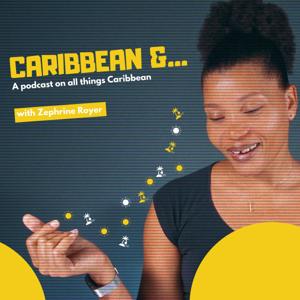
Caribbean &...

Caribbean &...

By Zephrine RoyerSociety & CultureArtsLeisure
Download on the App Store

Caribbean &... episodes

  • Picking kenips at midnight
    S01EP05 - Why were we picking kenips at midnight?
    I say we were training for life!
    Were we different from children growing up elsewhere in the Caribbean ?
    In this episode, I talk with film director Stephanie Saxemard about our different experiences growing up in Dominica and in Martinique, and what it means for me today.
    11 min
  • Breaking coconuts with rocks
    S1EP04 - Breaking coconuts with rocks
    There was this stretch of road near the sea that we walked as kids to get home from school. On that stretch lived a man in a small wooden house. One day, we discovered that the man had planted sweet potatoes. I don’t now why, but one day we walked into the man’s garden dug up a couple of sweet potatoes with our hands, rubbed off the dirt and heartily ate them. They were sweet, crunchy and delicious.
    This is just an example of how autonomous we were as kids growing up. We knew how and where to find food, and it did not come from a supermarket! From breaking coconuts with rocks to catching chickens with fishing twine we had resources for food self-sufficiency that were just natural as we used them. Today they seem extreme.
    But I also know that is part of the natural flow of things this connection we had with the land around us.
    4 min
  • Claiming beauty as a black child
    Caribbean &...
    S01E03- Claiming black beauty as a child
    My first clear memory of being told I was pretty was when teacher Annie, my primary school principal, looked at (maybe) 7-year-old me and said to another teacher “she is such a pretty child!”
    I used to wish my parents would shower us with tender compliments like the white families did to their children in the movies. Or the white families in the religious publications we had at home.
    I mean there were compliments, my parents were just not all soft and lovey-dovey like those pamphlet parents. They were caring and solid, and very busy trying to make life easier for us.
    But we had an awareness of our beauty, though. Somehow they gave it to us. So even though having a light-skinned child with curly hair was somehow good, as a child I cannot say I was touched by the beauty of the white people passing through my community. Rather I looked at them with a certain amount of awe because I was aware that they were very different, they held a power that I did not have, that I could not grasp, a power that no one around me seemed to have. It was intriguing and displeasing all at once.
    So that chant we chanted as children I truly do not know whether it was simple mimicry or some form of rebellion.
    I just know that it gave us some form of power that made us feel good.

    5 min
  • Shadeism
    Caribbean &... S01EP02 - SHADEISM
    Our series on Caribbean culture, lifestyle, and stories. Hosted by Zephrine Royer
    IN THIS EPISODE:
    What shade of black are you? Who told you first? What did it bring you? What did it take away from you?
    Growing up some children were considered more intelligent because they were of a lighter shade. Darker children were more « thick in the head ». More troublesome too.
    Lighter-skined children were prettier. And so it was natural to see them as pretty (that was the standard), and later on, attractive too. So even though my first loves were dark, somehow, all through my teens, I thought having a lighter skinned child was better than a darker one. I had to move to another country and work years with young children before I could destroy that malware in my psyche.
    And there is more programming that remains to be undone when it comes to the subject of #blackniss and #shadeism
    7 min
  • Blackniss
    When I think of being black in the Caribbean one of the first things I think of is degrees of ‘blackniss’. At various moments in my life I was reminded of my shade of blackniss or had someone else’s blackniss pointed out to me.
    Why was this important?
    With the ongoing global events, I question how we see ourselves as black people in the Caribbean, how we relate to each other, and to others.
    This is an open conversation. Join in!
    6 min

About Caribbean &...

From the publisher's feed

Our series on Caribbean culture, lifestyle, and stories. Hosted by Zephrine Royer.