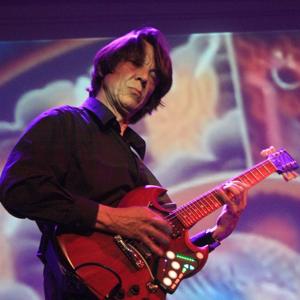
Carlos Vivanco

Carlos Vivanco

By Carlos VivancoMusic
Download on the App Store

Carlos Vivanco episodes

  • At The End Of The Blue Sky
    Composed, arranged, performed, and produced by:
    Carlos Vivanco
    For this tune, I used three minor Pentatonic scales, D minor, A minor, and E minor. The time signature is 12/8 and the instruments are a Fender Fretless Jazz bass, a PRS guitar with a Fishman midi pickup, a Yamaha piano, and my Sonor Drums that I turn into electronic Drums myself. I hope you guys enjoy it!
    6 min
  • Chitta
    Composed, arranged, performed, and produced by:
    Carlos Vivanco
    Citta or chitta is a term used in Buddhism to refer to the mind. It is one of three overlapping terms used in the nikaya to refer to the mind, the others being manas and viññāṇa. The Pali–English Dictionary translates citta as heart or heart-mind, emphasizing it as more the emotive side of the mind, as opposed to manas as the intellect in the sense of what grasps mental objects (dhamma). Citta is the object of meditation in the third part of Satipatthana, also called Four Foundations of Mindfulness 1. In Indian Psychology, chitta is the seat and organ of thought 1. It represents the mind, thoughts, emotions, or in a nutshell the metaphysics of our mind.
    7 min
  • Waning Gibbous
    Composed, arranged, performed, and produced by:
    Carlos Vivanco
    A lunar phase or Moon phase is the apparent shape of the Moon's directly sunlit portion as viewed from the Earth (because the Moon is tidally locked with the Earth, the same hemisphere is always facing the Earth). In common usage, the four major phases are the new moon, the first quarter, the full moon, and the last quarter; the four minor phases are waxing crescent, waxing gibbous, waning gibbous, and waning crescent. A lunar month is the time between successive recurrences of the same phase: due to the eccentricity of the Moon's orbit, this duration is not perfectly constant but averages about 29.5 days.
    The appearance of the Moon (its phase) gradually changes over a lunar month as the relative orbital positions of the Moon around Earth, and Earth around the Sun, shift. The visible side of the Moon is sunlit to varying extents, depending on the position of the Moon in its orbit, with the sunlit portion varying from 0% (at new moon) to nearly 100% (at full moon)
    4 min
  • Far Away Reality
    Composed, arranged, performed, and produced by:
    Carlos Vivanco
    For this composition, I used the Phrygian mode.
    The Phrygian mode (pronounced /ˈfrɪdʒiən/) can refer to three different musical modes: the ancient Greek tonos or harmonia, sometimes called Phrygian, formed on a particular set of octave species or scales; the medieval Phrygian mode, and the modern conception of the Phrygian mode as a diatonic scale, based on the latter.
    the scale in C phrygian is: C,Db,Eb,F,G,Ab,Bb.
    Medieval Phrygian mode
    The early Catholic Church developed a system of eight musical modes that medieval music scholars gave names drawn from the ones used to describe the ancient Greek harmoniai. The name "Phrygian" was applied to the third of these eight church modes, the authentic mode on E, described as the diatonic octave extending from E to the E an octave higher and divided at B, therefore beginning with a semitone-tone-tone-tone pentachord, followed by a semitone-tone-tone tetrachord.

    6 min

About Carlos Vivanco

From the publisher's feed

You can find another 1000 plus tracks of mine in Bandcamp