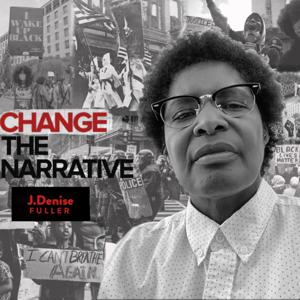
Change The Narrative with JD Fuller

Change The Narrative with JD Fuller

Download on the App Store

Change The Narrative with JD Fuller episodes

  • Mental Health in the Black Community
    Henry Mauldin is a producer and talent manager. His company Hendar Media develops and produces award winning scripted and non-scripted film, television and digital content. Henry recently produced “The Lucky Ones”. A film directed by Debra Wilson that tells the love story of a couple diagnosed with Schizophrenia. Listen to our conversation with Henry about the film and how it spotlights the mental health issues in the black community.
    What you will hear
    “The Lucky Ones” documentary film plot and purpose.
    Schizophrenia definition and the invisibility and stigma of mental illness in the BIPOC community
    Economics, one of the major issues in the black community.
    Systemic problems that play into the mishandling of mental health episodes.
    The difficulty of getting funding for the creation of “The Lucky Ones” and the depth of that struggle.
    The effect of Reagan’s policies on the mental health community and homelessness.
    The love story in front of and behind the camera between the couple featured in “The Lucky Ones.”
    Barriers that Henry has encountered and how he has navigated them as a black creator.
    Quotes
    “The lower your socio-economic class, the harder it is to get treatment and the harder it is for people to understand what is going on.”
    “Our largest mental health facilities are jails.”
    “Systems are failing people beginning in elementary school.”
    “Police aren’t equipped and yet they are the first ones called when there is a mental health crisis in a community they aren’t from and they aren’t connected to.”
    HenDar’s upcoming projects.
    The takeaway Henry is hoping people will get from “The Lucky Ones”.
    Mentioned
    HenDar Media
    Debra A. Wilson
    https://www.theluckyonesdoc.com/ (The Lucky Ones trailer)
    https://www.imdb.com/title/tt0424871/ (Butch Mystique)
    Hazel Scott
    30 min
  • Women Who Survived Their Addiction
    Michelle Palmer and Barri Brown sit down with us to discuss their experience with addiction and rehabilitation. Michelle and Barri became friends after being sponsored by the same person in their Alcoholics Anonymous program at a time when both were looking to change their lives. Struggling with drug and alcohol addiction coupled with multiple incarcerations, both women lived for many years denying their addiction. Listen in as they describe their journey from addiction to recovery and their efforts to help others through their recovery.
    What you will hear
    Barri and Michelle’s substance abuse and addictions.
    Recognizing and admitting one’s addiction and level of dysfunction.
    Gaining clarity and the willingness to commit to a recovery program.
    Lessons learned from addiction.
    Advice for those struggling with addiction during the pandemic.
    Alcoholic Anonymous program then vs now.
    The consequences of class and race in regards to getting help with addiction.
    Denial
    The success of 12 step programs.
    Quotes
    “Uncover, discover and discard.”
    “Just don’t drink or use no matter what, pick up the phone and call someone.”
    “We (black and brown brothers and sisters) are more likely to go to jail before we are offered recovery.”
    “Addiction is a disease of denial.”
    “Don’t leave 5 minutes before the miracle happens. The miracle is when you become willing.”
    34 min
  • Mental Health in The Transgender Community with Buck Angel
    Human rights activist, speaker, entrepreneur and innovator Buck Angel joins JD and Suzy to talk about his journey as a transgender man and mental health in the transgender community. Born a female in the 60’s, Buck struggled psychologically, physically and emotionally trying to find and understand his own identity throughout his childhood and adolescence. Living through a roller coaster of eating disorders, suicide attempts, psych wards, drug abuse, prostitution and depression, Buck attributes his successful transition to having medically transitioned with a therapist. Buck Angel’s message of empowerment through self-acceptance and encouragement of everyone to be comfortable in their own skin has struck a passionate chord with people around the world. As he demonstrated in recent appearances at Yale, Cornell and many other universities and events, Buck inspires people to think outside the box and is educating an entire generation on the fluidity of sexuality and identity politics.
    What you will hear
    Buck’s early life as a female and the physical, emotional, social and mental struggles of gender identity at a time when it was not a socially acceptable or common topic.
    Buck’s suicide attempts
    Modeling, homelessness, prostitution, drugs and rehab.
    The absence of mental health being mandatory in people’s transition and the adverse effects.
    Generational differences in the process of transitioning.
    De-transitioning.
    Intersectionality of race in the transgender community.
    Buck’s personal journey learning about compassion, abundance, communication and education.
    The effects of celebrity and the expectation of representation.
    Sexual wellness.
    Continued activism and speaking out.
    Quotes
    “My therapist saved my life.”
    “If you don’t talk to a person who has the ability to find out what’s going on with you, you may be making the wrong choice.”
    “If you let people leave in peace, you watch the world uplift.”
    “White people need to stand up.”
    “Do the one thing you do, do it well and it will speak to many.”
    Mentioned
    https://buckangel.com/ (Buckangel.com)
    IG: @BuckAngel
    Twitter @BuckAngel
    Facebook:https://www.facebook.com/officialbuckangel/ (@OfficialBuckAngel)
    30 min
  • Police Speak
    Former LAPD officer and author Brian Bentley grew up in Los Angeles. Raised with the principles and importance of contributing to the community, Brian focused on a career in law enforcement with the goal of bridging the gap between community and the police. Experiencing discrimination, racism, sexism and corruption during his time in training and on the job motivated Brian to write his books. Publishing his first book, One Time: The Story of A South Central Los Angeles Police Officer, with the purpose of improving the community and giving other officers the courage to speak out resulted in Brian being terminated and facing charges. Brian was the subject of an extensive investigation that included over three hundred allegations of misconduct and seven months of surveillance. Brian has written three books, One Time: The Story of a South Central Los Angeles Police Officer, Honor without Integrity and Hit Me Once, Hit Me Twice. He keeps a busy schedule hosting the Starting Point podcast, continuing to write and coaching high school track.
    What you will hear
    Brian’s shocking experiences of discrimination early on in his police academy training.
    The continued discrimination as Brian began working for LAPD.
    The negative effects of Brian’s experiences as a rookie officer.
    Social acceptance of anger issues amongst police officers.
    What motivated Brian to write his book including the murder of his colleague Kevin Gaines by another colleague.
    The backlash Brian received after publishing his first book.
    The culture of violence, racism, sexism and anger within law enforcement
    The knowledge that police officers can get away with police brutality and murder.
    Police officers are meticulously taught how to circumvent citizen’s civil rights.
    Violence addiction.
    Veterans within law enforcement.
    Psychological effects of being a police officer.
    Brian wrote his book with the purpose of improving the community and giving other police officers the courage to speak out against the malfeasance within law enforcement.
    Fear and retaliation within law enforcement.
    The need for change.
    How Brian was able to overcome his experiences and maintain his mental health
    Black Lives Matter
    Quotes
    “As a black police officer you can’t go anywhere and make a formal complaint.”
    “Police officers don’t feel like they can get away with brutality and murder, they know they can.”
    “Police officers are experts in circumventing your civil rights.”
    “Police officers suppress their emotions and their morals.”
    “It’s a tough job psychologically.”
    “The lack of access and poverty breeds crime.”
    “Law enforcement is not what suppresses or stops crime.”
    Mentioned
    https://didihirsch.org/ (Didi Hirsch)
    https://www.youtube.com/channel/UC7ziXzWD-p7X4kBx1ZIdvHg/featured (Youtube Brian S. Bentley)
    https://www.barnesandnoble.com/w/one-time-brian-s-bentley/1102499991 (One Time : The Story of a South Central Los Angeles Police Officer)
    https://www.barnesandnoble.com/w/honor-without-integrity-brian-s-bentley/1006845046 (Honor Without Integrity)
    https://www.amazon.com/Hit-Me-Once-Twice/dp/1890632015 (Hit Me Once, Hit Me Twice.)

    54 min
  • Introduction

    JD and Suzy take a moment to reflect on how they met and what prompted them to create a podcast unlike any other mental health podcast.

    13 min

About Change The Narrative with JD Fuller

From the publisher's feed

Join JD Fuller as she breaks down the social narrative through a mental health lens. As a licensed clinical, social worker, educator, activist and truth seeker, JD engages with Hollywood royalty to…