
Sign up to save your podcasts
Or

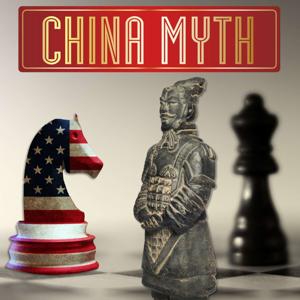


Why does pressure reduce productivity in Chinese workplaces?
Many Western managers struggle with Chinese employees who become quiet, indirect, or withdrawn under stress. What appears to be disengagement is often a predictable psychological response rooted in Chinese culture.
In this video, I explain two key concepts that shape Chinese workplace behavior:
• Wěiqu (委屈) — feeling wronged without protection
• Jiāolǜ (焦虑) — anxiety caused by suppressed expression
Together, they form an emotional chain that affects leadership, communication, accountability, and trust in China.
If you work in China, manage Chinese teams, or negotiate with Chinese partners, understanding these cultural and psychological dynamics is critical.
Topics covered:
This episode breaks down Chinese psychology in practical terms so you can lead more effectively and avoid common mistakes in China business environments.
🔗 Learn more: https://www.genejhsu.com
#ChinaBusiness #ChineseCulture #LearnMandarin #SpeakChinese #CulturalPsychology
Many Westerners assume China’s Iron Rice Bowl mentality disappeared with prosperity, skyscrapers, and global integration.
It didn’t.
In this video, I explain why the Iron Rice Bowl (铁饭碗 tiě fàn wǎn) was never just a job guarantee—and why its psychological imprint still shapes how Chinese professionals think, decide, and protect themselves today.
Even among:
You’ll still see risk aversion, silence, and reluctance to take responsibility.
Why?
Because the Iron Rice Bowl wasn’t erased by growth.
It was internalized as survival psychology.
In this episode, we explore:
This isn’t about laziness or lack of ambition.
It’s about understanding WHY they protect themselves—and how to lead without triggering defensive paralysis.
🔗 Learn more: https://www.genejhsu.com
#ChinaBusiness #ChineseCulture #IronRiceBowl #LearnChinese #GreatLeapForward
In China, Giving Face doesn’t mean abandoning your values.
It means choosing when and how to express them.
This video tackles one of the hardest moments foreigners face in China—when Western instincts about honesty, ethics, and “doing the right thing” collide with Chinese expectations around harmony, Face, and relationship preservation.
If you’ve ever felt:
You’re not alone—and you’re not misunderstanding China by accident.
In this episode, I explain:
This is not about learning what to say in China.
It’s about learning when not to speak, how to read what’s really happening, and how integrity works inside a different psychological system.
🔗 Learn more: https://www.genejhsu.com
#ChineseCulture #ChinaBusiness #Guanxi #SpeakMandarin #LearnChinese
Western business culture assumes one thing by default:
If someone trusts you, they’ll tell you the truth.
China doesn’t work that way.
In this video, I break down one of the most damaging assumptions foreigners bring into Chinese relationships—the belief that trust and truth are morally linked and rise together over time.
They don’t.
In China:
Chinese cooperation isn’t about lying or deception. It’s about managing risk, preserving Face, and keeping future options open.
Once you understand why Chinese counterparts default to skepticism—and why pressing for clarity often backfires—behaviors that once felt confusing start to make sense.
This episode is part of The Chinese Honeymoon Period series, exploring how trust, guānxì, and perception really work beneath the surface.
🔗 Learn more: https://www.genejhsu.com
#ChineseCulture #ChinaBusiness #Guanxi #ChinesePsychology #LearnMandarin
“Mastering the gray areas is to doing business in China what political correctness is to corporate America: MANDATORY.”
Westerners often parachute into China assuming strength, clarity, and leverage translate cleanly across cultures. They don’t.
China operates in a gray zone—where ambiguity is tactical, patience is power, and absolutist, black-and-white thinking quietly destroys influence.
In this video, I explain why:
China’s “maddening vagueness” isn’t incompetence or evasion. It’s a pragmatic system designed to preserve Face, share risk, and keep future options open.
If you’re frustrated by indirect answers, shifting commitments, or a lack of accountability, the problem usually isn’t them—it’s the questions you’re asking.
This episode reframes Yīnyáng not as an ancient philosophy but as a modern psychological operating system that governs leadership, negotiation, ethics, and survival in China’s business landscape.
If you want to lead, negotiate, or build teams in China, mastering the shades of gray isn’t optional.
🔗 Learn more: https://www.genejhsu.com
📘 Speak Less, Guanxi More is now available (PDF & Flipbook still free)
#ChineseCulture #ChinaBusiness #Guanxi #LearnMandarin #SpeakChinese
Was there a FAILED attempted coup in Beijing?
When purges happen at the top in China, it's rarely about loyalty failing overnight.
It's about perceptions shifting—and Guānxì (关系) no longer being enough.
Recent earth-shattering removals of Zhang Youxia and Liu Zhenli aren't just political headlines. They're reminders of a rule foreigners often miss:
In China, relationships open doors—but they don't shield you when power dynamics realign.
My experiences are a microcosm and can be an invaluable lesson for those venturing inside the Chinese arena, "Is Guānxì Enough? Unveiling the Hidden Dynamics of Chinese Relationships & Power."
What feels like trust can coexist with quiet threat.
What looks stable can become untenable the moment incentives, narratives, or perceived risks change.
At senior levels, Guānxì is structural, conditional, and constantly reassessed. The question is never who you know—it's who you are perceived to be now.
The same logic plays out in business, leadership, and politics.
What scales up is the psychology.
Once you understand why Guānxì alone doesn't protect anyone—on the ground or at the top—you'll be one step closer to understanding "How China Works."
#ChinaCrisis #ChinaPolitics #CCP #ChineseCulture #Guanxi #ChinaBusiness
Watch on YouTube: https://youtu.be/abWot5Ori0A
I almost filmed this video using an AI digital twin.
It was efficient. Scalable. Technically impressive.
But in a world where trust is at an all-time low—and real human connection has quietly disappeared—I realized something uncomfortable:
Authenticity is now the only currency that matters.
In this video, I explain why I deleted my AI clone and introduce the newly updated 2026 edition of The Chinese Honeymoon Period.
When the original book was written, the world still believed in engagement, exchange, and cautious optimism.
That world is gone.
The U.S. and China have shifted from frenemies to perceived existential threats.
“Decoupling” has metastasized into reality.
An AI arms race is accelerating distrust while hollowing out human-to-human understanding.
This video reflects on what all of that means—for professionals, parents, students, and anyone living between cultures.
In this update, I explore:
• Why I chose “real” over “perfect” for this channel—and what AI gets wrong about trust
• The 2026 reality of US–China relations after the honeymoon is long dead
• Why language fluency alone no longer works without cultural intelligence and empathy
• New reflections shaped by leaving China and raising a next-generation American-Born Chinese (ABC)
If the original book was about recognizing when the honeymoon ends, this edition asks a harder question:
What happens after we wake up?
If you work, live, study, or raise children across cultures—and feel the growing tension but still believe understanding matters—My latest book, Speak Less, Guanxi More takes your awareness into practice—where outcomes are actually shaped.
Learn when not to speak, how to read what’s happening beneath the surface, and why fewer assumptions lead to far better results.
https://genejhsu.com/
#USChinaRelations #CulturalIntelligence #MandarinChinese #Chineseculture #Chinabusiness
Why do Chinese negotiations feel so unpredictable? The answer lies in a concept called Lìyì (利益).
Most Westerners assume business runs on competence, transparency, and institutional trust. In China, the operating system is entirely different. It is dynamic, personal, and based on a continuous calculation of perceived benefit.
In this episode, I break down the "Lìyì Calculus"—the invisible operating system that has kept Chinese society running for thousands of years. Learn how to stop judging Chinese partners by Western standards and start understanding their actual motivations.
📚 FREE: For a limited time, get the full 114-page PDF of Speak Less, Guānxì More for free here: https://genejhsu.com/
#ChinesePsychology #Chineseculture #ChinaBusiness #CulturalPsychology #LearnChinese
Where does “China speed” really come from?
Most people point to tech, manufacturing, or economic reforms — but the true origins began somewhere unexpected: on a volleyball court in the 1980s.
In this video, we unpack the surprising story of 短、平、快 — short, flat, fast — the strategy that led China’s women’s volleyball team to global dominance and shaped the mindset behind modern Chinese business.
If you’ve ever wondered why Chinese companies move faster, iterate faster, and recover from failure faster, this story reveals the cultural psychology behind it all.
Explore how “short cycles, flat structures, fast execution” became China’s playbook — not through brute force, but through strategy, timing, and adaptability.
Learn the origins.
Understand the mindset.
See China through a new lens.
Read the blog and preview my books: https://www.genejhsu.com/
Watch on YouTube: https://youtu.be/3fc9T6XTTPw
#ChinaBusiness #ChinaCulture #ChineseCulture #LearnChinese #MandarinChinese
In this episode of ABC in the Middle, I’m sharing a powerful Chinese moral story I grew up with, now retold for my son—and for you.
This is a Mandarin language version of the story behind the idiom:
貪心不足,蛇吞象 (Greed knows no bounds—like a snake trying to swallow an elephant)
📖 What’s it about?
A boy goes on a journey to save his sick mother by retrieving a glowing pearl hidden inside a magical mountain serpent. But when greed clouds his judgment, the outcome turns tragic…
You'll learn and practice Chinese listening and speaking:
• Chinese storytelling with pinyin and English translation
• A vivid moral lesson about greed, promises, and self-restraint
• How this folk version reflects the deep meaning behind a classic idiom
Perfect for Mandarin learners, ABC families, and anyone curious about Chinese culture, values, and psychology.
Watch all videos: https://youtube.com/@chinamyth
#ChineseStorytime #LearnMandarin #ChineseIdioms #ChineseCulture #SpeakChinese
From the publisher's feed