
Sign up to save your podcasts
Or




Based on Podcast App listening data
One point brought up in Episode 116, highlighting the connection between real estate interests and over-policing, solicited a lot of feedback from listeners. In this News Brief, we wanted to expand upon this topic by interviewing an academic source we cited in the episode: assistant professor of sociology at the University of Colorado Denver Brenden Beck, whose work focuses on the intersection between "urban development" projects and the targeted, sustain harassment of communities of color.
The popularity of HGTV house-flipping TV shows can't be overstated: In the second week of July, HGTV was the fourth highest rated cable network, behind only Fox News, MSNBC and CNN, making it the highest rated entertainment network in the United States. Its most prominent programming: the reliable, risk free formula of home flipping shows. All of these shows—Flip or Flop and its many regional spinoffs, Good Bones, Flipping 101, to name just a few—share a basic formula: house-flippers, usually a family business in the form of a husband and wife team or parent and child with a folksy rapport, buy a neglected house on the cheap—cue zoom-ins on mold, water damage, decaying wood, dust and dead bugs—that's often in a relatively poor or gentrifying neighborhood.
They then turn it into something they describe as "beautiful", to be sold at a much higher price to, most likely, young white people looking for a "funky" home in an "up-and-coming" neighborhood. But at what cost do these glossy, get-rich-quick reality shows entertain us? What ideologies do they promote, and how do they erase the working class black and brown families whose housing was condemned, and communities were systemically neglected, before the camera's even began rolling?
On this episode—our Season 3 finale—we take a look at these shows to understand how and why HGTV became a glorified commercial for house-flipping and gentrification, examining its indifference to housing instability and its dead-eyed cheerleading of "middle-class" bourgeois aspirationalism, no matter the social cost.
Our guests are culture writer Ann-Derrick Gaillot and Atlanta-based community organizer Kamau Franklin.
For over a hundred years, the American film industry has been promoting and glorifying U.S. foreign policy, initially working with the military and Department of Defense, and eventually, the CIA as well. From its origins as a producer of wartime propaganda like 1911's The Military Air-Scout to its contemporary role as purveyor of high-tech action epics like Iron Man, Hollywood and the American war machine reinforce each other — myth and politics intertwine.
In the process, the entertainment industry has reaped handsome rewards. Producers, directors, and other top brass in the entertainment industry are lavished with military equipment for filming, personal tours of government headquarters, and inside information — or at least what government officials want filmmakers to believe is inside information — all under the guise of lending "authenticity" and "realism" to film and, to an extent, television shows as well.
But what are the costs of this so-called "authenticity?" How do the U.S. military and intelligence agencies use benign-sounding partnerships like "on-set consulting" and "equipment loaning" arrangements to shape and censor narratives so they make American Empire look, at worst bumbling and good natured, and, at best, heroic and pure hearted?
In Parts I and II of this three-part series on Hollywood and anti-Muslim racism, we analyzed over half a dozen films and TV shows, illustrating how state-driven narratives of U.S. nationalism and vilification of an official enemies animate Hollywood's cultural products, namely those targeting Arabs and Iranians. On this episode, we'll explore the intersection of U.S. military and intelligence agencies with Hollywood, taking a closer look at how the military state helps shape films and television showing that pro-U.S. messaging used to smear Muslims doesn't happen in a vacuum, but is often subsidized by the very forces dropping bombs on them.
Our guest is Professor Matthew Alford, co-author of National Security Cinema: The Shocking New Evidence of Government Control in Hollywood.
Our cultural context for understanding what we see on the news and hear in our politics, is often informed by the films and TV shows we've grown up watching. Pop culture is powerful and persuasive, and — for a century now — racist, Orientalist and cartoonish portrayals of Arabs and Muslims have littered our screens, big and small. This is the second episode in our three-part Citations Needed series on anti-Muslim racism in Hollywood. On Part I, we discussed big budget action and adventure films like Delta Force, American Sniper and True Lies, where Muslims get blown away at every turn.
But not every movie and TV show is quite so overt in its vilification of the designated enemy. Since the release of these movies, the state curated narrative in film has diversified, broadening to include savvier Oscar-bait productions in which anti-Muslim racism is dressed up in elaborate plot structures and supposedly nuance "debates".
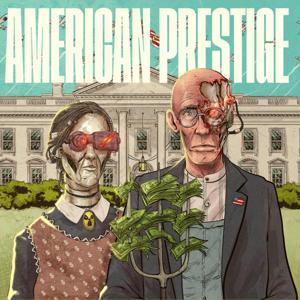
Films like Argo, Syriana, and Zero Dark Thirty are lauded for their ostensible complexity, subtlety, and nuance, such as their willingness to suggest that government agencies like the CIA are bloated and bureaucratic. Instead of scenes with a tough action hero bodyslamming or mowing down teeming hordes of Muslim terrorists, these films are part of a smarter genre of jingoistic action film — the prestige thriller — featuring flawed protagonists, some meta comedy, and women CIA agents excelling in a historically male-dominated field of coups and torture.
But ultimately, they project the same tired nationalism and ideology reinforcement just in a sleeker, more modern form. On this episode, we'll examine how anti-Muslim and anti-Arab propaganda is disseminated through the contemporary prestige thriller genre.
We're joined by historian, artist and author Maytha Alhassen.
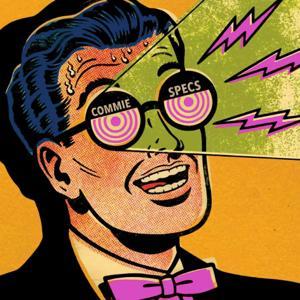
A bizarrely vague, cliquish letter demanding everyone be open-minded has no interest in explaining what, precisely, it wants.
"Polarization Is Dividing American Society, Not Just Politics," laments The New York Times. "The Constitution Is Threatened by Tribalism," frets The Atlantic. "American politics has reached peak polarization," declares Vox. After the past few election cycles, and as uprisings occur throughout the country, we've seen endless concern about our alleged zenith of "polarization" and "tribalism."
The Right and the Left, we are told, have grown too radical and today lack the ability to "get things done" and "come together" with a "shared reality." It's a superficially appealing narrative — one nostalgic for a non-specified past time of ideal consensus building and Reasonable Centrism.
But it's also a narrative driven by a fantasy that ignores material forces that have shifted the U.S. political establishment further to the right, as the ruling political and economic class has helped sow distrust and paranoia with decades of deadly wars, runaway and rampant inequality, lethal racism and the failed promises of endless economic growth.
On this episode, we explore the origins of "polarization" and "partisan tribalism" discourse, profile its biggest pushers, detail who it serves––and who it gets off the hook––and lay out why reductionist and vague "polarization" laments are so beloved by our media and political elite.
Our guest is journalist and writer Osita Nwanevu.
"Obama lauds small business owners in his State of the Union," announced The Washington Post. "I have always said that there is nothing more optimistic – perhaps maybe getting married – than starting a small business," Speaker Nancy Pelosi tells us. "John Kerry would raise taxes on 900,000 small businesses," insisted a reelection ad for George W. Bush.
Everywhere we turn we are centering the needs of and reminded of the glowing status of the "small business." They are the bipartisan holiest of holies in our economy – the scrappy little guy that also props up the moral pillars of capitalism – evidence that with a little elbow grease and knowhow anyone can build a business in their image. Small businesses are one of two major vehicles for COVID-19 relief – a wholly uncontroversial good that both parties, all ideologies, everyone!, can agree are worth protecting and prioritizing.
But what do pundits and politicians mean exactly when they say "small business"? How does our romantic vision of "small business" match up with reality, and how is their plight used as a messaging vanguard to strip away environmental and labor regulations, tort protections, taxes and a host of safeguards against corporate greed?
The rhetoric forces the evocation of a wholesome image of a Mom-and-Pop candy store in Appleton, Wisconsin, in order to push for laws that will ultimately benefit hedge funds, Dupont and Koch Industries, and a murderers row of polluters and worker abusers.
Our guests are Public Citizen's Lisa Gilbert and Street Fight Radio's Bryan Quinby.
In this News Brief we recap the recent mainstream pushback against pro-police pop culture, and discuss how this pushback is raising fundamental questions about the supposed firewall between creators and the political content they produce.
In this News Brief we examine the old––and new––ways police and government officials seek to undermine and divide the George Floyd protests.
From the publisher's feed
Ranked by our users in the last 21 days

1,460 Listeners

1,582 Listeners

8,833 Listeners

6,103 Listeners
3,317 Listeners
1,942 Listeners

586 Listeners

4,287 Listeners

2,068 Listeners

3,340 Listeners
3,132 Listeners
2,706 Listeners

604 Listeners
1,060 Listeners
1,046 Listeners