
Sign up to save your podcasts
Or




Based on Podcast App listening data
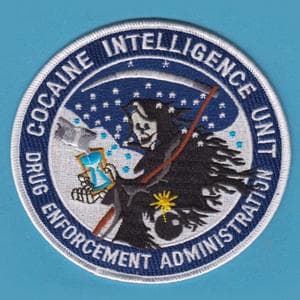
Since the beginning of the so-called War on Drugs, authorities in the United States have viewed drugs not as a public health issue but one of crime, vice and violence, requiring the funding and mobilization not of medical officials but police, DEA agents and a sprawling network of paramilitary actors.
In response, corporate media and its culture of parasitic, "ride-along" coverage has evolved in parallel taking this same line, reflecting the state's approach rather than influencing or challenging it. "Drug stories," with rare exception, fall under the "crime" reporting rubric rather than being seen as stories to be covered by reporters familiar with the actual science of drugs and addiction - skirting empiricism for police stenography and cartoon narratives replete with good guys and bad guys.
The result: a feedback loop of a police and federal government determined to keep the War on Drugs in their domain, shaping a media narrative that manufactures and manipulates the public's and lawmakers' perception of drugs and drug-related crime. But what if there's another way? Increasingly, public health advocates and journalists have been pushing back, trying to demilitarize not just the public approach to drugs but how they're covered in the media.
On this episode, we explore how we got to this point––where drugs are viewed as an enemy force to be combated with violence and prisons––and highlight ways people are trying to fundamentally rewire the way we talk about the problems of drugs and addiction.
With guest Zachary Siegel, Journalism Fellow at Northeastern University's Health in Justice Action Lab.
In the lead up to the 2020 presidential election, two of the Obama administration's most consistently hawkish advisors, former Deputy National Security Advisor Ben Rhodes and former US Ambassador to the UN Samantha Power have rebranded themselves as anti-war voices in a world turned upside down by Trump's radical foreign policy and what we've been told is an global environment of rising "authoritarianism."
With a perfunctory "we could have done more" gesture towards accountability for their role in an administration that turned Libya into a broken state and assisted the destruction of Yemen before they move on to positioning themselves as truth-tellers on behalf of a kinder, gentler machine gun hand in the run up to a potential Warren, Sanders or Harris administration, Rhodes and Power have tested the limits of liberal amnesia.
On this episode, we take a closer look at their rebranding and what it says about the so-called "foreign policy" debate in the 2020 democratic primary and what actual accountability looks like beyond empty tweets and self-serving "I was trying to change things from the inside" revisionism.
Our guest is Dr. Shireen Al-Adeimi of Michigan State University.
In this unlocked News Brief we discuss New York media's racist, factually incorrect coverage of the #Bronx120 and how Preet Bharara went from careerist "gang raid" general locking up poor black teenagers to woke MSNBC platitude machine.
"Naked Florida man revealed on video sneaking into restaurant and munching on ramen." "Florida man broke into jewelry store, cut himself on glass and bled all over everything, police say." "Florida man arrested at Olive Garden after eating spaghetti with his hands."
We've seen this supposedly hilarious stories for years on our social media feeds and wacky listicle. Florida-themed crime stories, we are told, are uniquely bizarre and worthy of derision. But what are we really mocking when we mock "Florida Man"?
On this total buzzkill episode, we dissect the anti-poor, mental health-shaming subtext that animates the Florida Man meme and how it too often serves as little more than a socially acceptable way to mock the marginalized and indigent.
We are joined by Florida organizer Michelle Bruder.
"The United States believes any Palestinian government must renounce violence," a U.S. official told Ha'aretz. When it comes to nonviolence, writes Barbara Reynolds in The Washington Post, "Black Lives Matter seems intent on rejecting the proven methods." "Violence Is Never the Answer," New York Times columnist Charles Blow insists.
We are told endlessly that violence is inherently and unequivocally bad, something - when it comes to advocating for social justice or against military occupation and fascism - that's always to be avoided, condemned and renounced. It must be rejected, our press and politicians declare, in favor of non-violence, so-called "peaceful protests" and the democratic process.
But in popular discourse, discussions of violence aren't really about violence; rather, they're about sanctioned versus unsanctioned violence. The routine violence of poverty, racist policing, militarism is never called "violence"–––it's just the way things are, a law of nature, the price of "stability". But unsanctioned violence, namely that carried out by activists, non or sub-state actors, and those generally distant from the halls of power, causes outrage without any coherent criteria for this indignation.
On this episode, we discuss how what is and isn't deemed "violence" by our media is largely a function of proximity to power and whether those actions challenge or serve the interests of the status quo.
We are joined by journalist and author Natasha Lennard.
Though now a fixture of the fringe right-wing, libertarian pundit John Stossel was a longtime staple of mainstream, Serious Person media. With hour-long specials and a weekly segment on the ABC program 20/20, Stossel built his brand as muckraking Truth-Teller against Big Government and out of control "political correctness", along with an empire of high school "educational" videos, distributed by libertarian billionaire-funded front groups to tens of thousands of American classrooms.
In his peak libertarian phase on 20/20, the ABC News program was frequently a Top 20 show, with an average of 13 million viewers an episode. Through his "Give Me A Break" segments and other high-profile special reports, Stossel – without challenge or balance – spread endless well-worn libertarian scare stories on topics ranging from teachers' unions to the EPA to anti-tobacco regulators to minimum wage to Black civil rights activists, nut-picking the most fringe elements while building stories on anecdotal, fraudulent data and a black hole of libertarian sourcing.
On this episode, we trace today's neoliberal, far-right toxic media back to Stossel's brand of mainstream-laundered, libertarian "contrarianism."
We are joined by Jeff Cohen, founder of Fairness and Accuracy in Reporting (FAIR).
Kinetic strikes. Limited military coercion. Robust sanctions. No fly zones. Military muscle. Modernization. All options are on the table.
So much of how we discuss U.S. militarism and imperialism is laundered through seemingly anodyne phrases, rhetorical thingamajigs that vaguely gesture towards an idea without conjuring the unseemly images of what's really being called for.
In Part II of our two-part episode on "foreign policy-speak," we examine five more ubiquitous euphemisms and discuss what's really being said (and what's always left out) when the media uses banal phrases meant to mask military violence.
Our guest is FAIR's Janine Jackson.
From the publisher's feed
Ranked by our users in the last 21 days

1,460 Listeners

1,582 Listeners
8,833 Listeners

6,103 Listeners

3,317 Listeners

1,942 Listeners

586 Listeners

4,287 Listeners

2,068 Listeners

3,340 Listeners
3,132 Listeners

2,706 Listeners

604 Listeners

1,060 Listeners
1,046 Listeners