
Sign up to save your podcasts
Or



Mrs. Bellowes, along with a lot of other older women, had paid good money to stay at Mr. Thirkell's Restorium and eventually on to the greatest adventure life could offer. But after yet another delay, she just had to take matters into her own hands...
This short story appeared in the August 1951 issue of Galaxy Science Fiction.
-----
Ray Douglas Bradbury (August 22, 1920 – June 5, 2012) was an American author and screenwriter. One of the most celebrated 20th-century American writers, he worked in a variety of genres, including fantasy, science fiction, horror, mystery, and realistic fiction.
Bradbury is widely known by the general public for his novel Fahrenheit 451 (1953) and his short-story collections The Martian Chronicles (1950) and The Illustrated Man (1951). Most of his best known work is speculative fiction, but he also wrote and consulted on screenplays and television scripts, including Moby Dick and It Came from Outer Space. Many of his works were adapted into television and film productions as well as comic books.
The New York Times called Bradbury "the writer most responsible for bringing modern science fiction into the literary mainstream."
-----
If there's a story you'd like me to narrate, let me know at [email protected].
Ed Loyce was a practical man. He liked to fix things himself. And if he couldn't fix it himself, he'd call someone. When he saw what was hanging in the town square, and no one doing anything about it, he had to go and investigate...
This short story appeared in the December 1953 issue of Science Fiction Adventures Magazine.
-----
Philip Kindred Dick (December 16, 1928 – March 2, 1982) was an American science fiction writer. He wrote 44 novels and about 121 short stories. His fiction explored philosophical and social questions such as the nature of reality, perception, human nature, and identity, and commonly featured characters struggling against elements such as alternate realities, illusory environments, monopolistic corporations, drug abuse, authoritarian governments, and altered states of consciousness.
Dick's influence has been widespread, extending into Hollywood filmmaking. Popular films based on his works include Blade Runner (1982), Total Recall (1990 and 2012), Screamers (1995), Minority Report (2002), A Scanner Darkly (2006), The Adjustment Bureau (2011), and Radio Free Albemuth (2010). In 2015, The Man in the High Castle (1962) was a dapted into a multi-season television series, based on Dick's 1962 novel; and in 2017 Channel 4 produced the anthology series Electric Dreams, based on various Dick stories.
In 2007, Dick became the first science fiction writer included in The Library of America series.
-----
If there's a story you'd like me to narrate, let me know at [email protected].
How do you kill a man without killing him?
This was the problem Colonel Donovan had to solve if Earth was to win the war against Antares. Suicide was not an option; the killing of one's own soldiers was just wrong. But a way had to be found to prevent captured soldiers from divulging information about the disposition of Earth's forces.
This short story appeared in the June 1958 issue of Infinity Science Fiction.
-----
Richard Rein Smith (November 28 1930 – ) is an American science fiction writer, and a writer of novels in other genres under various pseudonyms, some of which are as yet unrevealed.
-----
If there's a story you'd like me to narrate, please let me know at [email protected].
The Pas-udeti war-fleet had turned the flank of the human war-fleet, and, for the first time in a century, the humans were retreating. But this planet around Orion was Tony's home. He'd been born here. He had Pas-udeti friends. He'd known them for five years. They were building a model spaceport. Nothing would change...
This short story appeared in the December 1953 issue of Orbit.
-----
Philip Kindred Dick (December 16, 1928 – March 2, 1982) was an American science fiction writer. He wrote 44 novels and about 121 short stories. His fiction explored philosophical and social questions such as the nature of reality, perception, human nature, and identity, and commonly featured characters struggling against elements such as alternate realities, illusory environments, monopolistic corporations, drug abuse, authoritarian governments, and altered states of consciousness.
Dick's influence has been widespread, extending into Hollywood filmmaking. Popular films based on his works include Blade Runner (1982), Total Recall (1990 and 2012), Screamers (1995), Minority Report (2002), A Scanner Darkly (2006), The Adjustment Bureau (2011), and Radio Free Albemuth (2010). In 2015, The Man in the High Castle (1962) was adapted into a multi-season television series, based on Dick's 1962 novel; and in 2017 Channel 4 produced the anthology series Electric Dreams, based on various Dick stories.
In 2007, Dick became the first science fiction writer included in The Library of America series.
-----
If there's a story you'd like me to narrate, or a genre you'd like me to include more of, let me know at [email protected].
Dinner with Samlaan Britt at West o' Mars was the pinnacle of Peache's career, but he was determined to get to the truth of the rumors that surrounded the founding of West o' Mars.
Peache believed that behind every man lies the influence of a woman. Influence, though, can take odd forms...
This short story appeared in the April 1958 issue of Infinity Science Fiction.
-----
Charles Louis Fontenay (March 17, 1917 – January 27, 2007) was an American journalist and science fiction writer. He wrote science fiction novels and short stories.
-----
If there's a story you'd like me to narrate, let me know at [email protected].
Rufus Sollenar, creator of EmpaVid, a revolutionary entertainment system, had everything. However, the Special Public Relations Office of the International Association of Broadcasters needs to ensure that its members investements were safe, especially as Cortwright Burr, Sollenar's biggest competitor, recently visited the Martian engineers...
This novelette appeared in the December 1961 issue of Galaxy Magazine.
-----
Algirdas Jonas "Algis" Budrys (January 9, 1931 – June 9, 2008) was a Lithuanian-American science fiction author, editor, and critic. He was also known under the pen names Frank Mason, Alger Rome (in collaboration with Jerome Bixby), John A. Sentry, William Scarff, and Paul Janvier. He is best known for the influential 1960 novel Rogue Moon.
Incorporating his family's experience, Budrys's fiction depicts isolated and damaged people and themes of identity, survival, and legacy.
-----
If there's a story you'd like me to narrate, let me know at [email protected].
It was only a tiny scout ship from somewhere beyond the stars; only one alien creature occupied it. But the ship's mission spelled life to its fellow creatures and death to all living creatures on Earth. And against the super-science of the raider stood one terrified old man and his dog...
This short story appeared in the May-June 1950 issue of "Future combined with Science Fiction Stories".
-----
Murray Leinster (June 16, 1896 – June 8, 1975) was a pen name of William Fitzgerald Jenkins, an American writer of genre fiction, particularly of science fiction. He wrote and published more than 1,500 short stories and articles, 14 movie scripts, and hundreds of radio scripts and television plays.
-----
If there's a story you'd like me to narrate, please let me know at [email protected].
In a small grimy shop selling bric-a-brac and antiquities in Seven Dials, London, was a large crystal egg. The shop's proprietor, a Mr. C Cave, was reluctant to sell, even when offered the outrageous sum of five pounds! His step-family didn't understand; there was so much they could do with such a fortune!
What was it about that crystal egg that prevented Mr. Cave from selling?
This short story appeared in the collection "Tales of Space and Time," published in 1900 by Harper & Brothers.
-----
Herbert George Wells (21 September 1866 – 13 August 1946) was an English writer. He wrote more than fifty novels and dozens of short stories. His non-fiction output included works of social commentary, politics, history, popular science, satire, biography, and autobiography. Wells' science fiction novels are so well regarded that he has been called the "father of science fiction".
As a futurist, he wrote a number of utopian works and foresaw the advent of aircraft, tanks, space travel, nuclear weapons, satellite television and something resembling the World Wide Web. His science fiction imagined time travel, alien invasion, invisibility and biological engineering before these subjects were common in the genre. Brian Aldiss referred to Wells as the "Shakespeare of science fiction."
Wells rendered his works convincing by instilling commonplace detail alongside a single extraordinary assumption per work – dubbed "Wells's law." His most notable science fiction works include The Time Machine (1895), which was his first novel, The Island of Doctor Moreau (1896), The Invisible Man (1897), The War of the Worlds (1898), the military science fiction The War in the Air (1907), and the dystopian When the Sleeper Wakes (1910).
Wells was a diabetic and co-founded the charity The Diabetic Association (Diabetes UK) in 1934.
-----
If there's a story you'd like me to narrate, let me know at [email protected].
When Captain Makki is found dead on a routine hop from Earth to Mars, there are only three suspects; Lefler, the astrogator, Taat, the ship's doctor, and Robwood, the engineer. One of them must have done it. But who? And why?
This short story appeared in the September 1957 issue of Infinity.
-----
Charles Louis Fontenay (March 17, 1917 – January 27, 2007) was an American journalist and science fiction writer. He wrote science fiction novels and short stories.
-----
If there's a story you'd like me to narrate, let me know at [email protected].
The war with the Ganymedeans has been going on for two months, and Terra has been unable to use the launch cradles at Ganymede to send space ships to its colonies at Proxima Centauri. The colonists at Proxima Centauri are slowly starving, and Terra is about to capitulate to the Ganymedeans' demands.
As a vote to capitulate is being taken in the Senate, an urgent message arrives; a new type of Ganymedean ship has been captured! General Groves, Commander Carmichel, Major Siller, and Dr. Basset volunteer to take it for a test flight to discover its secrets.
This short story appeared in the Winter 1954 issue of "Thrilling Wonder Stories".
-----
Philip Kindred Dick (December 16, 1928 – March 2, 1982) was an American science fiction writer. He wrote 44 novels and about 121 short stories. His fiction explored philosophical and social questions such as the nature of reality, perception, human nature, and identity, and commonly featured characters struggling against elements such as alternate realities, illusory environments, monopolistic corporations, drug abuse, authoritarian governments, and altered states of consciousness.
Dick's influence has been widespread, extending into Hollywood filmmaking. Popular films based on his works include Blade Runner (1982), Total Recall (1990 and 2012), Screamers (1995), Minority Report (2002), A Scanner Darkly (2006), The Adjustment Bureau (2011), and Radio Free Albemuth (2010). In 2015, The Man in the High Castle (1962) was a dapted into a multi-season television series, based on Dick's 1962 novel; and in 2017 Channel 4 produced the anthology series Electric Dreams, based on various Dick stories.
In 2007, Dick became the first science fiction writer included in The Library of America series.
-----
If there's a story you'd like me to narrate, let me know at [email protected].
From the publisher's feed
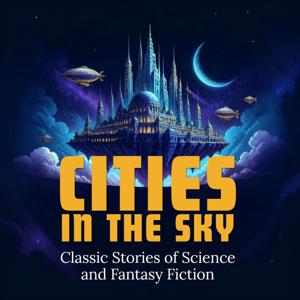
Classic Stories of Science and Fantasy Fiction.
Science fiction and fantasy stories have captivated audiences for as long as stories have been told. The Epic of Gilgamesh, written around 2000…
Speculative fiction began to take shape prior to and during the European Enlightenment, encouraged by the new scientific discoveries being made. Thomas More's 1516 book, "Utopia", describes an island nation whose inhabitants have developed a seemingly perfect society. Several books from this period deal with voyages to, or societies living on, the moon; Johannes Kepler's "Somnium", 1634, Francis Godwin's "The Man in the Moone", 1638, and Cyrano de Bergerac's "Comical History of the States and Empires of the Moon", 1656. Voltaire's "Micromégas", 1752, suggests that people of other worlds may be more advanced than those of Earth.
Mary Shelley's classic novel "Frankenstein; or, The Modern Prometheus", published in 1818, contains the archetypal 'mad scientist' experimenting with advanced technology. Another of her novels, "The Last Man", in 1826, is cited as the first Dystopian story.
Alexander Veltman's novel "The forebears of Kalimeros: Alexander, son of Philip of Macedon", 1836, was the first Russian science fiction novel and the first novel to use time travel, although via a magical hippogriff rather than technological means.
Samuel Butler's 1872 novel "Erewhon" describes machines that could become sentient and replace humans. Edward Everett Hale's "The Brick Moon", published serially in 1869 in The Atlantic Monthly, was the first story to describe an artificial satellite. "The Case of Summerfield" written by William Henry Rhodes and published in 1871 in the Sacramento Union newspaper, introduces the first 'weapon of mass destruction' used by a 'mad scientist' to blackmail the world. Edward Page Mitchell published science fiction short stories in The Sun for more than a decade, from 1874 onwards, dealing with invisibility, faster than light travel, teleportation, time travel, cryogenics, mind transfer, mutants, cyborgs and mechanical brains.
In the 19th Century, Jules Verne and H G Wells represented divergent styles of speculative fiction. Verne's mix of accurate technology and daring romantic adventures could be considered the earliest 'hard' science fiction. Well's more didactic approach skipped over much of the science and technology in order to critique Victorian society, and could be considered the first 'soft' science fiction. Both were commercially successful, and showed that a comfortable living could made writing such stories.
American author L. Frank Baum's book "Tik-Tok of Oz", 1914, contains the first literary appearance of handheld wireless communicators. Jack London's science fiction short stories "The Unparalleled Invasion", published in McClure's in 1910, and "The Red One", published in Cosmopolitan in 1918, contain germ wafare and extraterrestrials, respectively.
Then came the so-called golden age of science fiction from around the mid-1920s to the mid-1940s. Pulp magazines such as Astounding Stories, Amazing Stories, Wonder Stories, Galaxy, If Magazine, and Weird Tales filled newstands and helped launch the writing careers of many of the giants of science fiction; household names such as Isaac Asimov, Arthur C. Clarke, Robert Heinlein, Philip K. Dick, Ray Bradbury, Leigh Brackett, and Frank Herbert. The rich heritage upon which they drew, and to which they contributed, continues to influence modern science fiction and fantasy writers, and will undoubtedly do so far into the future.
Please note that performance of a story is not a condoning, endorsement, or promotion of attitudes, prejudices, biases or opinions therein—particularly of gender and gender roles, ethnicity, disability, and sexuality—that an inhabitant of modern times would find distasteful.
If there's a story that you'd like me to narrate, let me know at [email protected].