
Sign up to save your podcasts
Or



Lobo was thirsty, so thirsty that he must venture close to where he knew his old enemy—man—was, but where he knew he would find water...
"Lobo's Return" appeared in "Blue Book Magazine," January 1925, pages 64 - 65.
-----
Forrestine Cooper Hooker (March 1867 - March 1932) was an American author of primarily children's books set in the wild west of 19th Century America.
-----
If there's a story you'd like me to narrate, or a genre you'd like me to include more of, please let me know at [email protected].
-----
Music: "Mesmerizing Galaxy" Kevin MacLeod (incompetech.com). Licensed under Creative Commons: By Attribution 4.0 License http://creativecommons.org/licenses/by/4.0/.
A surprizing tale about the Black Tower and the intrusion therein of a barbarian adventurer—a strange weird tale of the love of a queen for her enemy.
"Duar the Accursed" appeared in the May 1937 issue of "Weird Tales" on pages 541 to 553.
Ball was especially enamored of Robert E Howard's Conan stories. The setting for Duar the Accursed is similar to Howard’s Hyborian Age.
-----
Clifford Nankivell Ball (January 24, 1908, New York, New York – January 1947, Baltimore, Maryland) was an American fantasy writer whose primary distinction was having been one of the earliest post-Howard writers in the sword and sorcery subgenre of fantasy. He wrote as Clifford Ball.
-----
If there's a story you'd like me to narrate, or a genre you'd like me to include more of, please let me know at [email protected].
-----
Music: "Mesmerizing Galaxy" Kevin MacLeod (incompetech.com). Licensed under Creative Commons: By Attribution 4.0 License http://creativecommons.org/licenses/by/4.0/.
Tommy hated Earth, knowing his mother might go home to Mars without him. Worse, would his dad buy an android to secretly take her place?
"Native Son" appeared in "Imagination, Stories of Science and Fantasy," July 1953, pages 108 - 114.
-----
Guldran was going to save the day and return to the ship at the eleventh hour with his prize, a defenseless mother burdened with her child.
"The Last Supper" appeared in "Worlds of If Science Fiction," September 1952, pages 105 - 106.
-----
For Williams, to be among the stars was everything, even if he had only made it to Mars. But when an earthquake forced him to lift off and leave his fellow astronauts behind, he was not used to the isolation and the silence...
"Floor of Heaven" appeared in "Amazing Stories," January 1961.
-----
T D Hamm (real name Thelma Hamm Evans, 1905 – 1995) was a science fiction writer with stories published in If, Tomorrow's Universe, The Magazine of Fantasy and Science Fiction, and several others.
-----
If there's a story you'd like me to narrate, or a genre you'd like me to include more of, please let me know at [email protected].
-----
Music: "Mesmerizing Galaxy" Kevin MacLeod (incompetech.com). Licensed under Creative Commons: By Attribution 4.0 License http://creativecommons.org/licenses/by/4.0/.
Lancelot Biggs was an unpredictable quantity, but nobody aboard the Saturn thought he'd ever turn traitor!
"The Genius of Lancelot Biggs" appeared in the June 1940 issue of "Fantastic Adventures," on pages 92 to 103 and 132.
-----
Nelson Slade Bond (November 23, 1908 – November 4, 2006) was an American writer. His works included books, magazine articles, and scripts used in radio, for television and on the stage.
The 1998 recipient of the Nebula Author Emeritus award for lifetime achievement, Bond was a pioneer in early science fiction and fantasy. His published fiction is mainly short stories, most of which appeared in pulp magazines in the 1930s and 1940s. Many were published in Blue Book magazine. He is noted for his "Lancelot Biggs" series of stories and for his "Meg the Priestess" tales, which introduced one of the first powerful female characters in science fiction.
-----
If there's a story you'd like me to narrate, or a genre you'd like me to include more of, please let me know at [email protected].
-----
Music: "Mesmerizing Galaxy" Kevin MacLeod (incompetech.com). Licensed under Creative Commons: By Attribution 4.0 License http://creativecommons.org/licenses/by/4.0/.
The Irritant was hungry, but with no intellects nearby, it had to bait a hook and wait. Something would come along. That something was John Singleton Mosby, a Civil War General with a novel idea for a new weapon...
"The Vertigo Hook" appeared in "Fantastic Universe," October-November 1953, pages 93 - 98.
-----
Richard Ashby is an American author of science and general fiction, who first published "A Joke for Harry" for Amazing in September 1949. His science fiction novel, Act of God (December 1951-January 1952 Other Worlds; exp 1971), concerns a conspiracy in 2002 to deprive the one man who has gained Immortality of his powerful gift.
-----
If there's a story you'd like me to narrate, or a genre you'd like me to include more of, please let me know at [email protected].
-----
Music: "Mesmerizing Galaxy" Kevin MacLeod (incompetech.com). Licensed under Creative Commons: By Attribution 4.0 License http://creativecommons.org/licenses/by/4.0/.
Kidder had a system for inventing things in a hurry—and he thought he had a system for handling the results. His method was inhuman—but his agent was human—and dangerous!
"Microcosmic God" It appeared in the April 1941 issue of "Astounding Science Fiction" on pages 46 to 68.
-----
"Microcosmic God" was recognized as one of the best science fiction short stories published before the Nebula Awards by the Science Fiction Writers of America in 1970, and was named as one of the best science fiction stories in polls by "Analog Science Fiction and Fact" in 1971, and "Locus" in 1999. In 1976, it was also published as a comic book version in issue 3 of "Starstream: Adventures in Science Fiction," by Gold Key Comics.
Sturgeon wrote the 1967 "Star Trek: The Original Series" episode "Amok Time," which featured the first appearance of 'pon farr,' the Vulcan mating ritual, the Vulcan hand gesture, and the phrase "Live Long and Prosper."
-----
Theodore Sturgeon (born Edward Hamilton Waldo, February 26, 1918, New York City – May 8, 1985, Eugene, Oregon) was an American author of primarily fantasy, science fiction, and horror. He wrote more than 120 short stories, 11 novels.
Sturgeon also wrote the screenplays for the Star Trek: The Original Series episodes "Shore Leave" (1966) and "Amok Time" (1967.) Sturgeon also wrote several more Star Trek scripts that were never produced, one of which first introduced the Prime Directive.
Sturgeon's science fiction novel More Than Human (1953) won the 1954 International Fantasy Award (for SF and fantasy) as the year's best novel, and the Science Fiction Writers of America ranked "Baby Is Three" number five among the "Greatest Science Fiction Novellas of All Time" to 1964. Ranked by votes for all of their pre-1965 novellas, Sturgeon was second among authors, behind Robert Heinlein.
The Science Fiction and Fantasy Hall of Fame inducted Sturgeon in 2000, its fifth class of two dead and two living writers.
-----
If there's a story you'd like me to narrate, or a genre you'd like me to include more of, please let me know at [email protected].
-----
Music: "Mesmerizing Galaxy" Kevin MacLeod (incompetech.com). Licensed under Creative Commons: By Attribution 4.0 License http://creativecommons.org/licenses/by/4.0/.
Take one tiny memory out of a man's life—and the entire universe may turn topsy turvy.
"My Past is Mine" appeared in "Fantastic Universe", October 1954, pages 82 - 88.
-----
Gerda Rhoads was born in Vienna and came to the United States with her parents by way of London and Rio. She was educated at Hunter College, became a ballet dancer, took up painting and has done some very charming canvases. Then she married a painter and they went to Paris and she turned to writing.
-----
If there's a story you'd like me to narrate, or a genre you'd like me to include more of, please let me know at [email protected].
-----
Music: "Mesmerizing Galaxy" Kevin MacLeod (incompetech.com). Licensed under Creative Commons: By Attribution 4.0 License http://creativecommons.org/licenses/by/4.0/.
Hercule Poirot, the famous detective, pits his 'little gray cells' against a powerful crime syndicate.
Today's story is "The Lady on the Stairs," by Agatha Christie. It appeared in the May 1927 issue of "The Blue Book Magazine" on pages 35 to 41.
-----
Dame Agatha Mary Clarissa Christie, Lady Mallowan, DBE (née Miller; 15 September 1890 – 12 January 1976) was an English writer known for her 66 detective novels and 14 short story collections, particularly those revolving around fictional detectives Hercule Poirot and Miss Marple. She also wrote the world's longest-running play, the murder mystery The Mousetrap, which has been performed in the West End of London since 1952.
A writer during the "Golden Age of Detective Fiction," Christie has been called the "Queen of Crime"—now trademarked by her estate—or the "Queen of Mystery." She also wrote six novels under the pseudonym Mary Westmacott. In 1971, she was made a Dame (DBE) by Queen Elizabeth II for her contributions to literature. Guinness World Records lists Christie as the best-selling fiction writer of all time, her novels having sold more than two billion copies.
-----
If there's a story you'd like me to narrate, or a genre you'd like me to include more of, let me know at [email protected].
-----
Music: "Mesmerizing Galaxy" Kevin MacLeod (incompetech.com). Licensed under Creative Commons: By Attribution 4.0 License http://creativecommons.org/licenses/by/4.0/.
LeDoux, the Interplanetary Company pilot, had flown too close to Callisto in an attempt to get a gravity assist from Jupiter to make up for lost time. But the Callistonians were known to waylay travellers in order to sate their 'curiosity' about humans. That meant that Verger, Anderson, LeDoux, and their 'cargo' of music-playing wives for the exiled miners on Ganymede, were in grave danger. But, the Callistonians didn't know anything about music. Maybe Verger could use that to their advantage...
"Rhythm Rides the Rocket" appeared in "Science Fiction Classics," published in October 1940 on pages 28 - 41.
-----
Alfred Johannes Olsen (April 12, 1884 – May 20, 1956), better known under his pen name Bob Olsen, was an American science fiction writer. He moved to California and started the Olsen Advertising Agency, while writing stories for magazines like "Amazing Stories." Olsen often wrote humorous science fiction in "Amazing Stories," from 1927 to 1936. He was one of the first writers to use the phrase "space marine." Ray Bradbury, just a teenager at the time, visited Bob Olsen often for mentorship, friendship, as well as for the sharing of ideas.
-----
If there's a story you'd like me to narrate, or a genre you'd like me to include more of, let me know at [email protected].
-----
Music: "Mesmerizing Galaxy" Kevin MacLeod (incompetech.com). Licensed under Creative Commons: By Attribution 4.0 License http://creativecommons.org/licenses/by/4.0/.
Porky's ego wouldn't stay in his own body, and that, believe it or not, was what saved the city!
"The Man who Saved New York" appeared in the July 1943 issue of "Science Fiction Stories" on pages 69 to 78.
-----
Ray Cummings (born Raymond King Cummings) (August 30, 1887, New York, New York – January 23, 1957, Mount Vernon, New York) was an American author of science fiction literature and comic books.
From 1914 to 1919, he worked with Thomas Edison as a personal assistant, where he arranged phonograph record albums and wrote labels for Edison Records.
Cummings is identified as one of the "founding fathers" of the science fiction genre. His most highly regarded fictional work was the novel "The Girl in the Golden Atom" published in 1922, which was a consolidation of a short story of the same name (in which he combined idea of Fitz James O'Brien's The Diamond Lens with H. G. Wells's The Time Machine,) and a sequel, "The People of the Golden Atom."
He recycled the plot of "The Girl in the Golden Atom" for a two-part Captain America tale, "Princess of the Atom" (Captain America Comics #25 & #26.)
-----
If there's a story you'd like me to narrate, or a genre you'd like me to include more of, let me know at [email protected].
-----
Music: "Mesmerizing Galaxy" Kevin MacLeod (incompetech.com). Licensed under Creative Commons: By Attribution 4.0 License http://creativecommons.org/licenses/by/4.0/.
From the publisher's feed
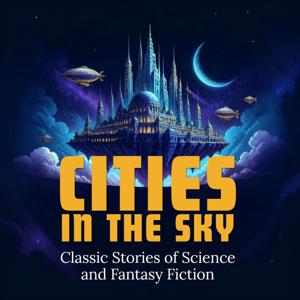
Classic Stories of Science and Fantasy Fiction.
Science fiction and fantasy stories have captivated audiences for as long as stories have been told. The Epic of Gilgamesh, written around 2000…
Speculative fiction began to take shape prior to and during the European Enlightenment, encouraged by the new scientific discoveries being made. Thomas More's 1516 book, "Utopia", describes an island nation whose inhabitants have developed a seemingly perfect society. Several books from this period deal with voyages to, or societies living on, the moon; Johannes Kepler's "Somnium", 1634, Francis Godwin's "The Man in the Moone", 1638, and Cyrano de Bergerac's "Comical History of the States and Empires of the Moon", 1656. Voltaire's "Micromégas", 1752, suggests that people of other worlds may be more advanced than those of Earth.
Mary Shelley's classic novel "Frankenstein; or, The Modern Prometheus", published in 1818, contains the archetypal 'mad scientist' experimenting with advanced technology. Another of her novels, "The Last Man", in 1826, is cited as the first Dystopian story.
Alexander Veltman's novel "The forebears of Kalimeros: Alexander, son of Philip of Macedon", 1836, was the first Russian science fiction novel and the first novel to use time travel, although via a magical hippogriff rather than technological means.
Samuel Butler's 1872 novel "Erewhon" describes machines that could become sentient and replace humans. Edward Everett Hale's "The Brick Moon", published serially in 1869 in The Atlantic Monthly, was the first story to describe an artificial satellite. "The Case of Summerfield" written by William Henry Rhodes and published in 1871 in the Sacramento Union newspaper, introduces the first 'weapon of mass destruction' used by a 'mad scientist' to blackmail the world. Edward Page Mitchell published science fiction short stories in The Sun for more than a decade, from 1874 onwards, dealing with invisibility, faster than light travel, teleportation, time travel, cryogenics, mind transfer, mutants, cyborgs and mechanical brains.
In the 19th Century, Jules Verne and H G Wells represented divergent styles of speculative fiction. Verne's mix of accurate technology and daring romantic adventures could be considered the earliest 'hard' science fiction. Well's more didactic approach skipped over much of the science and technology in order to critique Victorian society, and could be considered the first 'soft' science fiction. Both were commercially successful, and showed that a comfortable living could made writing such stories.
American author L. Frank Baum's book "Tik-Tok of Oz", 1914, contains the first literary appearance of handheld wireless communicators. Jack London's science fiction short stories "The Unparalleled Invasion", published in McClure's in 1910, and "The Red One", published in Cosmopolitan in 1918, contain germ wafare and extraterrestrials, respectively.
Then came the so-called golden age of science fiction from around the mid-1920s to the mid-1940s. Pulp magazines such as Astounding Stories, Amazing Stories, Wonder Stories, Galaxy, If Magazine, and Weird Tales filled newstands and helped launch the writing careers of many of the giants of science fiction; household names such as Isaac Asimov, Arthur C. Clarke, Robert Heinlein, Philip K. Dick, Ray Bradbury, Leigh Brackett, and Frank Herbert. The rich heritage upon which they drew, and to which they contributed, continues to influence modern science fiction and fantasy writers, and will undoubtedly do so far into the future.
Please note that performance of a story is not a condoning, endorsement, or promotion of attitudes, prejudices, biases or opinions therein—particularly of gender and gender roles, ethnicity, disability, and sexuality—that an inhabitant of modern times would find distasteful.
If there's a story that you'd like me to narrate, let me know at [email protected].