Classically (Un)Trained

Classically (Un)Trained

By Ema KatrovasArtsPerforming Arts
Download on the App Store

Classically (Un)Trained episodes

  • PILOT: How To Use The Classically (Un)Trained Podcast

    The first episode will launch a week from now, Monday, November 4th! 


    In this pre-season episode I want to tell you a little about how to listen to the podcast and how I envision it to be useful. I’ll also talk about who I imagine my audience to be, how I’m using the term “classical,” and why I decided to create the show in the first place. 


    Links: 


    Episode transcript: https://classicallyuntrainedpodcast.com/2024/10/28/pilot/


    Season schedule: https://classicallyuntrainedpodcast.com/episode-schedule/


    Newsletter: https://classicallyuntrainedpodcast.com/newsletter/

    Anonymous answers: https://classicallyuntrainedpodcast.com/anonymous-answers/

    Community: https://classicallyuntrainedpodcast.com/community/

    Sponsor an artist: https://classicallyuntrainedpodcast.com/sponsor-an-artist/


    Website: https://classicallyuntrainedpodcast.com/ 

    Instagram: https://www.instagram.com/ema_katrovas_podcast/

    13 min
  • Classically (Un)Trained Trailer

    The first season of Classically (Un) Trained will run from October to December 2024.


    Music: Silvia Berrone

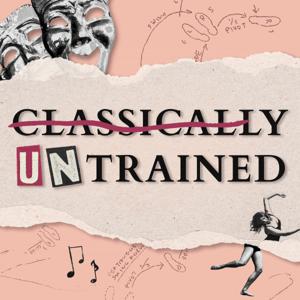
    Cover art: Kateřina Krejcarová


    For more information visit: https://classicallyuntrainedpodcast.com/

    3 min
  • Announcing Classically (Un)Trained: Survey results, show description, and tying loose ends

    FORGOT TO SAY THAT EPISODES OF THE PREVIOUS PODCAST WILL BE AVAILABLE HERE: https://classicallyuntrainedpodcast.com/former-podcast-archive/


    In what I hope is the last update before I launch the first season of the new podcast, in this episode I will:

    1) Tell you about audience survey results (including reading out some responses about performing artists' frustrations and responding to a repeating theme which surprised me)

    2) Describe the podcast to come (including some titles of episodes I'm writing)

    3) Tie up some loose ends from the last podcast!


    Currently the best way to stay up-to-date is the newsletter, which you can sing up for HERE.


    New Website (under construction): classicallyuntrainedpodcast.com


    Here is a full written presentation of the new podcast:


    Classically (Un)Trained - Performing Artists (Re)Inventing Themselves in Times of Hardship and Technological Change 

    Classically (Un)Trained is a companion for classically-trained performers who are on a journey to (re)invent themselves for the 21st century and (re)discover meaning in what they’ve trained so hard to master.  

    …

    Performing arts degrees are likened to pyramid schemes, auditions are called cattle calls, and artists who make a living from performing are the 1%. 

    If you’re a classically-trained actor, singer, instrumentalist or dancer, you’ve heard these quips before and you’re well aware - thank you very much - that you’ve trained hard to fit into a very elite but, as it turns out, very overcrowded market - and one that is shrinking under your feet. 
    Most advice for young performers focuses on how to break into the industry, make enough money from gigging, or find the right parallel career. Those things are important, but something’s missing. What about the need to find meaning in what you do, beyond just chasing after your next stage "fix"? What about the fundamental need to be part of a community of people you respect and admire, not just ones you need to outcompete? What about the importance of doing something you know is relevant, meaningful and even, dare we say, essential? 
    In every episode of the first season of Classically (Un)Trained, we’ll explore artistic solutions to the economic, social, and technological problems facing the 21st century classically-trained performing artist and explore how performers can find meaning in their work not just despite of, but also thanks to, the unique challenges they face today. 


    About the host:

    Ema Katrovas is a classically-trained singer. She spent her formative years singing in regional Czech theatres. After the pandemic, she pivoted to contemporary classical music and cultural journalism, attending the Aix-en-Provence festival’s cultural journalism workshop and completing a two year Artist Diploma residency at the High Conservatory in Lyon, where she created and performed in the one-woman vocal-theatre show Diva Lazarus*. She is currently working on a doctorate at the University of Strasbourg/HEAR with a thesis called* A Poor Opera: In Search of Vocal Theatre. www.emakatrovas.com

    9 min
  • 56: Post-Show Glow - A Debrief for My Listeners About the Past and Future of Live Performing and the Podcast

    Host of Artists on the Verge, Ema Katrovas, shares her next-day impressions after a live show she created which was two years in the making - and, more importantly, how her experiences around the budget, the technical aspects of the show, the reactions of the public, and the show's prospects for the future may hint at a new focus for the podcast.

    Here are links to the YouTube and Instagram accounts where you can find some of the shorts/reels about the show which Ema published in the month leading up to the show:

    • YouTube Playlist: https://www.youtube.com/playlist?list=PLSFIN5ke8euZ18W2hUWGKNnd0MGCdSjVB
    • Instagram account: https://www.instagram.com/artists_on_the_verge/
    • (During this episode, Ema mentions Jerzy Grotowski's Poor Theatre without much explanation - you can actually learn more about that in the shorts/reels linked above.)

      • 💋👁👂🏼 Artists on the Verge website: https://artists-on-the-verge.com/
      • 👀 Instagram: @artists_on_the_verge
      • 11 min
      • 55: Ep. 10: How Camp Explains Taste (ft. a final review of The Sudbury Devil) | An Opera Singer and a Comedian Walk Into a Bar

        Welcome to another conversation from the high/low art divide between opera-singer-turned-experimental-performer Ema Katrovas and comedian-and-TV-writer-turned-novelist Nicholas Anthony. 

        I was going to put the film the Sudbury Devil (whose creator I interviewed on this podcast) to rest - but then I stumbled across Susan Sontag’s essay “Notes on Camp” and I realised “camp” kind of explains EVERYTHING about how Nick and I (i.e. a comedian and an opera singer) had very different reactions to this film - namely why Nick HATED it and I didn't.

        So what does “camp” have to do with certain corners of YouTube, the piece of outsider cinema called the Sudbury Devil, and how might it explain why two people might have different reactions to a particular work of art?

        Timestamps:

        00:00:00 Intro

        00:00:02 Conversation about why Nick didn’t like the Sudbury Devil 

        00:34:44 Interlude and disclaimer to the creators of the film (“the opposite of love isn’t hatred, it’s indifference”) 

        00:35:66 Understanding Susan Sontag’s “Notes on Camp” 

        00:53:58 Why camp MIGHT explain Nick’s dislike of the Sudbury Devil (disclaimer: this features Ema’s hot take on camp which she may revise) 

        01:08:40 So what is camp? (and final thoughts on Sudbury Devil) 

        01:12:59 Outro 

        My interview with Andrew Rakich on the Sudbury Devil: https://podcasters.spotify.com/pod/show/artistsontheverge/episodes/52-A-Friendly-Debate-With-Andrew-Rakich-On-His-Epic-Micro-budget-Film---The-Sudbury-Devil-e2euolq

        Links:

        • 💋👁👂🏼 Artists on the Verge website: ⁠⁠⁠https://artists-on-the-verge.com/⁠⁠⁠
        • 👀 Instagram: @artists_on_the_verge
        • 1 hr 14 min
        • 54: Ep. 9: Trip to New York Pt. II: What is it like to Sleep No More? (first impressions of immersive theatre recorded at Scallywags Irish Pub) | An Opera Singer and a Comedian Walk Into a Bar
          Welcome to another conversation from the high/low art divide between opera-singer-turned-experimental-performer Ema Katrovas and comedian-and-TV-writer-turned-novelist Nicholas Anthony. 
          This episode is the second half of a two-part series recorded in New York City - this time, fresh off of our experience of Sleep No More at the the McKittrick Hotel, an immersive theatre experience created by the British theatre company Punchdrunk.
          So what is Sleep No More? Is it a theatrical experience based on Shakespeare’s MacBeth, Alfred Hitchcock’s film noir Rebecca, and a real witch trial that took place in 1697 in Scotland, which is how it’s advertised? Or is it an aesthetic haunted house? Or is it just an elaborate method of selling cocktails? Let's find out...
          Sleep No More website: https://mckittrickhotel.com/events/sleep-no-more/
          Music:
          The bar did not end up getting back to me about who was playing live music that night. If I ever find out, will credit the musician/singer here. (If you or someone you know played Scallywags Irish Pub on 9th Ave Between 38th and 39th street late on January 10th, please let me know!)
          As background for my description of the experience, I used a recording someone uploaded to YouTube after smuggling a recording device into Sleep No More (!) - given that it's been up for a while, it seems the creators don't mind much: https://www.youtube.com/watch?v=rYg0thPEPVw&t=2602s
          Peggy Lee's rendition of "Is That All There Is?": https://www.youtube.com/watch?v=3sWTnsemkIs
          Links:
          💋👁👂🏼 Artists on the Verge website: ⁠⁠⁠https://artists-on-the-verge.com/⁠⁠⁠
          👀 Instagram: @artists_on_the_verge
          30 min
        • 53: Ep. 8: Trip to New York Pt. I: High Art About Poor Artists (recorded at the Met Opera House) | An Opera Singer and a Comedian Walk Into a Bar

          Welcome to another conversation from the high/low art divide between opera-singer-turned-experimental-performer Ema Katrovas and comedian-and-TV-writer-turned-novelist Nicholas Anthony. 


          This episode is the first half of a two-part series recorded in New York - in this case, directly at the Metropolitan Opera.


          We recorded this episode sitting in our seats in the Family Circle, during both intermissions and right after the end of a performance of Zefirelli’s classic production of Puccini’s La Boheme, one of the most popular, if not the most popular, operas of the last century and, even better, one that tells the story of aspiring artists.


          The cast we heard on January 8th at the Metropolitan Opera: 

          Conductor: Marco Armiliato 

          Mimi: Elina Stikhina

          Rodolfo: Stephen Costello

          Musetta: Kristina Mkhitaryan

          Marcello: Adam Plachetka 

          Schaunard: Rodion Pogossov

          Colline: Krzysztof Bączyk

          Benoit/Alcindoro: Donald Maxwell

          Met Opera Chorus 


          Link to the recording I used as "illustration footage": https://www.youtube.com/watch?v=H_1OtRt0_ho

          Cast of the recording (though you don't get to hear most of them):

          Mimì: Mirella Freni

          Rodolfo: Luciano Pavarotti
          Musetta: Annarita Taliento
          Marcello: Lucio Gallo
          Schaunard: Pietro Spagnoli
          Colline: Nicolai Ghiaurov

          Conductor: Daniel Oren


          💋👁👂🏼 Artists on the Verge website: https://artists-on-the-verge.com/


          👀 Instagram: @artists_on_the_verge

          37 min
        • 52: A Friendly Debate With Andrew Rakich On His Epic Micro-budget Film - The Sudbury Devil
          A conversation with Adrew Rakich of  @AtunSheiFilms  on his micro-budget period horror movie The Sudbury Devil.
          Watch on YouTube here:
          https://youtu.be/FXYgbsub4gg
          Rent or Buy the Sudbury Devil here: https://atunsheifilms.vhx.tv/products/the-sudbury-devil
          00:00:00 - Intro - why I'm doing this interview
          (TALKING ABOUT THE FILM'S CONTENT)
          00:01:41 - What does it mean to shock with your work?
          00:09:20 - Ema's feminist critique
          00:25:27 - The historical basis of Puritan devil worship
          (END OF SPOILERS - TALKING ABOUT INDIE CREATING)
          00:31:17 - Are YouTubers Indie or Mainstream?
          00:39:22 - The YouTube branch of arts funding and why Andrew chose it
          00:44:11 - Andrew's update to his optimistic video about YouTubing
          00:55:24 - Andrew's advice for dealing with a crowdfunded platform
          01:01:00 - The critics are always right
          01:03:57 - The Co-Op model of film funding
          (I don't usually use title generators - but this AI-generated title was just hilarious)
          💋👁👂🏼 Artists on the Verge website: https://artists-on-the-verge.com/
          👀 Instagram: @artists_on_the_verge
          1 hr 15 min
        • All the Bullsh*t Artists Believe: A Conversation with William Deresiewicz, Author of Death of the Artist

          This is an episode of the old podcast, called Artists on the Verge. I decided to keep these conversations up in the feed because they are, in fact, part of what led me to create Classically (Un)Trained. I have taken down all except the artist interviews - but you can check out an expanded archive here: https://classicallyuntrainedpodcast.com/former-podcast-archive/


          Check out the current podcast here: https://classicallyuntrainedpodcast.com/


          Video version here: https://youtu.be/v1pvdmWkQ90

          A spirited chat with William Deresiewicz, author of /Death of the Artist: How Creatives Struggle to Survive In the Age of Billionaires and Big Tech/. This book argues that artists have a harder time making a middle class living today than in previous generations - but is this true? And how does it effect the art and entertainment made today?

          00:00:00 Intro: The two stories told about being an artist
          00:01:05 Why did /Death of the Artist/ need to be written now?
          00:02:31 But hasn’t it ALWAYS been hard to be an artist?
          00:05:03 How is all this unique to artists? Aren’t a lot of middle-class professions in danger?
          00:06:08 What is Art with a capital “A” and why is it under threat?
          00:09:06 The TV Renaissance is Over (Amending the section on TV in /Death of the Artist/)
          00:11:06 Is it helpful for individual artists to look at the bigger picture of the arts industry ?
          00:13:21 Is the sample of 140 artists used to write Death of the Artist really representative? How were they selected? What about other research?
          00:15:37 What are the goals of the book? What does William Deresiewicz want artists to know?
          00:17:49 Is art really “boring” now? And why does William Deresiewicz not watch movies in movie theatres?
          00:22:49 The chilling effect in the arts - is THAT why everything is boring?
          00:27:24 What if you’re depressed after reading /Death of the Artist/? Is there an actionable takeaway?
          00:30:59 How do you value an arts education? How do you repurpose creative skills? And why William Deresiewicz would encourage you to go for the artists life despite everything!
          00:38:09 Accepting that some art just doesn't have much market value.
          00:40:16 The 1000 true fans model - does it work?
          00:41:45 “Everyone is an artist”: The Romantic myth that led to the Silicon Valley myth (ft. David Graeber and Nicka Dubrovsky’s essay “Another Art World”)
          00:46:41 The lifecycle of an artist and how artists are discouraged as children
          Links to stuff we talk about:
          The Death of the Artist by William Deresiewicz: https://us.macmillan.com/books/9781250125514/thedeathoftheartist
          “We’re all Bored of Culture” by William Deresiewicz: https://www.tabletmag.com/sections/arts-letters/articles/bored-of-culture-william-deresiewicz
          “On Not Drinking the Kool Aid” by William Deresiewicz: https://salmagundi.skidmore.edu/articles/434-on-not-drinking-the-kool-aid
          💋👁👂🏼 Website: https://classicallyuntrainedpodcast.com/
          👀 Instagram: https://www.instagram.com/ema_katrovas_podcast/

          49 min

        About Classically (Un)Trained

        From the publisher's feed

        Classically (Un)Trained is a companion for classically-trained performers who are on a journey to (re)invent themselves for the 21st century and (re)discover meaning in their craft.