Claudia Sheinbaum - Biography Flash

Claudia Sheinbaum - Biography Flash

Download on the App Store

Claudia Sheinbaum - Biography Flash episodes

  • Sheinbaum: Mexico's President Confronts Controversy | Biography Flash
    Claudia Sheinbaum Biography Flash a weekly Biography.
    Welcome back to Claudia Sheinbaum Biography Flash. This past week has been absolutely pivotal for Mexico's president, with developments spanning from grand national celebrations to intense political controversy.
    Let's start with the marquee event. On November 20th, President Sheinbaum led one of the most grand and symbolic parades in recent Mexican history to commemorate the 115th anniversary of the Mexican Revolution. Speaking from Mexico City's iconic Zócalo before the civic-military parade, she delivered a forceful message against violence and disorder. She declared that those who call for violence are mistaken, those who encourage hate are mistaken, and those who believe force can replace justice are mistaken. This speech came just five days after what she characterized as a troubling incident at the same location.
    Here's where things get complicated. On November 15th, a so-called Generation Z protest movement gathered at the Zócalo, initially organized to demand greater security and protest the killing of activist Carlos Manzo. However, according to investigations by Infodemia, a Mexican fact-checking organization, the protest appears to have been orchestrated through coordinated digital campaigns. Over 90 million Mexican pesos, approximately five million dollars, was spent in the last month and a half to promote the march. The investigation traced involvement back to far-right networks, the Atlas Network, and even implicated international figures including Argentine political operatives with connections to Argentina's President Milei. Black bloc protesters clashed with police, resulting in more than twenty detentions.
    During her November 13th daily press conference, President Sheinbaum invited Miguel Angel Elorza, head of Infodemia, to publicly disclose the faces, names, and histories of protest organizers. Critics argue this represented a troubling conflation of legitimate protest with coordinated disinformation campaigns.
    Looking ahead, Sheinbaum has called for a major rally at Mexico City's Zócalo on December 6th to celebrate seven years of Morena party governance and the Fourth Transformation movement that began with AMLO's 2018 inauguration. She met privately with legislators to reinforce party messaging about government achievements.
    On the international front, Sheinbaum addressed security cooperation with the United States, firmly stating that U.S. strikes in Mexico are not going to happen, while emphasizing that collaboration and mutual assistance remain possible.
    The overarching narrative here reflects a presidency navigating intense political polarization, attempting to defend its record while confronting what it views as coordinated disinformation campaigns.
    Thank you so much for listening to this episode of Claudia Sheinbaum Biography Flash. Please subscribe now to never miss an update on Mexico's president and her political journey. Search the term Biography Flash fo
    This content was created in partnership and with the help of Artificial Intelligence AI.
    4 min
  • Biography Flash: Claudia Sheinbaum Faces Unrest, Trump Threats & Antisemitism in Turbulent Week as Mexico's President
    Claudia Sheinbaum Biography Flash a weekly Biography.
    Claudia Sheinbaum is currently navigating one of the most turbulent weeks of her presidency, facing mass protests, diplomatic pressures, and a digital media storm. Over the past few days, tens of thousands of Mexicans marched in Mexico City protesting rising violence and entrenched corruption. The unrest peaked with a violent clash in the Zócalo, leaving dozens of police officers injured and several arrests, making this one of the most significant confrontations between Sheinbaum’s administration and anti-government activists according to reliable reporting by Texas Public Radio. The protests were catalyzed by the assassination of Carlos Manzo, a mayor and vocal critic of organized crime—an event that has come to symbolize the growing insecurity under Sheinbaum’s leadership.
    Sheinbaum publicly condemned the violence and emphasized that any demand for change must occur through peaceful means, countering claims of generational youth involvement and suggesting some demonstrators were motivated by opposition groups harnessing bots and misinformation online, as noted in Hindustan Times coverage. Her rhetoric has highlighted a new line of divide in Mexican civil society, with the president denouncing “digital smear campaigns” and the alleged use of “right wing astroturf protests,” as analyzed in Mexico Solidarity Media’s recap of her latest press conference.
    Internationally, Sheinbaum faced sharp remarks from former U.S. President Donald Trump, who floated the possibility of military strikes in Mexico to tackle drug trafficking. Sheinbaum responded forcefully, declaring at her press conference—and reiterated by Mexico News Daily—that U.S. intervention is not welcome: “The last time the US came to Mexico, they took half the territory.” She has stressed Mexico’s sovereignty, maintaining that collaboration with the U.S. will not cross into foreign military operations. These statements carry substantial biographical weight, illustrating her insistence on national autonomy amid external pressure.
    On social media, Sheinbaum’s channels have distributed statements condemning violence, promoting scholarships for youth, and defending her administration against opposition-driven narratives. Yet, controversy continues to swirl, with the Jewish community voicing outrage as antisemitic graffiti targeting Sheinbaum surfaced during the protests—a disturbing episode reported in the Jerusalem Post that has prompted calls for rejection of discrimination and higher vigilance.
    Looking ahead, while another major “Generation Z” protest is scheduled for November 20, Sheinbaum assures that the traditional Revolution Day military parade will continue as usual, publicly dismissing threats of a repeat clash between protesters and military personnel.
    Business activities and personal ventures have taken a clear back seat, as Sheinbaum’s week has been dominated by these sweeping security and political challenges, social unr
    This content was created in partnership and with the help of Artificial Intelligence AI.
    4 min
  • Sheinbaum Weathers Mexico's Gen Z Storm | Biography Flash
    Claudia Sheinbaum Biography Flash a weekly Biography.
    Claudia Sheinbaum has been at the center of national and international headlines over the last few days as the political and social atmosphere in Mexico shifted dramatically. This week she faced the massive “Generation Z” protest movement, which exploded in Mexico City and several major metros on Saturday night. According to Israel Hayom and Euronews, tens of thousands of mostly young demonstrators gathered, initially to condemn cartel violence—catalyzed by the assassination of the outspoken Uruapan mayor Carlos Manzo—but soon broadened to criticizing Sheinbaum’s government and alleged inaction against crime. The protests turned heated and made global news after some demonstrators spray-painted antisemitic graffiti on the presidential palace, referencing Sheinbaum’s Jewish heritage. Riot police and protesters clashed, leaving 100 police and at least 20 civilians injured; 20 people were arrested. The “Gen Z Mexico” group, which organized the demonstrations, distanced itself from extremist rhetoric and declared itself party-independent, saying it represents a generation exhausted by violence and corruption.
    Sheinbaum responded directly in her Friday morning press conference, as covered by the Mexican Press Agency and Mexico News Daily. She reaffirmed freedom of assembly but claimed the march had been amplified by opposition parties and bots, pointing to her government’s ongoing support for youth, including the universal high school scholarship and “Youth Building the Future” program. She also reiterated her administration’s comprehensive security strategy—especially the recently unveiled Michoacán Plan for Peace and Justice, which is now being rolled out. This plan aims to tackle organized crime head-on with 100-plus specific actions amounting to a $3 billion US investment and the deployment of over 10,500 military and police personnel. Its targets include major cartels deeply rooted in Michoacán and neighboring states. The plan’s progress is personally overseen through periodic site visits by top security officials, with a special focus on protecting economic activity like lemon and avocado farming.
    In a significant legal development, Sheinbaum announced that the Mexican Supreme Court has ruled in favor of tax authorities in a long-running dispute with Grupo Salinas, requiring the powerful conglomerate to pay about $1.6 billion in back taxes. She emphasized this as a victory for the rule of law—no special favors and not a sign of authoritarianism.
    Outside the political storm, Sheinbaum kept her populist touch—publicly giving up her own ticket for the World Cup 2026 opening match, instead sending a deserving young girl in her place and overseeing preparations for “Fiestas México 2026” to ensure the world’s attention shines positively on Mexico.
    On the social media front, Sheinbaum was both praised and fiercely criticized. The antisemitic graffiti and rumors of bot-amplified opposition refle
    This content was created in partnership and with the help of Artificial Intelligence AI.
    5 min
  • Biography Flash: Claudia Sheinbaum - Mexico's Trailblazing President Fights Back Against Assault
    Claudia Sheinbaum Biography Flash a weekly Biography.
    Over the past few days, Claudia Sheinbaum, Mexico’s first female president, made global headlines after a deeply personal and highly public incident dominated both traditional media and social networks. On Tuesday, November 4th, Sheinbaum was speaking with supporters near the National Palace in downtown Mexico City when a visibly intoxicated man rushed up from behind, placed his hands on her, and tried to kiss her on the neck. The incident, caught on a supporter’s mobile phone and rapidly shared on social platforms, showed the president’s quick reflexes as she pulled away. Security staff eventually intervened, but the event provoked outrage and urgent debate about both public security and women’s safety in Mexico, a nation already grappling with high rates of gender-based violence. ABC World News Tonight and Good Morning America covered her response, noting her resolve to press charges, not just for herself but as “a representation of Mexican women.” Sheinbaum stated that this attack was not an isolated event but part of a broader crisis of harassment experienced by millions. She reiterated in a tweet that nobody, regardless of status, should have their personal space or body violated, highlighting her commitment to keeping public life accessible and not retreating behind increased security—a key part of her approachable political image.
    Just one day before the attack, Sheinbaum had presented a new security initiative for Michoacan, sending additional security forces to the region—timely, in light of continued public concern about political violence, illustrated by the recent assassination of a regional mayor during Day of the Dead festivities. Yet, some critics quickly accused Sheinbaum of leveraging her assault as a political distraction, as reported by the Associated Press and The Statesman. Some opposition politicians went as far as suggesting the event was staged to divert national attention from broader crime issues, while others used the moment to again question the government’s security protocols, highlighting the political polarization currently gripping Mexico.
    In the wake of the attack, Sheinbaum used her presidential platform to announce a push for urgent legislative reform, demanding that sexual harassment become a distinct crime across all jurisdictions in Mexico, as per reports in Le Monde and Economic Times. At a press conference, she cited her own experience to demand better legal protections and faster reporting mechanisms for women nationwide—a stance reinforced by her promise to roll out new awareness campaigns and to coordinate among Mexico’s states to unify their approach. Her refusal to increase personal security while launching long-term reforms speaks to her ongoing biographical significance: a leader leveraging personal adversity for systemic change rather than withdrawal.
    On social media, Sheinbaum’s Twitter post about the incident quickly trended across Latin Am
    This content was created in partnership and with the help of Artificial Intelligence AI.
    5 min
  • Biography Flash: Sheinbaum Assaulted, Fights for Women's Safety in Mexico
    Claudia Sheinbaum Biography Flash a weekly Biography.
    This is Claudia Sheinbaum for Biography Flash. In the past few days, my presidency has been jolted by an incident that has dominated headlines across Mexico and beyond. On Tuesday, as I was walking from Mexico’s National Palace to the Education Ministry in downtown Mexico City, a man, visibly intoxicated, came up behind me, put his arm around my shoulder, inappropriately touched me, and tried to kiss my neck. The incident, caught on video and distributed widely, immediately sparked outrage. According to Le Monde, I described the episode as not just a personal violation but an assault on all women in Mexico, pointing out that if this happens to the president, imagine the risks faced by millions of ordinary women every day. I made the decision to press charges against the man, who was quickly arrested, emphasizing my responsibility to set a precedent for reporting such crimes, especially in a country where, as Firstpost details, nearly 70 percent of women report experiencing harassment during their lifetimes and rates of femicide remain horrifyingly high.
    My response has been to call for urgent legal reforms. During my daily press conference, I announced plans for a nationwide campaign that pushes every Mexican state to criminalize sexual harassment—something only about two-thirds currently do. I’m using my platform to demand both greater respect for women’s autonomy and the strengthening of our judicial systems so that all women can safely report assault and harassment.
    This attack has inevitably drawn attention to my public security detail and my commitment to remaining accessible to citizens. Despite criticism—from security analysts and political opponents—I have refused to increase my security buffer, insisting, as reported by ABC7, that presidents must remain close to the people. Nevertheless, this stance has sparked debate about the balance between approachability and vulnerability, especially for women in power.
    Politically, the fallout has been immediate and intense. ABC News reports that while some rivals and opposition voices expressed support, others openly accused my party of using the groping incident to deflect from recent cartel violence in Michoacán, including the assassination of a popular local mayor. Yet as I told reporters Thursday, my focus will not waver from making Mexico safer for all women. My administration is not just reacting to an incident; we are using it to press overdue reforms and coordinate a unified national response to gender violence.
    On social media, the hashtags #Sheinbaum and #NoEsNormal have trended, amplifying both messages of solidarity and the deep societal frustrations around ongoing violence and harassment in Mexico. Some segments question political motives, but most comments reflect empathy, anger, and a call for action.
    Thank you for listening. If you want to follow every twist and turn in my story and those of other global figures, subscribe
    This content was created in partnership and with the help of Artificial Intelligence AI.

    4 min
  • Biography Flash: Sheinbaum Groped Amid Cartel Crisis, Faces Risks as Mexico's First Female Leader
    Claudia Sheinbaum Biography Flash a weekly Biography.
    Claudia Sheinbaum has dominated headlines this week with a combination of composure under fire and the challenges of leading Mexico through turbulent times. The most widely discussed and disturbing moment came just in the past 24 hours when, according to reports from the Economic Times and ABC News, a man who appeared to be intoxicated groped and attempted to kiss President Sheinbaum as she greeted supporters in downtown Mexico City. The scene, captured on video and now viral across platforms like X and Instagram, shows Sheinbaum keeping her trademark calm—she gently pushed the man’s hands away, told him “Don’t worry,” and maintained a tense smile even as security eventually intervened. The reaction online has been fierce. Outrage has erupted over the apparent security lapse, especially given that Sheinbaum stands as Mexico’s first female president and is known for her crowd-friendly approach reminiscent of her mentor, Andrés Manuel López Obrador. Numerous commentators have demanded to know how she was left so vulnerable, with critics calling it a “massive security failure” and raising potent questions about the risks female leaders face—no matter how high their office.
    The context of this incident is even more charged because it happened almost simultaneously with Sheinbaum rolling out a new security plan for Michoacán, as reported by the Houston Chronicle, after the recent assassination of Uruapan Mayor Carlos Manzo by cartel gunmen. Demonstrating personal concern, Sheinbaum met with the slain mayor’s widow and doubled down on pursuing justice, but she publicly and firmly rejected the idea of U.S. military intervention despite former President Trump floating it. In her words, “Mexico would accept help—not intervention—from foreign powers,” according to the Hindustan Times and ABC World News. Her government’s focus remains on sovereign solutions to cartel violence, even as public protests and national anger swell.
    Amid all of this, Sheinbaum made a softer appearance on social media by sharing vibrant images and commentary about the Day of the Dead offerings at the National Palace, celebrating Mexican culture and unity, but even these posts were overshadowed by concerns about her personal safety. On X, supporters and critics alike have hotly debated both her openness with the public and the urgency of protecting those at the pinnacle of political power in Mexico.
    No new business moves or official international visits have been announced in the past few days, as the president’s schedule has been almost entirely consumed by violence-related crisis meetings and public reassurance efforts.
    As the security debate escalates and her leadership style comes under scrutiny, Sheinbaum maintains her visible, unguarded connection with everyday citizens—a trait that may be her most defining and risky legacy yet. Thank you for listening. Be sure to subscribe to never miss an update on Claudia Sheinbaum,
    This content was created in partnership and with the help of Artificial Intelligence AI.
    4 min
  • Biography Flash: Sheinbaum's Empathy, Autonomy Shine Amid Tragedy
    Claudia Sheinbaum Biography Flash a weekly Biography.
    Claudia Sheinbaum has been front and center in Mexico’s headlines the past few days, and not just for policy discussions or political debates. The most significant breaking news relates to a tragic event in Hermosillo: on Saturday, a massive explosion and ensuing fire at a Waldo’s supermarket killed at least 23 people, including minors, and injured many others. Sheinbaum immediately expressed horror and heartfelt condolences to the affected families via her X account, emphasizing her ongoing coordination with Sonora governor Alfonso Durazo to mobilize federal support teams for victims and their relatives. She also stated she had instructed Secretary of the Interior Rosa Icela Rodríguez to send additional help—medical, psychological, and social assistance are being provided—while Durazo confirmed a transparent investigation has been ordered to clarify the cause of the disaster and assign responsibility. Sonora’s Public Security Secretary has ruled out any attack or violent motive, assuring citizens this was not related to criminal activity. The scenes from Hermosillo—huge flames, chaos, and heartbreak—have dominated social media, with Sheinbaum’s swift and visible response praised for its empathy and urgency.
    Shifting from tragedy to tradition, Sheinbaum dedicated the official Day of the Dead altar in Mexico’s National Palace to indigenous women, recognizing them as the foremothers and cultural pillars of the nation. She highlighted the ancestral wisdom, resilience, and artistry of indigenous women, calling them the “roots of our country” in both live appearances and social media posts, supported by the Ministry of Culture and the National Institute of Indigenous Peoples. It’s a symbolic move that dovetails with Sheinbaum’s frequent references to her pride in wearing traditional Mexican garments—her use of indigenous embroidery was recently noted in a London magazine. She dismissed this international coverage as “frivolity” but later acknowledged, with apparent pride, that showcasing indigenous textiles is a way to make Mexico’s cultural grandeur visible. This not only enhances her public image as the country’s first female president but also deepens her connection to grassroots communities and traditional sectors.
    Politically, Sheinbaum continues to push back against claims she’s under the sway of her predecessor, Andrés Manuel López Obrador. At her Friday press conference, she called that narrative misogynistic, saying decisions now come from her conviction and not from AMLO’s influence—even referencing the controversial choice not to invite the King of Spain to her inauguration, which she says was her own decision and not political inheritance.
    On social media, Sheinbaum’s posts have been a blend of emotional responses to national crises, cultural celebrations, and assertive statements defending her autonomy as president. Her handling of the Hermosillo catastrophe, public tributes to ind
    This content was created in partnership and with the help of Artificial Intelligence AI.
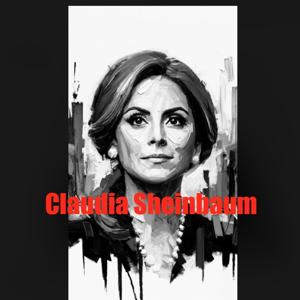
    4 min
  • Biography Flash: Claudia Sheinbaum - Mexico's Defiant Leader Takes on the US
    Claudia Sheinbaum Biography Flash a weekly Biography.
    Claudia Sheinbaum has been front and center in a series of developments with major biographical weight and plenty of headline-grabbing moments this week. Let’s start with the big news: just hours ago, Mexico’s president Claudia Sheinbaum again voiced her strong opposition to the ongoing US air strikes against alleged drug-smuggling vessels. According to The Indian Express and Latin Times, she stated that her administration does not agree with these attacks, called on the US to respect international treaties, and has asked Mexico’s foreign minister and navy chief to meet with the US ambassador to address the escalating crisis. This comes after fresh US strikes in the eastern Pacific killed 14 people and brings the death toll from these operations to at least 57 in less than two months. Sheinbaum, positioning herself as a resolute defender of Mexican sovereignty, emphasized publicly that international law must prevail and absolutely ruled out any American military intervention on Mexican soil. Al Jazeera details that her firm rhetoric has also become a point of friction with the Trump administration, which has openly argued that “Mexico is run by the cartels.” Trump described Sheinbaum as a “very brave woman,” but nevertheless continues to push for more aggressive anti-drug efforts and threatened tariffs in retaliation for what he frames as insufficient Mexican cooperation.
    On the domestic front, Sheinbaum is riding a wave of public trust, especially regarding Mexico’s armed forces. At her October 28 morning press conference, widely known as the mañanera and covered by Mexico News Daily, she underscored that more than 80 percent of Mexicans view the army, navy, and air force favorably. She linked their high standing, in part, to their emergency response efforts—particularly their central role during this season’s heavy flooding. She also addressed and dismissed media speculation about an alleged armed attack against her security minister, calling claims published in El Financiero “fiction.”
    There’s also a big business and policy headline: the Chamber of Deputies just approved reforms to Mexico’s income tax law, with Sheinbaum personally confirming insurers must pay their full VAT debts for 2025 and from 2026 onward. She made it clear this is a legal, not political, decision and emphasized respecting the Supreme Court and the rule of law.
    On a lighter note, Sheinbaum just launched her first book, “Diario de una Transición Histórica”—already declared a bestseller, generating buzz in Mexican publishing and political circles. She’s celebrating the expansion of Mexico’s El Insurgente commuter train, which she rode in a recent public appearance, and also announced a major investment in education infrastructure: by year’s end, 130 new high school campuses are slated to open, part of her ambitious goal to keep every student enrolled. Social media has been buzzing with debates and praise for her c
    This content was created in partnership and with the help of Artificial Intelligence AI.

    4 min
  • Claudia Sheinbaum: Mexico's Influential Reformer | Biography Flash
    Claudia Sheinbaum Biography Flash a weekly Biography.
    In the past few days Claudia Sheinbaum has been front and center on both domestic and international stages showing why she is considered one of Latin America's most influential political figures. Monday morning saw her issue strong words at the daily press conference about Mexico's devastating floods which have claimed 76 lives and left 27 missing mostly in Veracruz, Hidalgo, Puebla, and Querétaro. She highlighted the government’s rapid response with over 12,000 personnel and 297 collection centers and unveiled a dedicated flood-tracking website for transparency and public information. According to Mexico News Daily, she criticized the conservative PAN party’s timing in relaunching itself, calling the move insensitive given the disaster, and reminded everyone that the same old faces are running PAN under a fresh logo and slogan. She used this moment to emphasize the need for political unity especially within her own Morena party.
    This theme of unity resonated across other recent major headlines. Following Bolivia’s election results, where the left was dethroned after decades, Sheinbaum warned her party that “fragmentation is the greatest risk for transformation movements.” Evrim Ağacı reports that this sober message wasn’t just for Bolivia but a veiled admonition to Morena, which continues to face internal squabbles and personal ambitions. She reiterated at several press conferences that unity is not automatic—“it is constructed”—and that division is a cautionary tale for the Mexican left.
    In the realm of social policy and public health, Sheinbaum announced an unprecedented 8-billion-peso “Universal Care Model for Breast Cancer” at Tuesday’s press conference—a multi-year plan involving big investments in mammography and ultrasound equipment, hospital construction, and nation-wide awareness campaigns. The Health Ministry will purchase 1,000 mammography units and build one oncology center in every Mexican state by 2027, targeting the leading cause of death among Mexican women—this is a significant step in cementing her legacy as a progressive reformer.
    Cross-border relations were also in the spotlight. According to Xinhua and China Daily, Sheinbaum revealed that over 2,300 Mexican nationals have been detained in U.S. immigration crackdowns since January. She expressed deep concern for their legal status and vowed diplomatic action, stressing that Mexico is supporting its citizens through consular channels and legal advice.
    Business-wise, Sheinbaum’s government just launched a fast-track wind energy initiative to boost Mexico’s renewable output in alignment with her administration’s ambitious clean energy targets, as reported by Windpower Monthly. She also dismissed concerns expressed by Fitch Ratings about the newly reformed Amparo Law, assuring investors there is “no risk to private investment.”
    On the pop culture front, social media buzzed after a video emerged of Angelenos chanting “My
    This content was created in partnership and with the help of Artificial Intelligence AI.

    5 min
  • Claudia Sheinbaum: Mexico's Trailblazing President | Biography Flash
    Claudia Sheinbaum Biography Flash a weekly Biography.
    Claudia Sheinbaum’s past week has been eventful and emblematic of her growing influence as the first woman president of Mexico. Early October marked her first complete year in office, and the anniversary arrived with notably high public support despite persistent scandals and the challenge of navigating drug trafficking, public insecurity, and diplomatic tensions—especially with the United States, according to Latin American News Digest and Americas Quarterly. Recent editorial commentary from The Irish Times and other analysts highlights her ability to strike a delicate balance between continuity and change, favoring data-driven leadership over political instinct and carving out distinct policies from those of her predecessor, López Obrador.
    On October 8, Sheinbaum hosted over 60 business leaders from 17 countries at the National Palace, presenting an ambitious initiative called “Plan Mexico.” This plan seeks to revitalize national production, strengthen the domestic market, boost both public and private investment, and expand energy and food sovereignty. Sheinbaum laid out strategies for improved infrastructure including new railways, airports, and energy projects. She was quoted as stressing the principle that prosperity must be shared—“so welcome to Mexico”—in a powerful social media clip circulated soon after, demonstrating her outreach and optimism for the economic future. The plan envisions a dramatic six-year expansion in affordable housing and national connectivity, with substantial investment in clean energy and water projects, signaling her long-term vision for both economic and social progress.
    Flooding in several Mexican states has dominated national headlines, with Sheinbaum’s emergency response attracting praise and scrutiny alike. Throughout last week she was visibly present in flood-ravaged areas, personally touring affected communities in Veracruz and Tamazunchale and overseeing governmental relief efforts. Her administration launched a real-time flood tracking website, documenting casualties and missing persons while mobilizing tens of thousands of emergency personnel. Mexico News Daily described her as lauding the “heroism” of responders and emphasizing government solidarity with flood victims—“the people are not alone”—while also highlighting her push to include women at every level: from military honor guards to the seamstresses crafting her presidential sash for the Independence Day celebrations.
    Sheinbaum’s public appearances have not been limited to crisis intervention. Her symbolic leadership reached new heights during this year’s historic Independence Day ceremony, where she moved national sentiment by stopping for a photo beside portraits of female heroes of Mexican independence and calling for appreciation of unsung women throughout Mexican history, as noted on social media and covered by Professor Susie Porter in The Full Extent podcast.
    On the international f
    This content was created in partnership and with the help of Artificial Intelligence AI.
    6 min

About Claudia Sheinbaum - Biography Flash

From the publisher's feed

Discover the remarkable story of Claudia Sheinbaum, the trailblazing politician, environmental engineer, and climate scientist who made history as Mexico's first female and first Jewish president. Born in Mexico City in 1962, Sheinbaum's journey from physics student and Nobel Peace Prize-recognized IPCC climate researcher to the highest office in the land is one of the most compelling political narratives in modern Latin American history. This podcast delivers a comprehensive biography exploring every chapter of her life — from her early academic career at UNAM and her contributions to groundbreaking climate change reports, to her entry into politics under Andrés Manuel López Obrador, her transformative tenure as mayor of Mexico City, and her landslide 2024 presidential victory as the Morena party candidate. Along with her achievements in urban infrastructure, data-driven security policy, and gender parity, the show examines the controversies and challenges she faces, including inherited security crises, judicial reform debates, energy transition questions, and the complex dynamics of continuing AMLO's Fourth Transformation. Beyond the biography, this show brings you regular updates on the latest news, policy developments, and events shaping Sheinbaum's presidency as they unfold. Whether you're a student of Mexican politics, a follower of Latin American affairs, or simply fascinated by leaders who break barriers, Claudia Sheinbaum - Biography Flash is your go-to source for in-depth coverage and timely analysis. Subscribe now and stay informed on one of the most watched presidencies in the world.