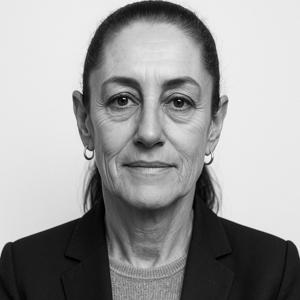
Claudia Sheinbaum Biography Flash a weekly Biography.
Claudia Sheinbaum’s past few days have played out on the biggest possible stage: security, sovereignty, and her evolving role as the face of a new Mexico under pressure from Washington. According to the Los Angeles Times, she has been brandishing a headline figure at her morning pressers: an alleged 40 percent drop in daily homicides since she took office, from an average of 87 in September 2024 to 52 in December 2025, which she calls the lowest level in a decade and proof that her intelligence‑driven, coordination‑heavy security strategy is working. Security analysts quoted in that same report warn that kidnappings, disappearances, and femicides are still rising, reminding us that the biography of her presidency on violence is far from settled.
At her recent mañaneras, summarized by Mexico Solidarity Media, Sheinbaum has doubled down on a foreign‑policy identity built on non‑intervention and national dignity. She read a formal statement condemning the U.S. raid in Venezuela and the abduction of Nicolás Maduro, declaring that Mexico “categorically rejects” interference in other nations and repeating her mantra: cooperation with the United States, yes; subordination, never. Reuters likewise reports she has publicly rejected not only U.S. intervention in Venezuela but any U.S. military action on Mexican soil, tying that stance to Mexico’s constitutional doctrine of non‑intervention.
This defiant but calibrated tone has become more pointed as Donald Trump, in high‑octane Fox News appearances, toys aloud with the idea of ground operations against Mexican cartels. Le Monde notes that Sheinbaum responded with a “cool head,” invoking a 2025 bilateral security agreement signed with Secretary of State Marco Rubio and insisting both sides stick to their own territory while still cooperating. Mexico News Daily’s recap of her Wednesday press conference has her insisting that the Venezuelan crisis will not derail U.S.–Mexico coordination on trade and security, but that there are “non‑negotiable” red lines: no foreign troops in Mexico.
On the diplomatic front, Qatar’s state news agency reports that in the last day she has talked up plans to deepen security coordination with the United States even as she resists pressure for direct intervention, a balancing act that could define her long‑term legacy. In Washington, a new letter from senior House Democrats, posted by the House Foreign Affairs Committee Democrats, praises her for dramatically increasing cooperation against organized crime, overseeing record fentanyl seizures, and pushing a legislative ban on fentanyl production and precursor chemicals, while warning U.S. hawks that unilateral strikes on Mexico would be “disastrous.”
On social media, official clips of her mañaneras and short videos stressing sovereignty, security statistics, and her phone call with Brazil’s President Lula circulate widely, though detailed metrics on engagement rema
This content was created in partnership and with the help of Artificial Intelligence AI.