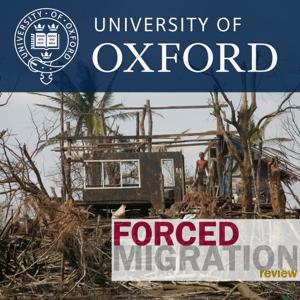
Stateless people and migrants are at greater risk of displacement and are less likely to receive assistance; in turn, environmental displacement (especially multiple migrations) heightens the risk of becoming stateless.
Residents’ strategies are generally aimed at either protection from or adaptation to flooding. Large-scale migration from the floodplains of rivers has not been seriously considered, even in high-risk zones.
The Philippine government’s ‘One Safe Future’ programme relocated disaster-affected poor families in areas where structures enabling opportunities are lacking.
Experience in the Philippines following Typhoon Haiyan suggests that resettlement as a strategy for mitigating disaster-induced displacement can create significant protection risks.
Focusing on climate-induced migration, rather than mitigation, can be at odds with grassroots demands and can make the future uninhabitability of some Pacific Islands appear as a foregone conclusion.
5 min
About Climate change and disasters (Forced Migration Review 49)
From the publisher's feed
In light of the projected increase in the frequency and intensity of disasters associated with climate change, the number of people displaced in the context of disasters will inevitably rise. Existing national, regional and international legal regimes, however, currently respond to only some of the protection concerns arising from such displacement. Crafting an appropriate response will demand a cross-sectoral approach that addresses different forms of human mobility and which also recognises the local knowledge, values and beliefs of affected communities. FMR 49 includes 36 articles on 'Disasters and displacement in a changing climate', five articles on 'Female genital mutilation (FGM) and asylum in Europe', and five 'general' articles.
- See more at: http://www.fmreview.org/climatechange-disasters
More shows like Climate change and disasters (Forced Migration Review 49)