
Sign up to save your podcasts
Or

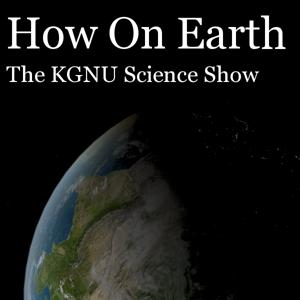

Feature #1 (time mark 5:30) When people think of Colorado, they usually don’t think about “oceans”. After all, Colorado doesn’t have much of a coastline these days, though it was definitely had oceanfront property a few hundred million years ago. However, being in a landlocked state doesn’t mean that there isn’t any thing we can do to impact the health and ecology of the ocean and marine biology. Co-host Joel Parker talks with Vicki Goldstein, founder and president of the Colorado Ocean Coalition about the “Making Waves in Colorado” symposium and what all of us around the world (leaving near or far from oceans) do that impact and can help oceans.
Feature #2 (time mark 14:10) Nitrogen – we can’t live without it, but you can have too much of a good thing. In its gaseous form nitrogen is harmless and makes up nearly 80 percent of the atmosphere. The worldwide population never would have reached 7 billion people without nitrogen, in the form of chemical fertilizer. But excess nitrogen –from fertilizer runoff, manure, human sewage and other sources is wreaking havoc on the environment. Co-host Susan Moran talks with John Mischler, a PhD student at CU Boulder, who is researching worms and snails in Colorado and Africa. He talks about how excess nutrients in ponds, lakes and elsewhere can lead to the spread of parasitic disease from trematodes to snails to us.
Hosts: Susan Moran, Joel Parker
 View all episodes
 By KGNU - How On Earth

4.5
2121 ratings
Feature #1 (time mark 5:30) When people think of Colorado, they usually don’t think about “oceans”. After all, Colorado doesn’t have much of a coastline these days, though it was definitely had oceanfront property a few hundred million years ago. However, being in a landlocked state doesn’t mean that there isn’t any thing we can do to impact the health and ecology of the ocean and marine biology. Co-host Joel Parker talks with Vicki Goldstein, founder and president of the Colorado Ocean Coalition about the “Making Waves in Colorado” symposium and what all of us around the world (leaving near or far from oceans) do that impact and can help oceans.
Feature #2 (time mark 14:10) Nitrogen – we can’t live without it, but you can have too much of a good thing. In its gaseous form nitrogen is harmless and makes up nearly 80 percent of the atmosphere. The worldwide population never would have reached 7 billion people without nitrogen, in the form of chemical fertilizer. But excess nitrogen –from fertilizer runoff, manure, human sewage and other sources is wreaking havoc on the environment. Co-host Susan Moran talks with John Mischler, a PhD student at CU Boulder, who is researching worms and snails in Colorado and Africa. He talks about how excess nutrients in ponds, lakes and elsewhere can lead to the spread of parasitic disease from trematodes to snails to us.
Hosts: Susan Moran, Joel Parker

91,018 Listeners
78,715 Listeners

43,970 Listeners

38,229 Listeners

43,617 Listeners
27,057 Listeners

3,416 Listeners

1,652 Listeners
941 Listeners

510 Listeners

6,478 Listeners
382 Listeners

112,284 Listeners
6,415 Listeners

16,302 Listeners